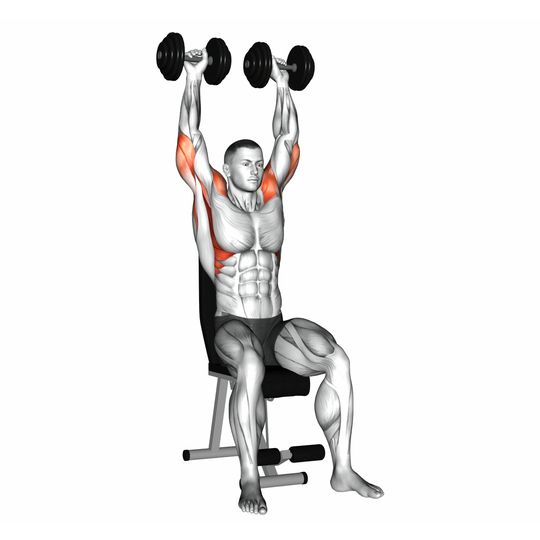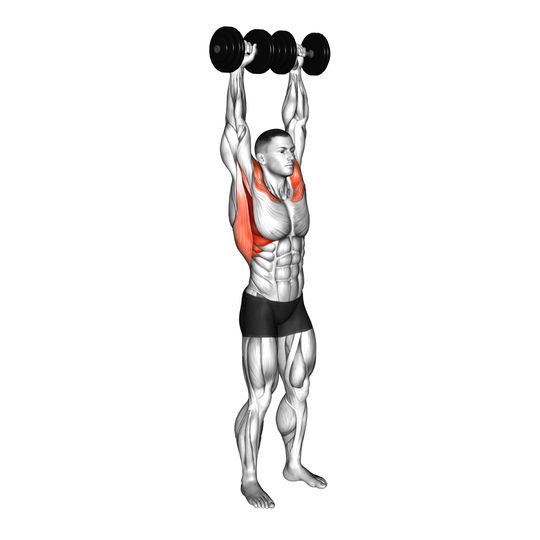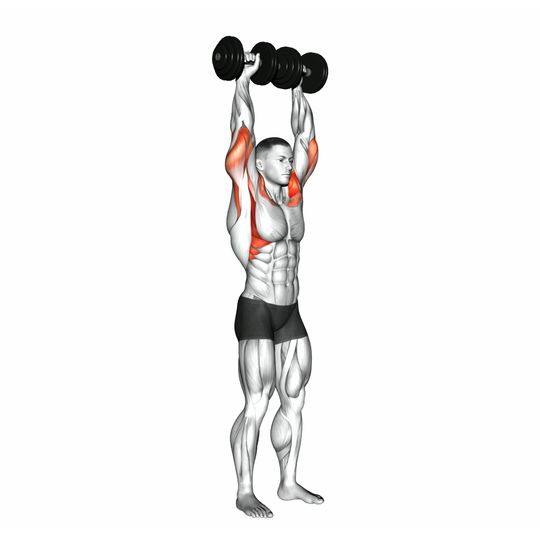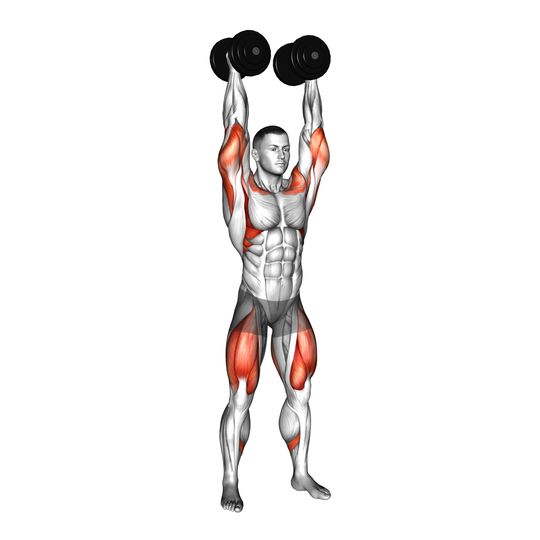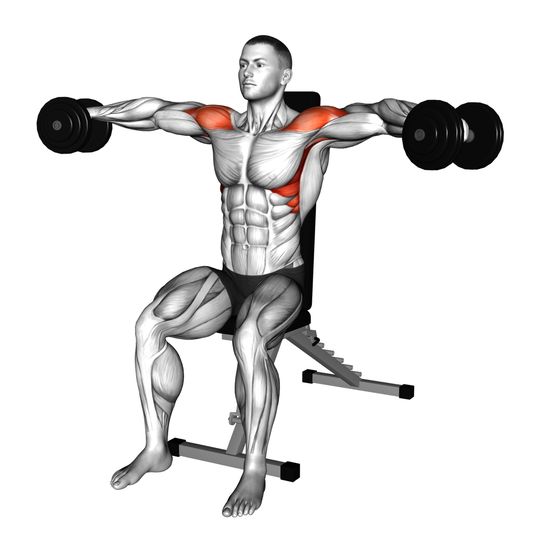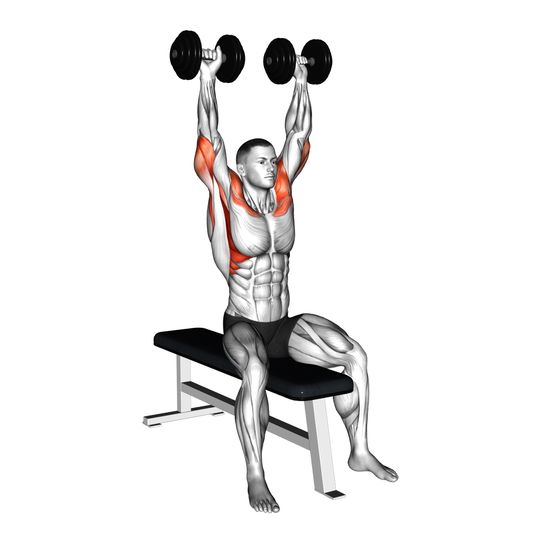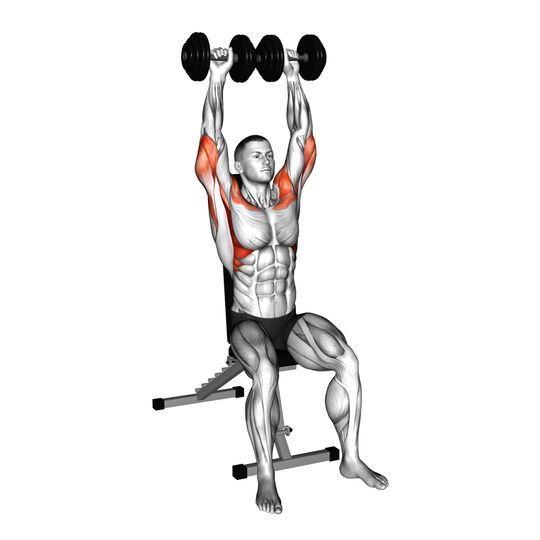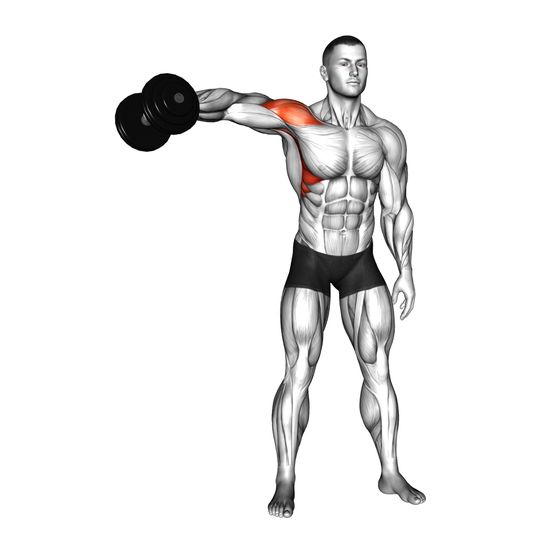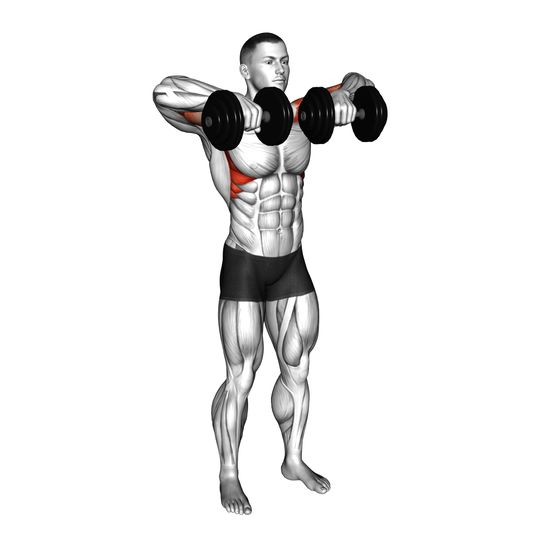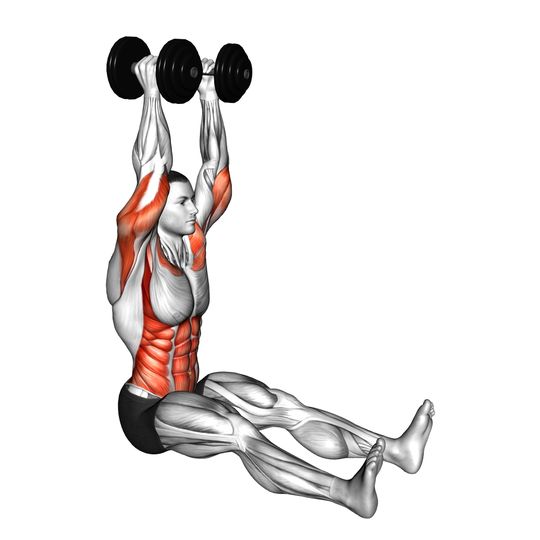


Stand and lift dumbbells out to your sides in a controlled arc to work the shoulder, primarily the lateral deltoids. The movement isolates the shoulders while the core stabilizes the torso.
How to do the Dumbbell Lateral Raise#
- Stand tall with feet hip-width and hold a dumbbell at each side with a small bend in the elbows.
- Brace your core and keep your chest up so the torso stays still throughout the movement.
- Lift the weights out to your sides, leading with the elbows, until your arms reach roughly shoulder height.
- Pause briefly at the top without shrugging your shoulders or leaning back.
- Lower the dumbbells back to your sides under control and prepare for the next repetition.
Muscles worked#
The dumbbell lateral raise is the isolation exercise for the side delts. Lifting the arm straight out to the side is called abduction, and the lateral head of the deltoid is the muscle built to do it. Pressing movements involve the side delts but let the front delts and triceps do most of the work; the lateral raise removes those helpers so the side of the shoulder has to lift the weight alone, which is what makes shoulders look wider.
The supraspinatus, one of the rotator cuff muscles, starts the movement in the first few degrees. The upper traps assist and will take over if you shrug, and the front delts contribute if the dumbbells drift forward. The forearms and grip hold the weight. It should feel like a burn on the outside cap of the shoulder, not in the neck or the front of the shoulder.
- Primary: Side delts (Lateral Deltoid)
- Secondary: Traps (Trapezius), Front delts (Anterior Deltoid)
Common mistakes#
- Using torso momentum to swing the weights up.
- Shrugging the shoulders at the top of the lift.
- Bending the elbows excessively so the movement becomes a row.
- Allowing the wrists to bend or rotate during the raise.
- Lowering the weights too quickly without control.
Why it works#
It builds the one part of the shoulder that nothing else trains well. Overhead presses hit the front delts, rows and pulldowns hit the rear delts, but the side delts only get serious work from raising the arm out to the side. Since shoulder width is mostly side delt, lateral raises are what make a frame look broader, and they are the reason bodybuilders do them in such volume.
They are also light, quick and easy to recover from. A pair of small dumbbells is all you need, the joint stress is low, and they can be done two or three times a week without affecting the rest of your training. Because the muscle responds to high reps and a hard burn, lateral raises reward effort and consistency more than heavy weight.
Sets, reps and setup#
Three to four sets of 12-20 reps with 45-60 seconds of rest, two or three times a week. The side delts recover quickly and respond to volume, so 10-15 sets a week spread across sessions is a reasonable target. Heavy sets of six turn into traps and momentum.
- Setup
- Stand tall or lean slightly forward from the hips, dumbbells at your sides with a small bend in the elbows. Lead with the elbows and lift out to the side, pinky slightly higher than the thumb, until the arms are roughly parallel to the floor. Pause for a beat, then lower over two to three seconds. Keep the shoulders down and the torso still.
- Progression
- Go up a dumbbell increment only when every set reaches 20 clean reps without the traps shrugging or the torso swinging. Between increments, progress by slowing the lowering phase, adding a one-second pause at the top, finishing sets with partial reps in the bottom half of the range, or doing them seated to remove any hip drive.
Variations#
- Cable Lateral Raise Constant tension through the range, including the bottom where dumbbells go slack.
- Machine Lateral Raise Pads at the elbows and a fixed path, which removes momentum and makes failure safe and easy.
- Seated Dumbbell Lateral Raise Sitting down takes the legs and hips out of it so you cannot cheat the weight up.
- Incline Dumbbell Lateral Raise Lying on your side on an incline bench, which loads the bottom of the range where the side delt is stretched.
- Single Arm Dumbbell Lateral Raise One arm at a time with the other hand braced, allowing full focus and a slight lean for more range.
Dumbbell lateral raise vs cable lateral raise#
The dumbbell version is convenient and effective, but the resistance changes through the rep. At the bottom the dumbbell hangs straight down and does almost nothing; the load peaks at the top when the arm is horizontal. That means the side delt is only truly challenged in the top half of the range.
The cable pulls from the side and low, so the muscle is under tension from the very start of the movement, including the stretched position at the bottom. For pure side-delt growth the cable is slightly better and feels smoother. Dumbbells win on availability and on how quickly you can set up and move through sets, so most lifters use both across a week.
Common questions#
What muscles does the dumbbell lateral raise work?
Primarily the side delts, with the supraspinatus of the rotator cuff starting the movement and the upper traps assisting near the top. The front delts contribute slightly if the arms drift forward, and the forearms hold the weight.
How many lateral raises should I do?
Three to four sets of 12-20 reps, two or three times a week. The side delts recover fast and grow with volume, so aim for 10-15 total sets a week across your sessions rather than trying to do everything in one.
How heavy should lateral raises be?
Light enough to reach 12-20 reps with no shrug or swing, which for most people means 4-10 kg per hand. If you cannot pause at the top for a second, the weight is too heavy. The goal is a burn in the side of the shoulder, not a number.
Should I raise the dumbbells above shoulder height?
No. Stop when the arms are roughly parallel to the floor. Going higher shifts the work to the upper traps and does nothing extra for the side delts.
Why do I feel lateral raises in my traps or neck?
You are shrugging to lift the weight, usually because it is too heavy. Drop the load, push the shoulders down before each rep, lead with the elbows rather than the hands, and think about reaching the dumbbells out to the sides rather than up.
Should my thumbs point up or down on lateral raises?
Neutral or with the pinky slightly higher than the thumb keeps the side delt in charge. Pointing the thumbs up brings in more front delt; pointing them sharply down can irritate the shoulder in some people. A neutral hand with a slight forward lean is the safest default.