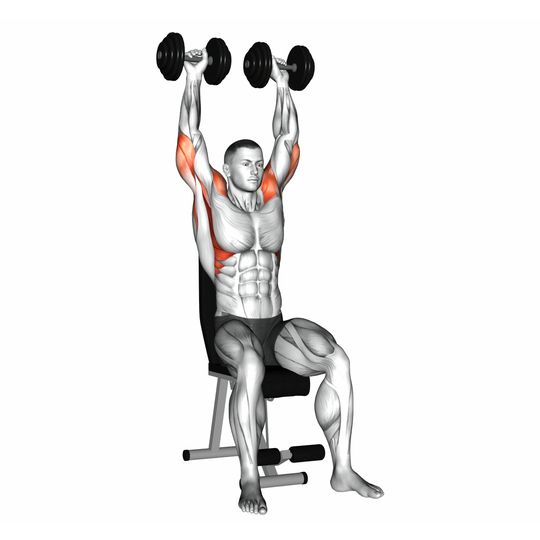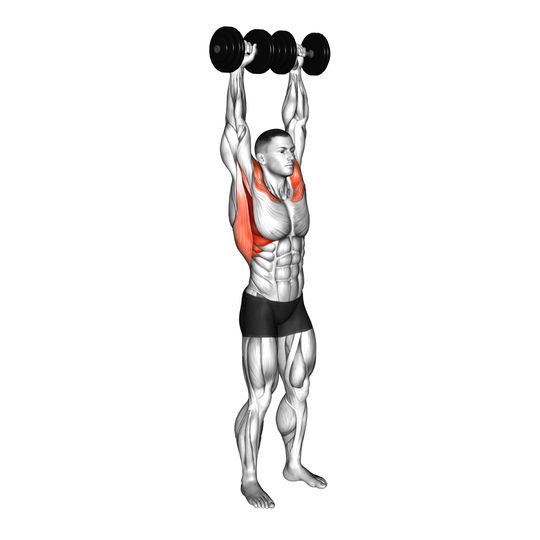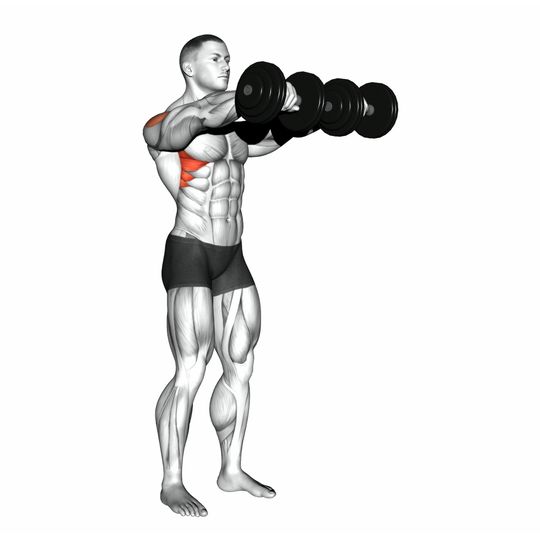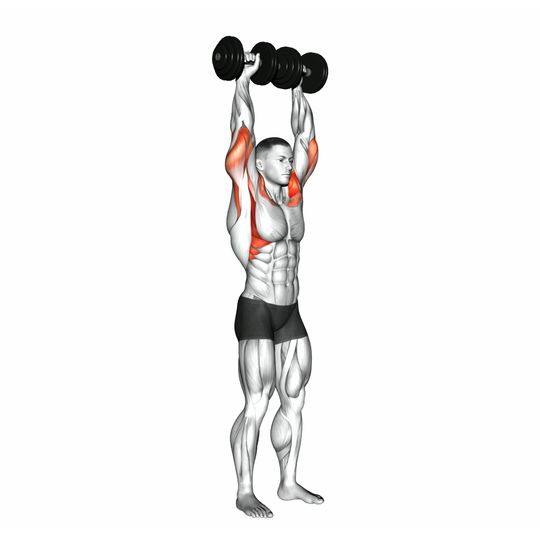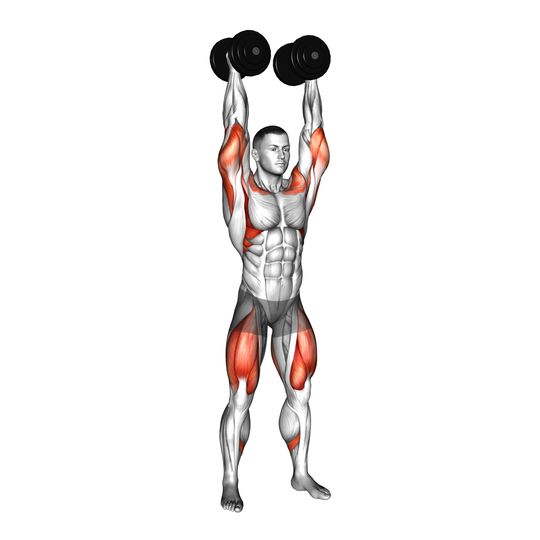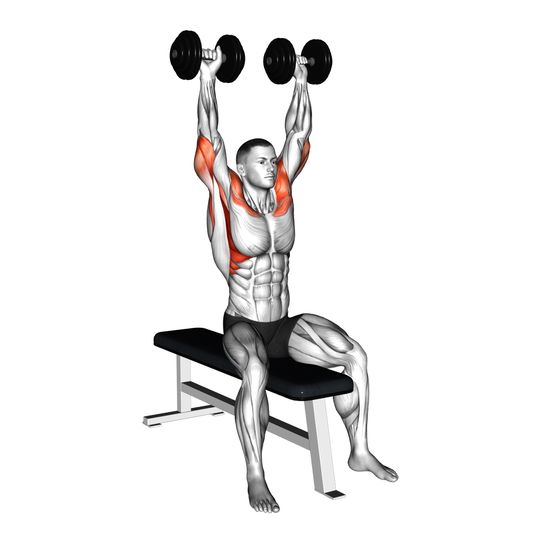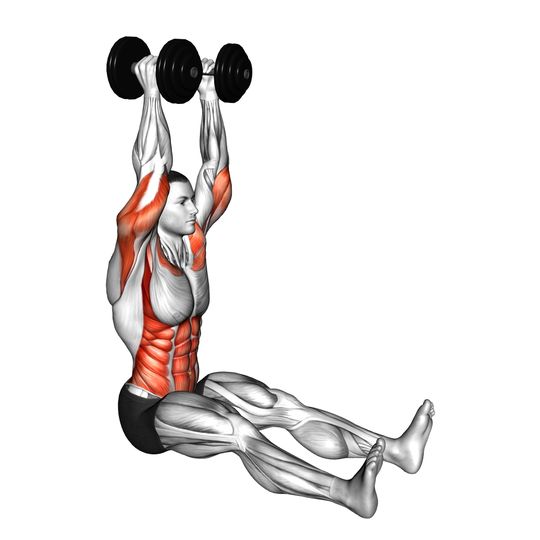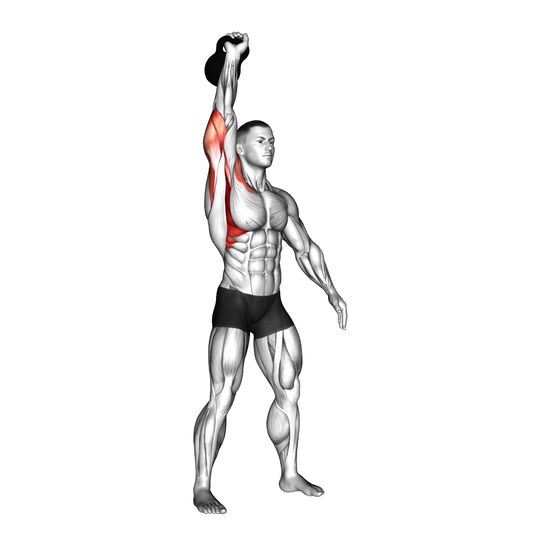


Lift dumbbells from shoulder level straight overhead, extending the arms to work the shoulder (deltoid) muscles.
How to do the Dumbbell Shoulder Press#
- Hold a dumbbell in each hand at shoulder height with elbows bent and wrists neutral.
- Brace your core and keep a tall, neutral spine whether seated or standing.
- Drive the dumbbells upward until your arms are nearly straight without locking the elbows.
- Pause briefly at the top, then lower the weights under control back to shoulder height.
- Repeat for the planned number of repetitions while maintaining steady breathing.
Muscles worked#
The dumbbell shoulder press is the main builder for the front and side of the shoulder. Pressing from shoulder height to overhead is the deltoid's core job: the anterior head drives the arm forward and up, and the lateral head lifts it out to the side as the elbows travel from beside the body to over the head. Dumbbells let the hands drift slightly outward and rotate naturally, which keeps the side delts more involved than a barbell does.
The triceps lock the elbows out at the top and the upper traps and serratus anterior rotate the shoulder blades upward so the arm can reach overhead. The rotator cuff works constantly to keep each dumbbell balanced, which is why the movement feels harder than the same weight on a bar. Expect fatigue in the front and outside of the shoulders first, then the triceps, with the upper back tightening to hold you steady.
- Primary: Front delts (Anterior Deltoid), Side delts (Lateral Deltoid)
- Secondary: Triceps (Triceps Brachii), Traps (Trapezius)
Common mistakes#
- Arching the lower back to help press the weights up.
- Using momentum or leg drive instead of pressing with the shoulders.
- Shrugging the shoulders up toward the ears at the top of the press.
- Allowing the wrists to bend instead of staying neutral.
Dumbbell Shoulder Press vs other exercises#
Head-to-head breakdowns of muscles worked, loading, joint stress, and which one to pick for your goal.
Why it works#
It builds the shoulders and trains each side independently. Almost everyone has a stronger pressing arm, and a barbell lets it take over; dumbbells force both shoulders to move their own weight and expose the difference so you can fix it. The freedom to move the hands also lets you find a path that suits your shoulders rather than forcing them onto a fixed bar line.
It is also a safer way to press heavy overhead. There is no bar to clear your face, you can drop the weights if a rep fails, and the range of motion is longer because the dumbbells can travel below shoulder height at the bottom. Seated with a back support it becomes a strict shoulder builder; standing it adds core and hip stability and turns into a full-body pressing movement.
Sets, reps and setup#
Three to four sets of 6-12 reps with two minutes of rest, once or twice a week. Sets of 6-8 with heavy dumbbells build strength as a main press; sets of 10-12 work better after a barbell press or bench press when the goal is shoulder size.
- Setup
- Seated with the bench upright or set one notch back, feet planted, lower back lightly against the pad. Start with the dumbbells at ear level, elbows slightly forward of the shoulders and palms facing forward or turned slightly in. Press up and a little inward until the arms are straight over the shoulders, then lower under control until the elbows are just below shoulder height.
- Progression
- Go up a dumbbell increment when all sets hit the top of the range with the dumbbells reaching full lockout and no lower-back arch. Because dumbbell jumps are large, use a rep-range approach: work from 6 to 12 reps with one weight before moving up. If getting the weights into position becomes the limit, press from a lower bench angle or switch to a standing version for the heaviest sets.
Variations#
- Arnold Press Palms rotate from facing you to facing forward on the way up, adding front delt range and time under tension.
- Seated Dumbbell Shoulder Press The back-supported version that removes leg and core involvement so the shoulders do all the work.
- Barbell Overhead Press The same pattern with a bar, easier to load heavy but with less range and side-delt involvement.
- Dumbbell Push Press A leg drive at the start that lets you handle heavier dumbbells and overload the lockout.
- Seated Machine Shoulder Press A fixed path that removes balance entirely, useful for taking the delts to failure safely.
Dumbbell shoulder press vs barbell overhead press#
The dumbbell press is the better shoulder builder for most people. Each arm works alone so imbalances cannot hide, the range is longer because the dumbbells drop below shoulder height, the side delts contribute more because the hands can travel outward, and the shoulders can find their own comfortable path. It is also easier to bail on a failed rep.
The barbell press is the better strength exercise. It lets you load in small increments, use more total weight, and train the whole body to stabilise a heavy load overhead. If you care about overhead strength as a number, press the barbell first and add dumbbells after. If you care mostly about how your shoulders look and feel, the dumbbell version can be your main press.
Common questions#
What muscles does the dumbbell shoulder press work?
The front and side delts are the main movers, with the triceps locking out the elbows and the upper traps and serratus anterior rotating the shoulder blades upward. The rotator cuff stabilises each dumbbell and the core braces, especially when standing.
Is the dumbbell shoulder press better seated or standing?
Seated isolates the shoulders more and lets you press heavier because the legs and core are out of the equation. Standing brings in the whole body and builds stability that transfers to sport and other lifts. Pick seated for shoulder size, standing for general strength, or alternate.
How much weight should I use for dumbbell shoulder press?
Start with a pair you can press for 10-12 clean reps with no back arch, which for most beginners is 8-12 kg per hand. Add weight when every set reaches the top of the range. Because the dumbbells stress each shoulder independently, expect to use well under half of what you barbell press per hand.
Should the dumbbells touch at the top?
Letting them come close is fine, but clanging them together at the top unloads the delts for a moment and adds nothing. Press until the arms are straight over the shoulders with the dumbbells a few centimetres apart, then lower.
How low should I lower the dumbbells?
Until the elbows are just below shoulder height and the dumbbells are around ear level. Going lower stretches the front of the shoulder more, which some people tolerate well and others do not; stop where you can keep tension and control without discomfort.