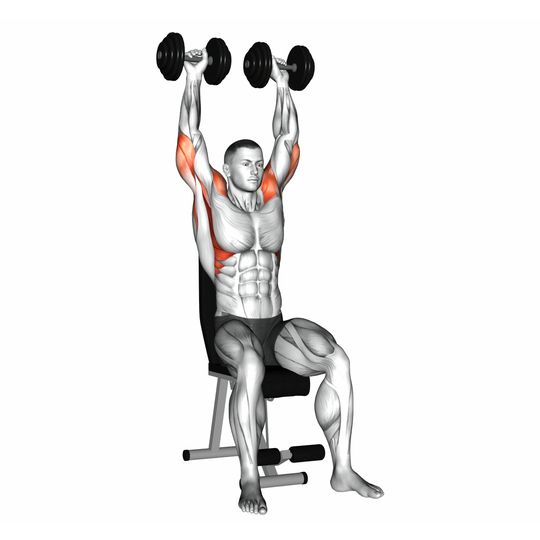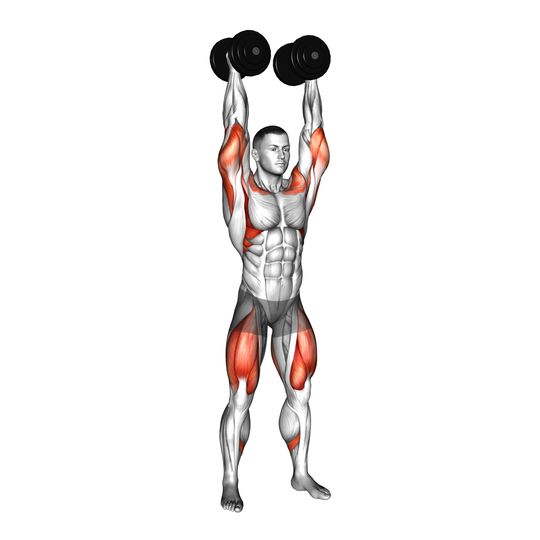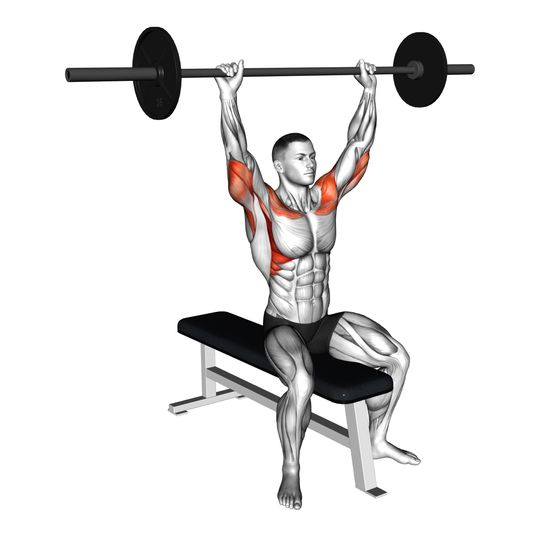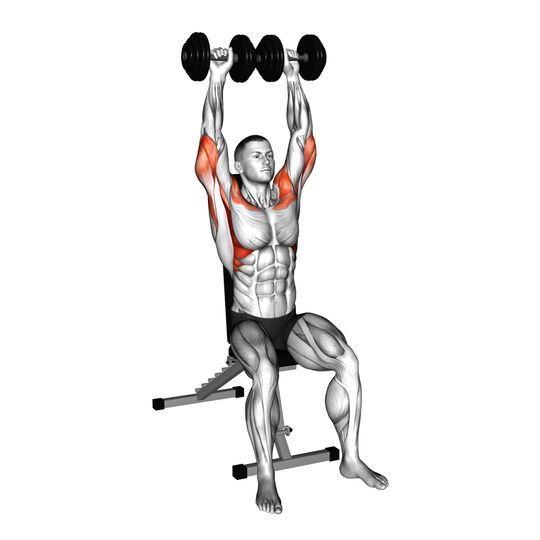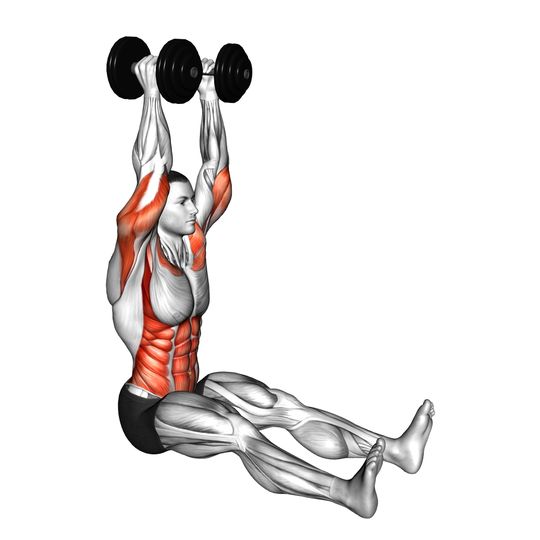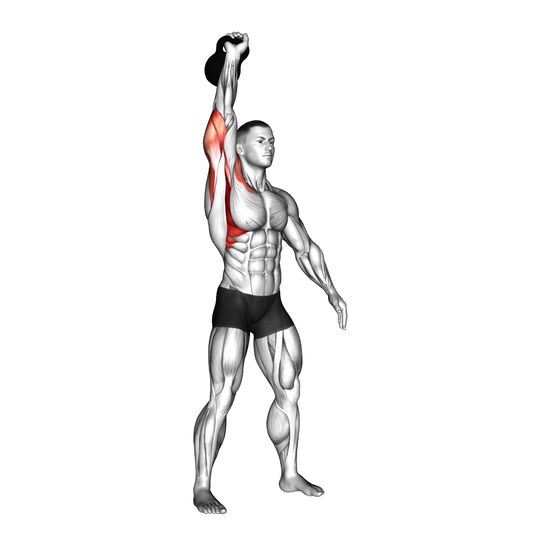


A seated, vertical pressing movement that drives dumbbells overhead and primarily works the shoulder (deltoid) muscles.
How to do the Seated Dumbbell Shoulder Press#
- Sit upright on a bench with feet planted and hold a dumbbell at each shoulder level.
- Position the dumbbells so the weight sits over the elbows and the handles are aligned with your shoulders.
- Press both dumbbells straight up until your arms are nearly extended overhead.
- Lower the dumbbells under control back to shoulder level.
- Repeat for the desired number of repetitions.
Muscles worked#
The seated dumbbell shoulder press is a front and side delt exercise. Pressing the weights from the shoulders to overhead is the anterior deltoid's main job, and because dumbbells let the elbows travel out to the sides rather than staying in front, the lateral deltoid, the part that gives the shoulder its width, gets more work than in a barbell press. The load is felt across the top of the shoulders from the start and the front delts take over as the arms approach lockout.
The triceps finish the lockout and are usually the muscle that fails first on heavy sets, and the upper traps and serratus anterior rotate the shoulder blades upward so the arms can get overhead. The rotator cuff works hard to keep two independent weights stable, which is a demand a bar or a machine does not make. The back support takes the lower back out of it, leaving the shoulders and triceps to do the work.
- Primary: Front delts (Anterior Deltoid), Side delts (Lateral Deltoid)
- Secondary: Triceps (Triceps Brachii), Traps (Trapezius), Upper back (Rhomboids & Middle Trapezius)
Common mistakes#
- Overarching the lower back during the press.
- Allowing the elbows to drift out too far from under the weights.
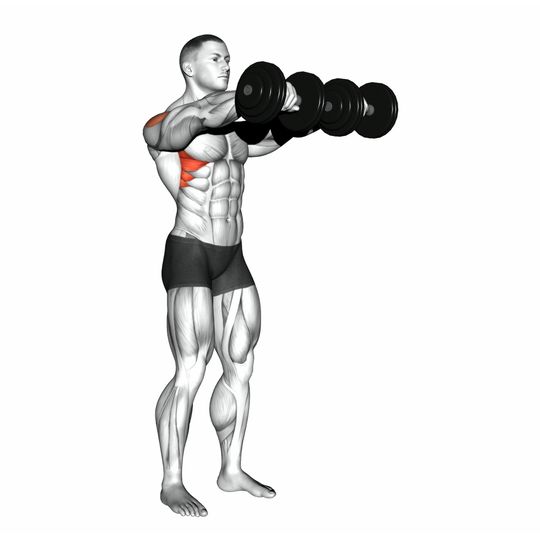
- Pushing the dumbbells forward instead of straight up.
- Dropping the weights quickly on the descent.
- Using momentum from the torso or legs to drive the lift.
Why it works#
The seated position turns the overhead press into a pure shoulder exercise. Standing, the legs and trunk have to stabilise the load, and the lower back usually gives out before the delts; seated with a back pad, none of that matters and every rep goes to the shoulders and triceps. That makes it the best overhead press for building shoulder size specifically.
Dumbbells add two things a barbell cannot: each arm has to work alone, so the stronger side cannot cover for the weaker one, and the hands can travel a natural path that most shoulders find far more comfortable than a fixed bar. Lifters whose shoulders complain about barbell pressing can often press dumbbells pain-free for years, and the rotator cuff work that comes from stabilising two weights is a bonus.
Sets, reps and setup#
Three to four sets of 8-12 reps with 90 seconds to two minutes of rest, once or twice a week. Use it as the main pressing movement on a shoulder day or as the second press after a barbell movement. Heavy triples are awkward because getting the dumbbells into position costs more than the set; the 8-12 range is where the exercise earns its place.
- Setup
- Set the bench to about 80 degrees, not fully upright, so you can press slightly back without the weights hitting the pad. Kick or lift the dumbbells to the shoulders with the palms facing forward or turned slightly in, elbows just in front of the body and under the weights. Press up and slightly in until the arms are nearly straight overhead, then lower over two seconds until the dumbbells are at ear level.
- Progression
- Add reps to twelve, then move up 2 to 2.5 kilograms per hand and drop back to eight. Dumbbell jumps are large relative to the load, so when the next size is too much, add a set, slow the lowering to three seconds, or pause for a second at the bottom. Once you press half your bodyweight per hand for reps, a standing press or a barbell adds new challenges.
Variations#
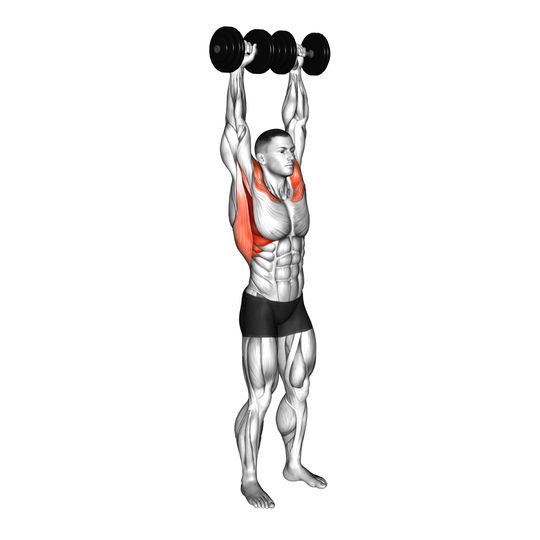
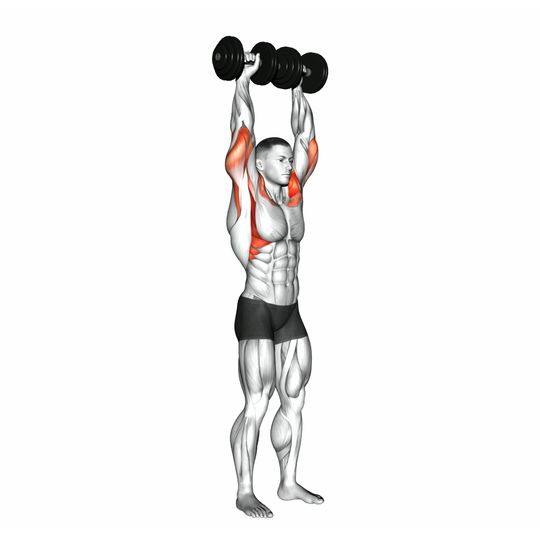
- Standing Dumbbell Shoulder Press The same press standing, which brings the trunk and legs in as stabilisers and lowers the weight you can use.
- Arnold Press Starts with the palms facing you and rotates through the press, adding range and more front delt involvement.
- Seated Barbell Press A barbell in the same seated position, for heavier loading and a fixed hand path.
- Seated Shoulder Press A machine press with a fixed path and no stabilising demand, the easiest version to take to failure.
- Dumbbell Push Press Adds a leg drive to press heavier dumbbells and overload the lowering phase.
Seated dumbbell press vs standing dumbbell press#
Standing, the legs, glutes, and trunk have to hold the body rigid under the load, and the lower back becomes the weak link for most people well before the shoulders do. That makes the standing press a full-body strength exercise, and it carries over better to sport and to anything you do on your feet.
Seated with a back pad, the stabilising demand disappears and the shoulders and triceps get the full effort, which typically means ten to fifteen percent more weight and sets that end because the delts are done. For shoulder size, seated is the better choice; for strength that transfers, standing wins. Most lifters benefit from rotating between them.
Common questions#
What muscles does the seated dumbbell shoulder press work?
The front and side delts do most of the pressing, with the triceps locking the elbows out at the top. The upper traps and serratus anterior rotate the shoulder blades so the arms can get overhead, and the rotator cuff stabilises each dumbbell independently.
Is the seated dumbbell press better than the barbell press?
It works the side delts more, allows a more comfortable hand path, and forces each arm to work alone, so for shoulder growth it is at least as good. The barbell lets you lift more total weight and is the better strength lift. Many lifters alternate the two.
What angle should the bench be for a seated dumbbell press?
Around 80 degrees, one notch back from fully upright. That small lean lets the dumbbells travel straight up without hitting the bench and lets the shoulder blades sit naturally against the pad; a fully upright bench often forces the elbows forward.
How heavy should seated dumbbell presses be?
Heavy enough that eight to twelve reps is hard with a full lower to ear level and no arching. Most beginners start around 8 to 12 kilograms per hand; pressing half your bodyweight per hand for reps is a strong intermediate goal.
Should the dumbbells touch at the top of a shoulder press?
They can come close, but they do not need to touch. Pressing slightly inward at the top keeps tension on the delts; clanking them together is usually a sign the arms are going past vertical and the shoulders are unloading.
Why does my lower back arch when I press seated?
The weight is too heavy or the bench is too upright, so you lean back to turn the press into an incline. Brace the abs, keep the feet flat and the ribs down, set the bench to about 80 degrees, and drop the load until the back stays against the pad.