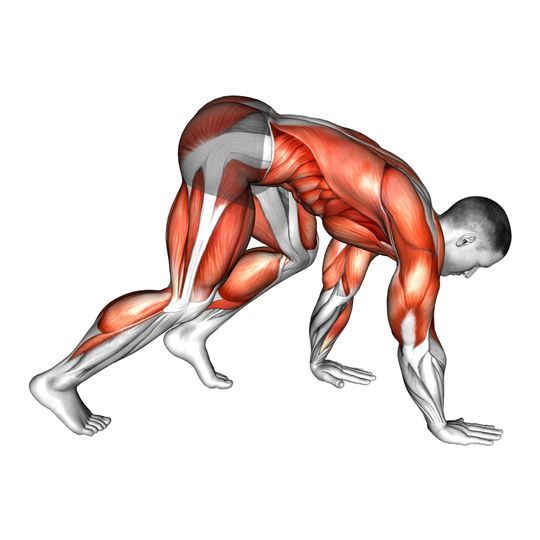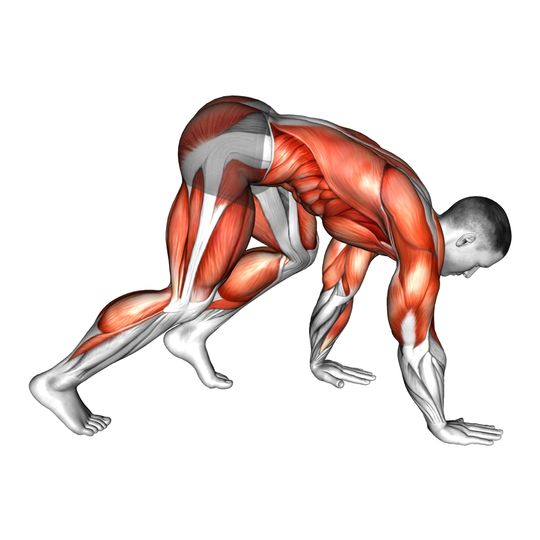


A vertical push variation performed from a pike position that primarily loads the shoulders and also works the triceps. You raise the hips and press the crown of your head toward the floor by flexing and extending the elbows.
How to do the Pike Push Up#
- Place your hands shoulder-width on the floor and lift your hips so your torso forms an inverted V with straight or slightly bent legs.
- Brace your core and keep your shoulders active by reaching the crown of your head toward the space between your hands.
- Bend your elbows and lower the top of your head toward the floor in a controlled, vertical path while keeping hips high.
- Press through your palms to extend the elbows and return to the starting pike position, maintaining shoulder engagement throughout.
Muscles worked#
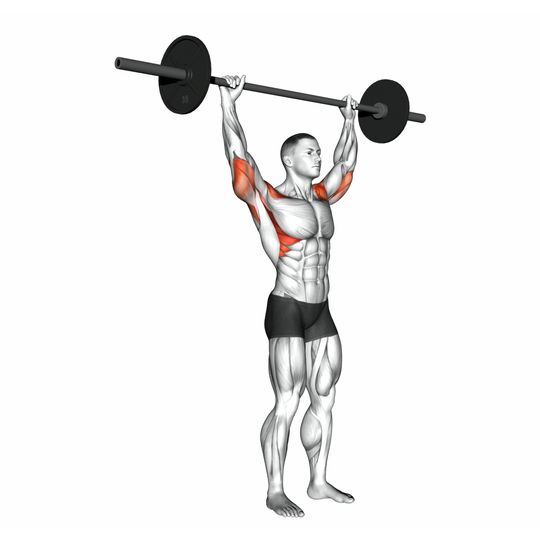
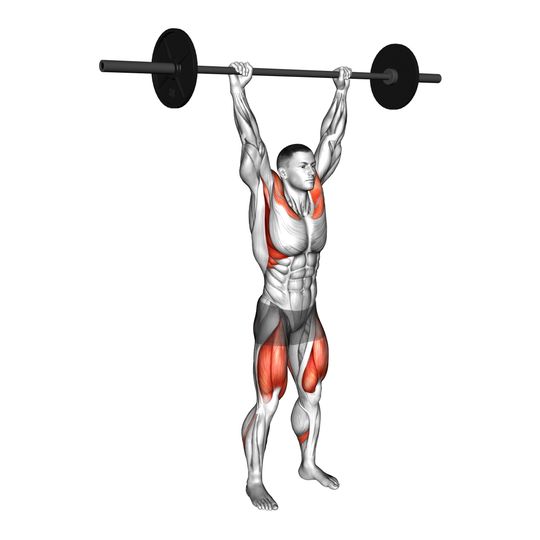
The pike push up is a bodyweight shoulder press. Lifting the hips into an inverted V tilts the torso toward vertical, so when you bend the elbows and lower the head toward the floor, the front delts (anterior deltoid) and triceps are doing the same job they do in an overhead press. The steeper the pike, the more of your bodyweight the shoulders carry and the less the chest can help.
The side delts assist as the arms move overhead, and the upper traps and serratus anterior control the shoulder blades as they rotate upward, which is why the movement is also useful for shoulder health. The upper back holds the pike shape, the abs keep the hips from sagging, and the hamstrings feel a stretch if you keep the legs straight. It should feel like shoulders and triceps, not chest.
- Primary: Front delts (Anterior Deltoid), Triceps (Triceps Brachii)
- Secondary: Side delts (Lateral Deltoid), Upper back (Rhomboids & Middle Trapezius), Traps (Trapezius), Abs (Rectus Abdominis)
Common mistakes#
- Hips sagging and losing the pike angle.
- Elbows flaring out too wide instead of tracking toward the head.
- Leading the movement with the neck rather than the shoulders.
- Only partially lowering and not approaching the head toward the hands.
Why it works#
It is the most accessible way to train vertical pressing without equipment. Overhead strength is hard to build with bodyweight alone, and the pike push up fills that gap while also being the standard progression toward a handstand push up. The load scales naturally: walk the feet closer for more shoulder work, or further away for less.
It is also easier on the shoulders than many people expect, because the hands are fixed and the body moves, which lets the shoulder blades move freely. That makes it a good choice for lifters who find barbell overhead pressing uncomfortable but still want strong, capable shoulders.
Sets, reps and setup#
Three or four sets of 6-12 reps with 90 seconds of rest, two or three times a week. Lower over two to three seconds and touch the head lightly to the floor. If you cannot do six clean reps, widen the pike angle; if you can do more than fifteen, elevate the feet.
- Setup
- Start in a push up position, walk the feet in until the hips are high and the torso is close to vertical, with the hands shoulder width and fingers pointing forward. Look between your hands, bend the elbows so they track slightly forward rather than out, and lower the crown of the head to a spot just in front of the hands. Press back to the start without letting the hips drop.
- Progression
- Once twelve reps are easy, put the feet on a bench for the elevated pike push up, then on a higher box, working toward a wall-supported handstand push up. Adding a deficit by placing the hands on parallettes or yoga blocks increases the range and is a good intermediate step.
Variations#
- Elevated Pike Push Up Feet on a bench or box put more bodyweight through the shoulders and bring the torso closer to vertical.
- Handstand Push Up The end goal of the pike progression, a full bodyweight overhead press against a wall.
- Push Up The horizontal version with the body flat, which moves the work to the chest.
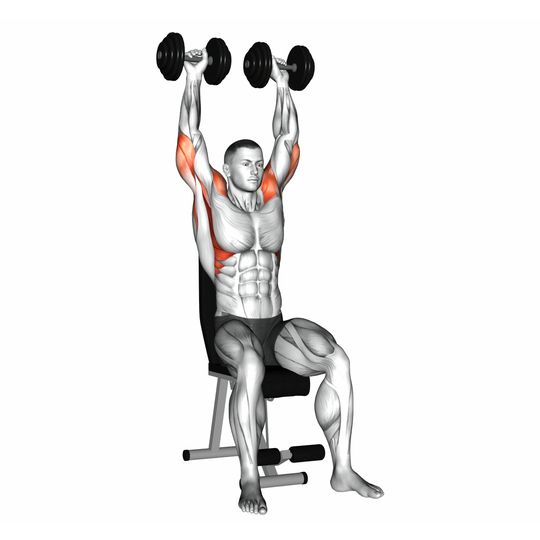
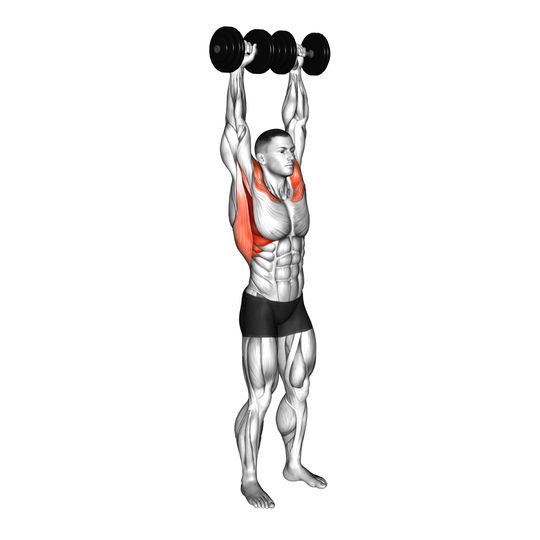
- Dumbbell Overhead Press The same shoulder pressing pattern with an adjustable load for anyone who has access to dumbbells.
- Plank to Push Up A core and shoulder stability drill that builds the scapular control the pike position demands.
Pike push up vs handstand push up#
The pike push up keeps the feet on the floor, so only part of your bodyweight goes through the shoulders and balance is not a factor. That makes it trainable for almost anyone, and the difficulty can be dialled in by moving the feet closer or elevating them. It is the right place to build the base of shoulder and triceps strength.
The handstand push up loads the full bodyweight through the arms and adds a balance demand, even against a wall. It is a genuinely hard strength move and the natural end point of the progression, but jumping to it before you can do 15 elevated pike push ups usually means partial reps and frustration. Earn it through the pike.
Common questions#
What muscles do pike push ups work?
The front delts and triceps do most of the pressing, with the side delts, upper traps, and serratus anterior assisting and controlling the shoulder blades. The abs and upper back hold the pike shape.
Are pike push ups as good as an overhead press?
They train the same muscles through a similar range and are the best bodyweight substitute available. A loaded overhead press is easier to progress in small steps, but a lifter who works up to elevated pike push ups and handstand push ups will have strong shoulders by any standard.
Where should my head touch on a pike push up?
Just in front of the hands, so the forehead or crown lands roughly in line with the fingertips. Touching further back means the hips have dropped and the movement has turned into a decline push up.
Why do pike push ups hurt my wrists?
Because the wrists are bent to 90 degrees under load. Turn the fingers slightly outward, warm up the wrists first, or use push up handles or parallettes to keep the wrists neutral. The discomfort usually fades within a few weeks as the tissue adapts.
How many pike push ups should I do?
Three or four sets of 6-12 reps, two or three times a week. When you can do fifteen clean reps per set, make the exercise harder by elevating the feet rather than adding more reps.