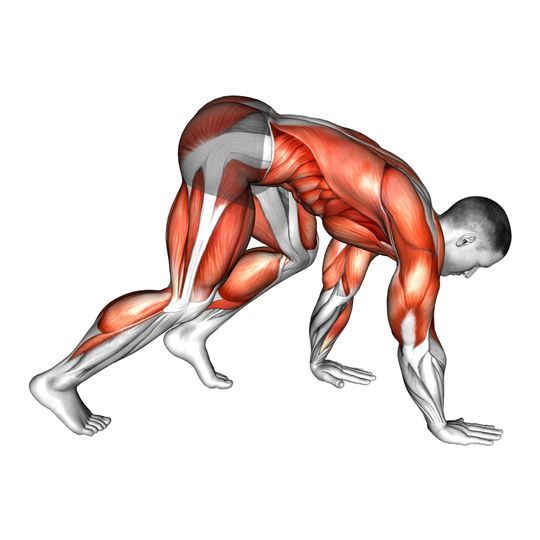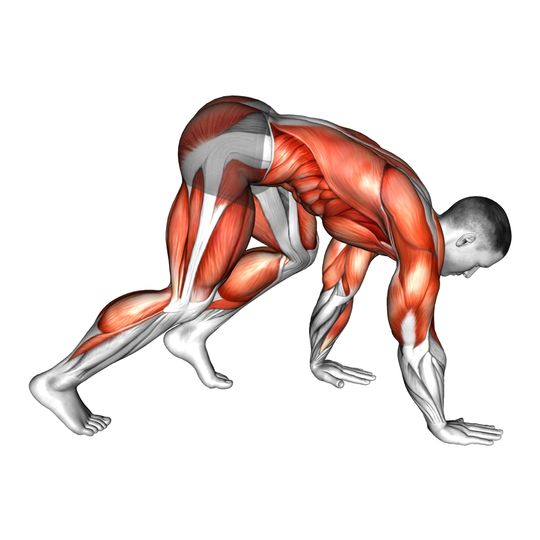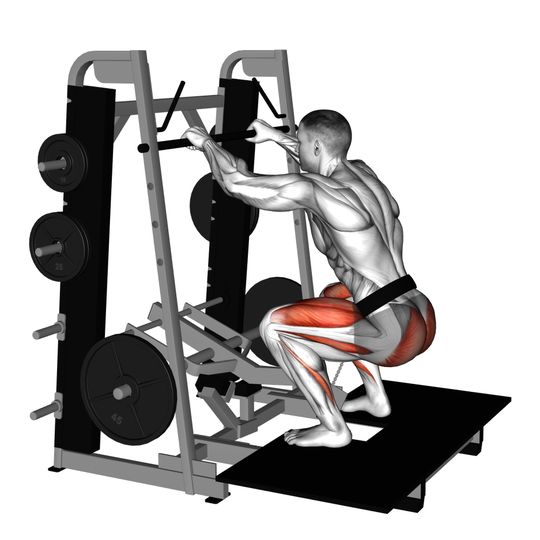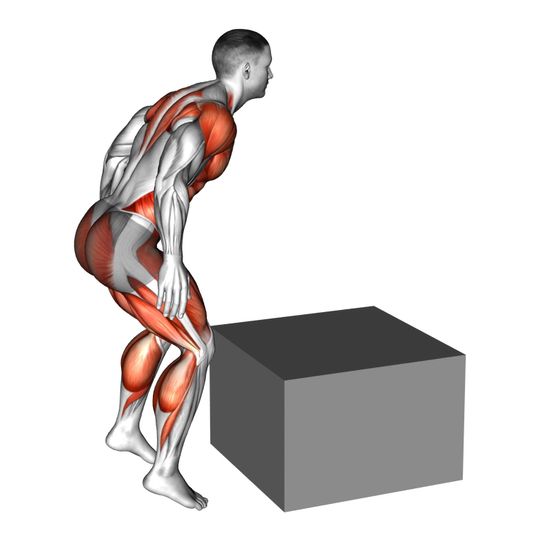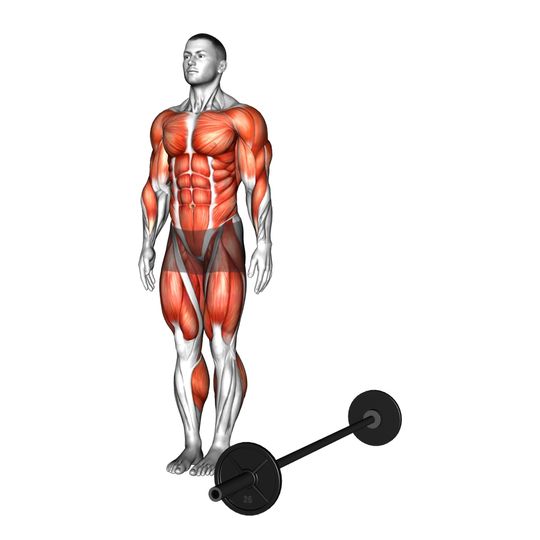


Walk forward at a steady, rhythmic pace using only your body weight to provide aerobic conditioning and primarily engage the leg muscles.
How to do the Walking#
- Stand tall with feet about hip-width apart and relax your shoulders.
- Begin stepping forward with a comfortable stride, placing each foot heel-first then rolling to the toe.
- Swing your arms naturally opposite your legs and keep your hands relaxed.
- Keep an upright posture and maintain a steady, sustainable pace and breathing pattern.
- Continue for the planned time or distance, adjusting speed or stride to match your effort level.
Muscles worked#
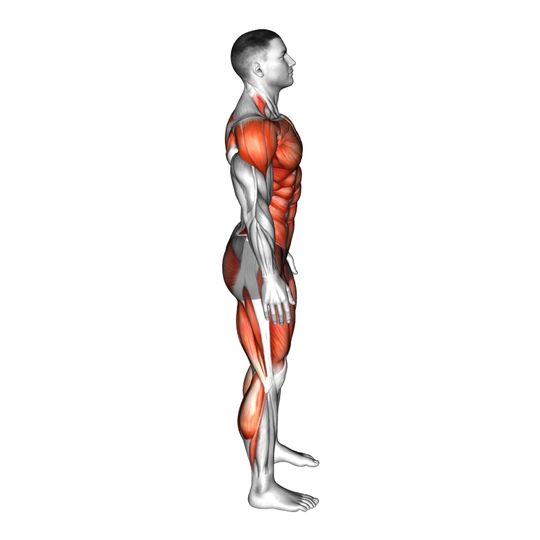
- Primary: Quads (Quadriceps Femoris), Glutes (Gluteus Maximus), Calves (Gastrocnemius & Soleus)
- Secondary: Hamstrings (Biceps Femoris, Semitendinosus & Semimembranosus), Hip flexors (Iliopsoas (Hip Flexors)), Abs (Rectus Abdominis)
Common mistakes#
- Rounding the upper back and letting the shoulders hunch.
- Taking short, shuffling steps instead of full strides.
- Overstriding and landing with a stiff or locked knee.
- Breathing shallowly or holding your breath.
- Looking down at your feet instead of ahead.