

A barbell hip thrust is horizontal hip extension with the load peaking at full lockout. That last part is the whole point: almost every other glute exercise is hardest at the bottom, when the hip is bent, while the thrust is hardest exactly where the glute is shortest and most contracted.
Substitutes therefore split by resistance direction. Machines, Smith machines, and glute bridges keep the horizontal line and the peak at lockout. Cable pull-throughs and kettlebell swings keep it too, from a standing position. Squat and hinge patterns train the glutes hard but load them at the bottom instead, which is a different stimulus rather than a worse one.
Every hip thrust alternative, and what it changes#
1. Machine Hip Thrust#
MachineGlutes
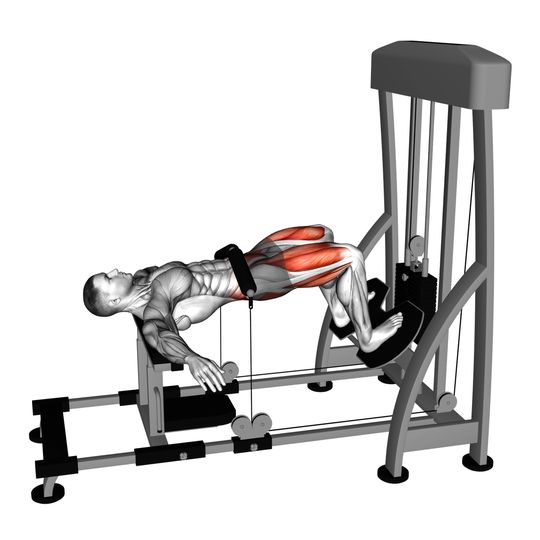
A purpose-built thrust machine gives you the same movement without the setup — no rolling a bar over your hips, no pad slipping, no bench walking away mid-set. The path is fixed and the loading is smooth, so it is easier to push a set to failure than with a barbell across your lap.
2. Smith Machine Hip Thrust#
Smith machineBenchGlutes
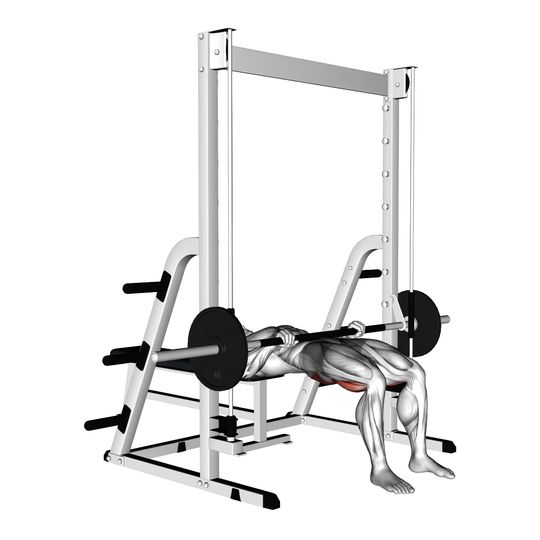
The bar path is guided and the bar stays put between sets, which removes almost all of the awkwardness of the barbell version while keeping the loading identical. Set the bench parallel to the bar and check that your shins end vertical at lockout.
3. Barbell Glute Bridge#
BarbellGlutes
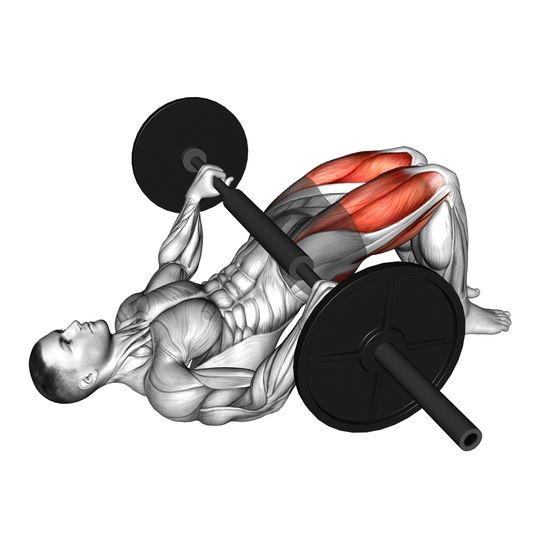
The same lift performed from the floor, with your shoulders down rather than on a bench. The shorter range means less work at the bottom but the same hard lockout, and you need no bench at all — just a bar and a pad. Often the answer when the benches are all in use.
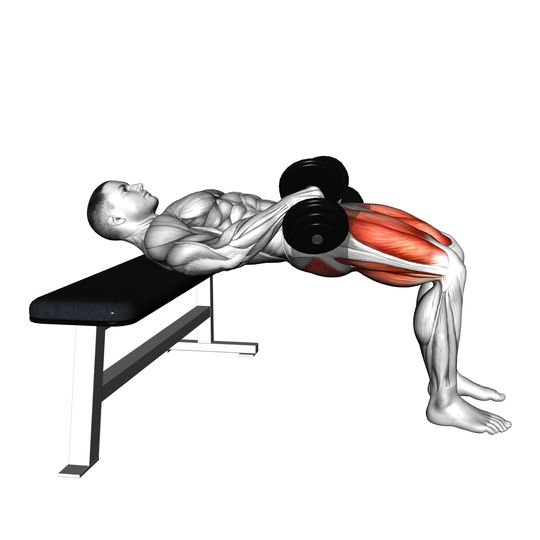
4. Dumbbell Hip Thrust#
DumbbellBenchGlutes
One heavy dumbbell held across the hips replaces the bar completely for anyone not yet thrusting serious weight. The load ceiling is low and the dumbbell digs in, so it works best for higher reps and slower tempos than the barbell version.
5. Single Leg Hip Thrust#
BenchGlutes
One leg turns bodyweight into a genuinely hard set and forces each glute to work without help from the other side. It also punishes any tendency to push through the lower back instead of the hip, because the pelvis will drop the moment the glute stops driving.
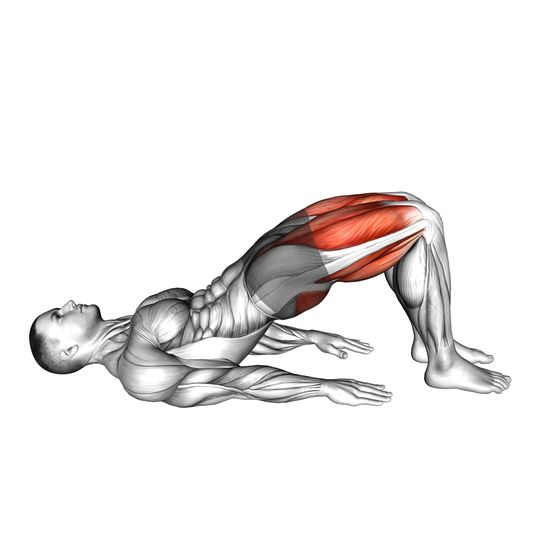
6. Glute Bridge#
Glutes
The floor version with nothing on top, which sounds trivial until you slow it down and pause for three seconds at the top of every rep. It is the baseline home movement and the best place to learn what a hard glute contraction actually feels like.
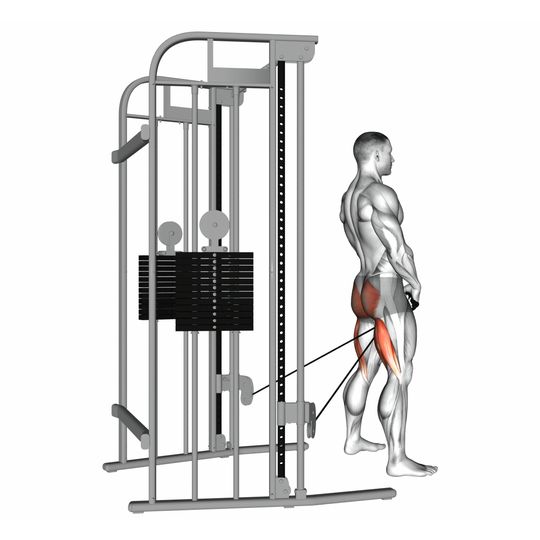
7. Cable Pull Through#
CableGlutesHamstrings
A standing hinge against a low pulley, so the resistance is horizontal and peaks at lockout — exactly like a thrust, but with your spine unloaded and no bar on your hips. The best substitute if the reason you are switching is that the barbell setup hurts.
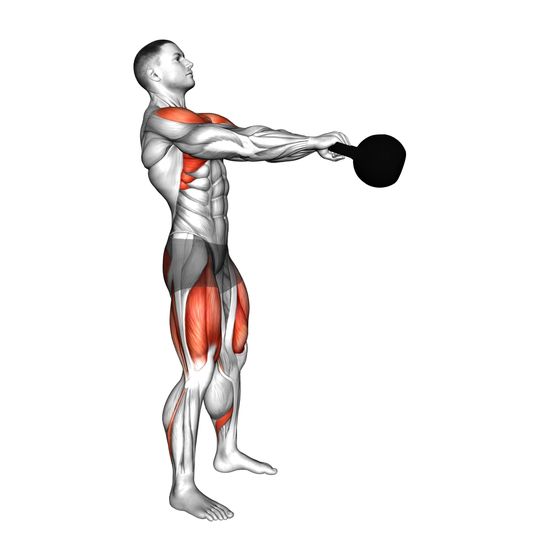
8. Kettlebell Swing#
KettlebellGlutesHamstrings
Explosive horizontal hip extension where the glutes have to snap the hips through to lockout against a moving load. Different in character to a slow thrust, but the same direction of force, and it adds a conditioning stimulus a heavy thrust never will.
9. Dumbbell Bulgarian Split Squat#
DumbbellBenchQuadsGlutes
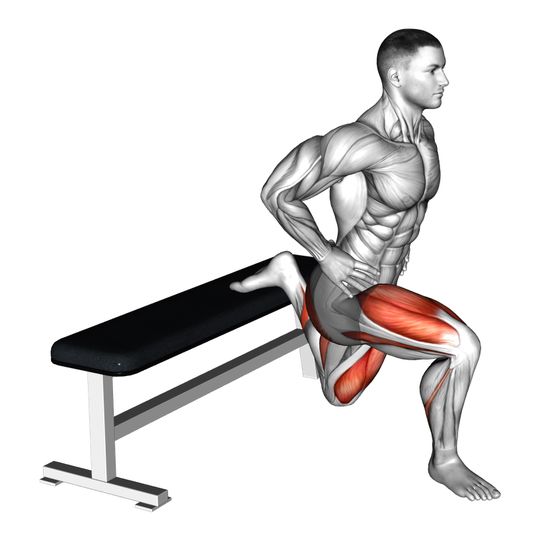
Lean the torso forward, take a longer stance, and a Bulgarian split squat becomes a glute movement loaded in the stretched position instead of the contracted one. It is the complement to a thrust rather than a copy, and the two together cover the whole range.
How to choose, by what you have#
The same shortlist, filtered by the equipment actually in front of you. Each row names the one to start with.
At home, no equipment#
Start with Glute Bridge
Start on the floor. Bodyweight glute bridges with a three-second pause at the top teach the contraction, then move to single-leg versions once two-legged reps stop being hard. Putting your shoulders on a sofa restores the full range, and a loaded backpack across your hips adds the weight back.
Dumbbells only#
Start with Dumbbell Hip Thrust
A single heavy dumbbell across the hips with your shoulders on a bench is the direct swap. Fold a towel under it so the edge does not dig in. When the heaviest dumbbell stops being challenging, switch to single-leg thrusts with a lighter one rather than trying to balance two.
Barbell and rack#
Start with Barbell Glute Bridge
No bench free is not a reason to skip it. A barbell glute bridge from the floor keeps the loading and the lockout, and it is easier to set up than the full thrust. Use a proper pad, drive through the heels, and stop the rep when your torso and thighs form a straight line.
Full gym#
Start with Machine Hip Thrust
A dedicated thrust machine first, a Smith machine thrust second, and a cable pull-through third. All three keep the horizontal resistance and the peak at lockout; the pull-through is the one to choose if your lower back has had enough for the day.
Frequently asked questions#
What is the best hip thrust alternative?
A hip thrust machine, if your gym has one, because it is the same movement with the setup problems removed. Without one, a Smith machine thrust or a barbell glute bridge keeps the loading and the hard lockout, and a cable pull-through gives you the same resistance direction while standing.
Can I do hip thrusts without a bench?
Yes. A barbell glute bridge from the floor loads the glutes the same way through a shorter range, and the lockout — the part that matters most — is identical. At home, a sofa, a low step, or a stack of cushions restores the range without a bench.
Are squats or hip thrusts better for glutes?
They train the glutes at opposite ends of the range. Squats load them hardest at the bottom, deep in hip flexion; thrusts load them hardest at full extension. Neither replaces the other, and the fastest glute progress usually comes from running one of each rather than picking a side.
How do I train glutes at home without weights?
Go unilateral and slow. Single-leg glute bridges and single-leg hip thrusts with your shoulders on a sofa produce a real stimulus from bodyweight alone, especially with a three-second hold at the top. Add a band above the knees to bring the abductors in and the sets get harder again.
Why does my lower back work harder than my glutes on hip thrusts?
Usually because the rib cage flares and the movement turns into a lumbar extension instead of a hip extension. Tuck the chin, keep the ribs down, and stop the rep when your hips are level rather than trying to arch past it. The same fix applies to every alternative here.
About the exercise you are replacing#
Barbell Hip Thrust — form, muscles worked, and common mistakes →