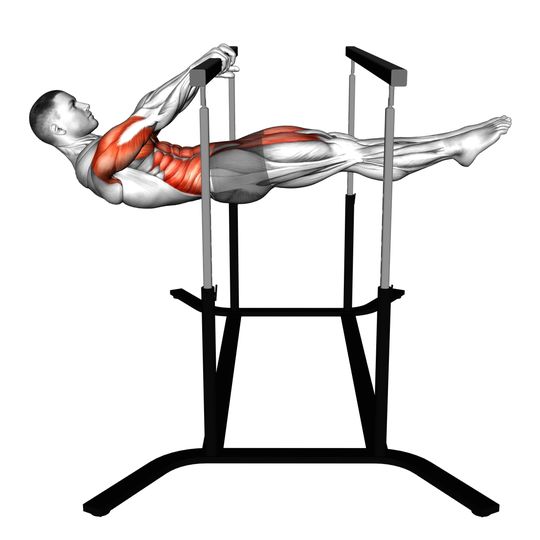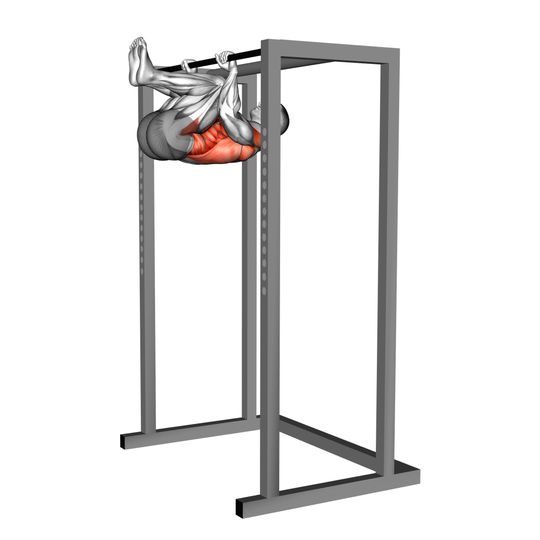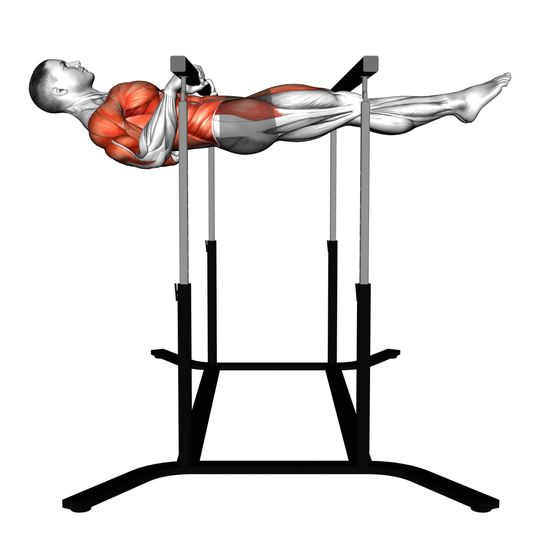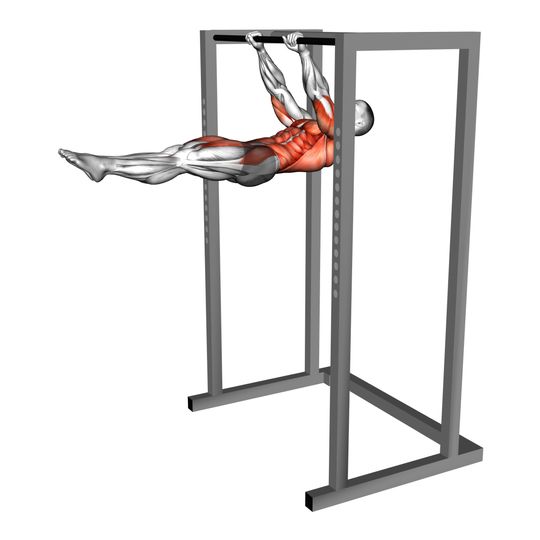


Negative Muscle Up

Also known as: Muscle Up (Negative)

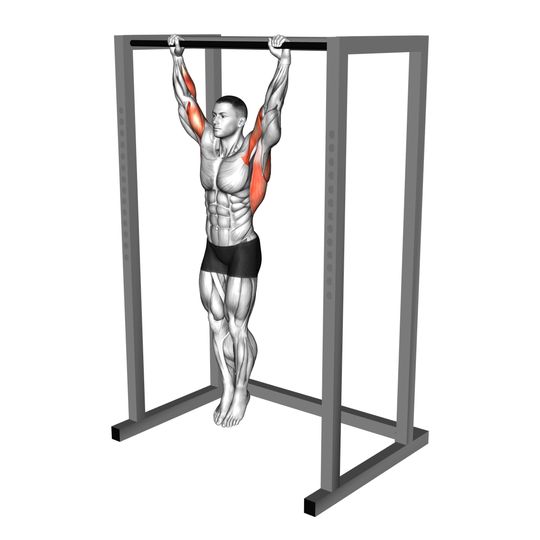
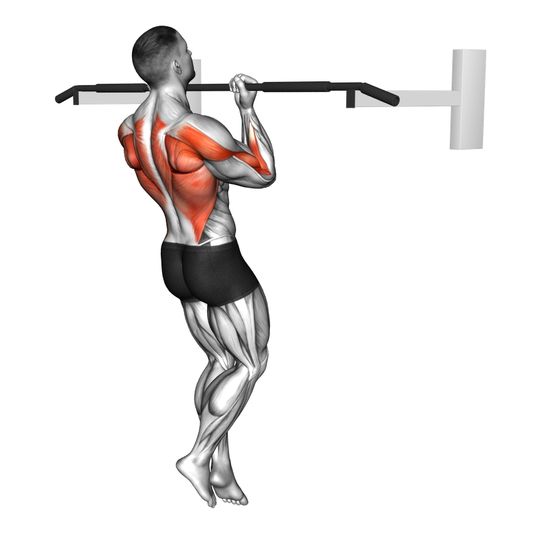
Perform a slow, controlled eccentric muscle-up by lowering from a supported top position down through the transition into a dead hang, emphasizing the lats and upper back.

How to do the Negative Muscle Up#

  1. Start in a stable top support above a pull-up bar or rings with your arms locked out and your shoulders set.
  2. Brace your core and lean slightly forward to align your body for the transition.
  3. Begin a slow, controlled descent by lowering your chest and hips over the bar while guiding the body through the dip-to-pull-up path.
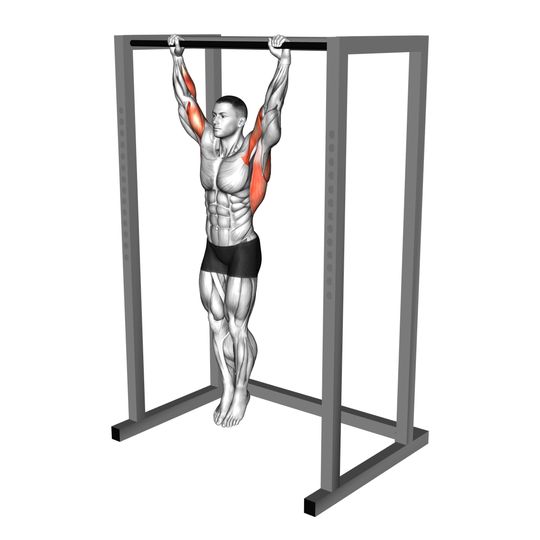
  4. Keep your movement steady as you continue lowering until your arms are fully extended in a dead hang.
  5. Maintain scapular control and even breathing throughout the eccentric; stop the descent if you lose tightness.

Muscles worked#

  • Primary: Lats (Latissimus Dorsi), Upper back (Rhomboids & Middle Trapezius), Triceps (Triceps Brachii)
  • Secondary: Biceps (Biceps Brachii), Chest (Pectoralis Major), Forearms (Forearm Flexors & Extensors (incl. Brachioradialis)), Abs (Rectus Abdominis), Front delts (Anterior Deltoid)

Common mistakes#

Track the Negative Muscle Up in Gript: your previous sets in view while you train, records detected automatically, and an estimated 1RM chart from every hard set.

Download on the App StoreGet it on Google Play
4.7 average ratingLoved worldwide

You're already in Gript

Everything on this page is also available inside the app — this article opens from Help, and the calculators live under Tools.

Frequently asked questions#

What muscles does the Negative Muscle Up work?

The Negative Muscle Up primarily works the lats, upper back, triceps. The biceps, chest, forearms, abs, front delts assist as secondary muscles — they stabilise the movement and take over when the main target fatigues. If you feel it mostly in the biceps, chest, forearms, abs, front delts, lighten the load and slow the lowering phase.

What equipment do I need for the Negative Muscle Up?

The Negative Muscle Up needs the following: Pull-up bar. Nothing beyond that is required to run the movement as described above.

Is the Negative Muscle Up suitable for beginners?

Usually not. The Negative Muscle Up is rated advanced — it asks for real technical control, and sloppy reps carry a genuine injury risk. Work through easier progressions until they feel routine before attempting it.

What are good alternatives to the Negative Muscle Up?

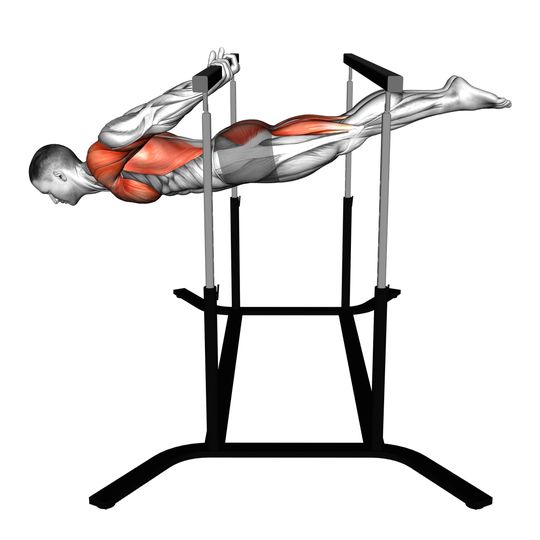
Active Hang, Back Lever, Advanced Tuck Back Lever all train the same primary muscles as the Negative Muscle Up. Pick whichever one matches the equipment in front of you.