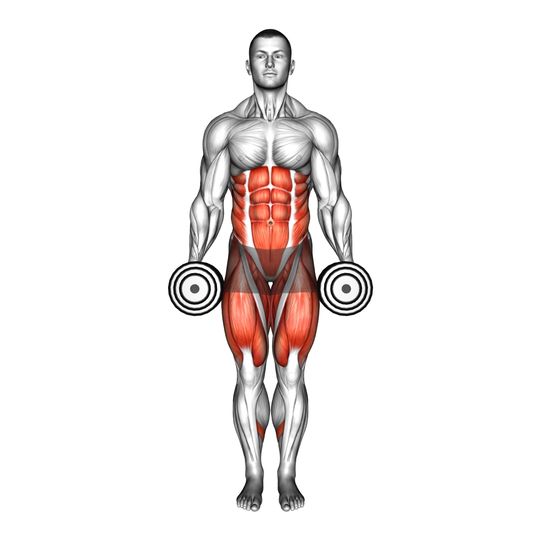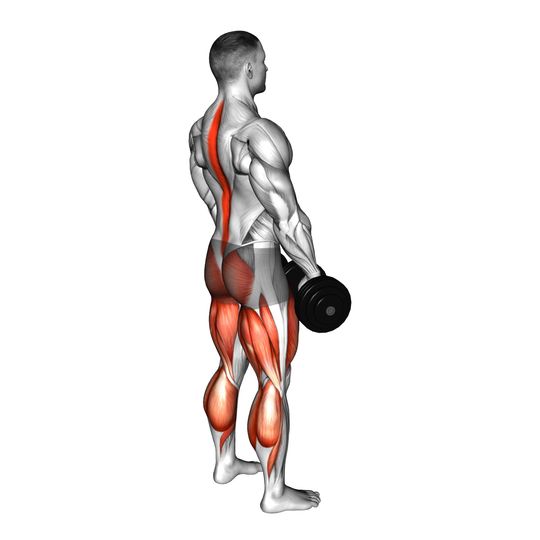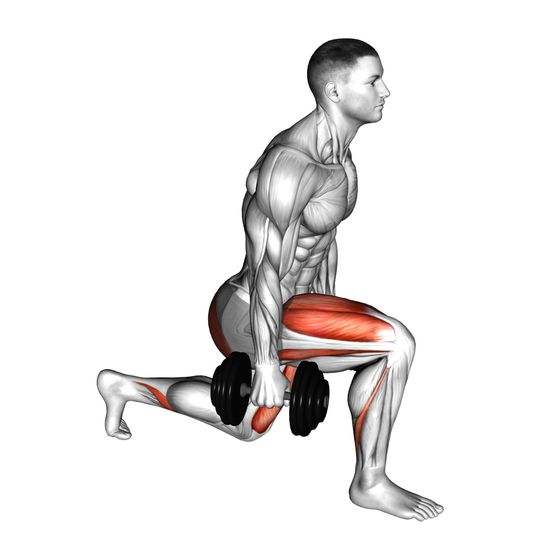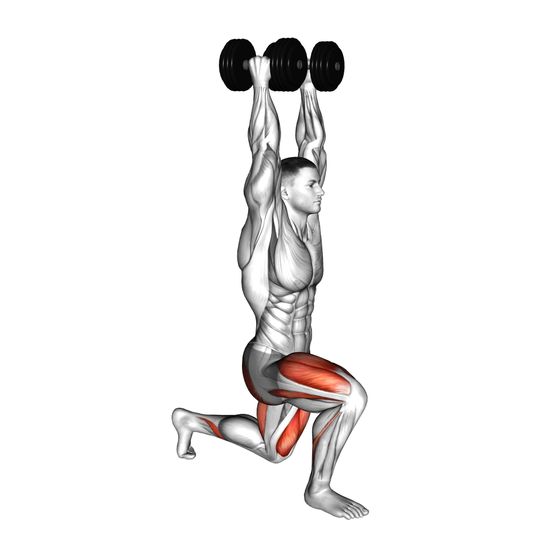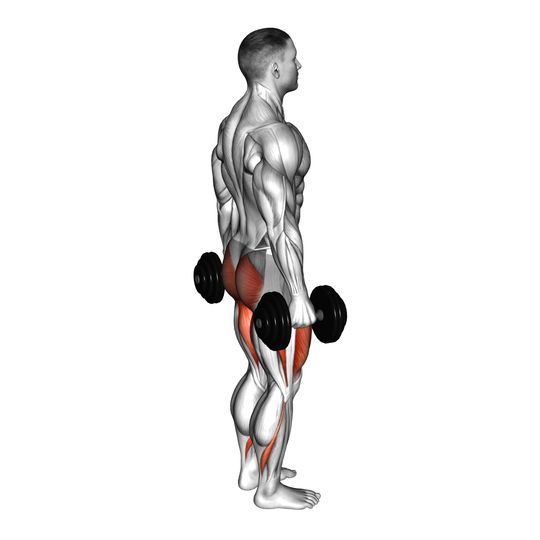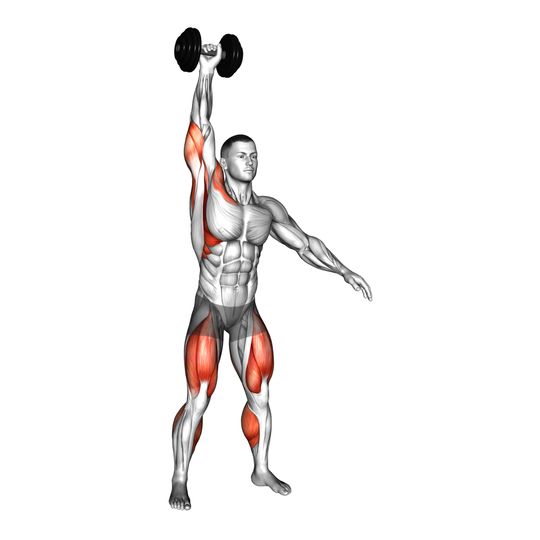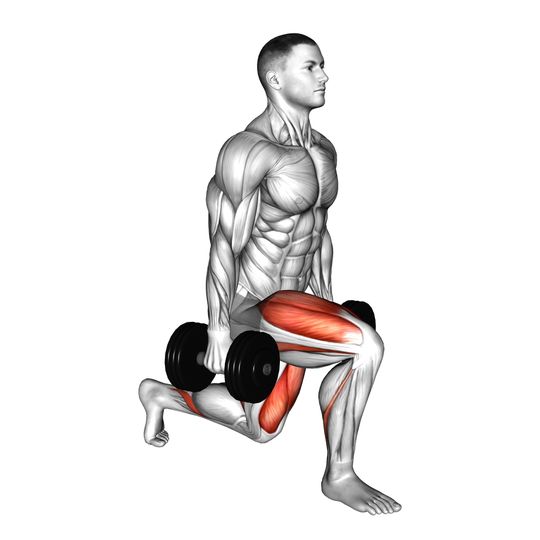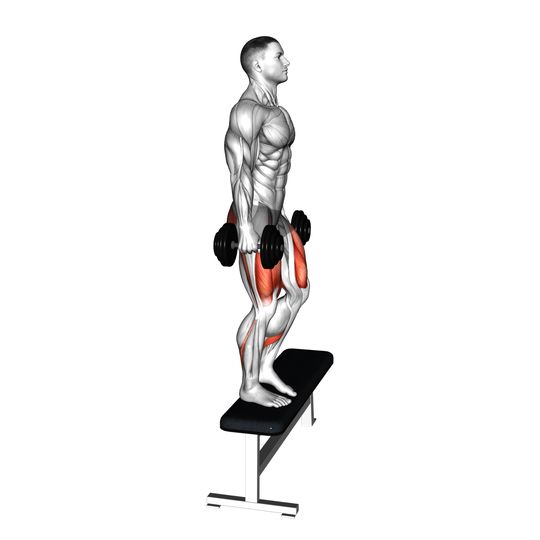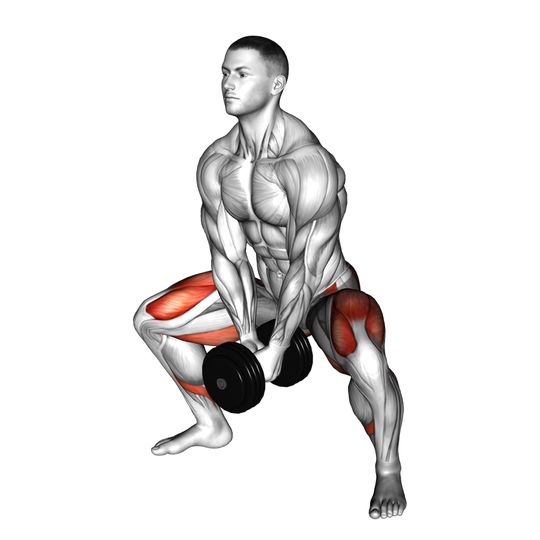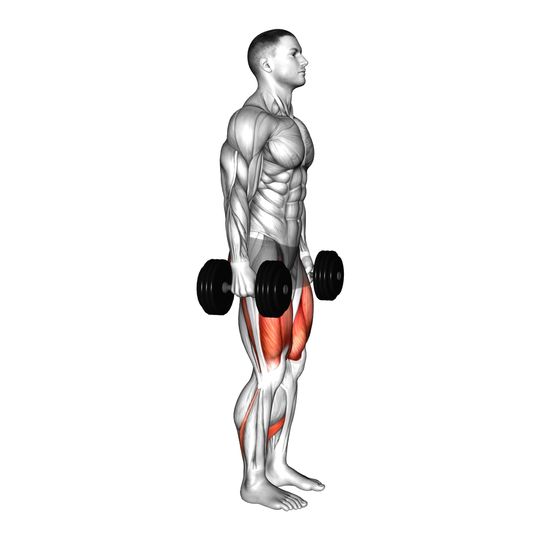


Hold a dumbbell in each hand and perform a hip-and-knee squat; this lower-body movement primarily loads the quadriceps with support from the glutes and hamstrings.
How to do the Dumbbell Squat#
- Stand with feet shoulder-width and a dumbbell in each hand at your sides; brace your core and keep a neutral head and torso.
- Push your hips back and bend your knees to begin the descent, keeping weight distributed through the middle of your feet.
- Lower until your thighs are about parallel to the floor or slightly below, maintaining an upright chest and knees tracking over your feet.
- Drive through your heels to extend the hips and knees, squeezing the glutes as you return to the starting position.
- Pause briefly at the top, then repeat for the desired number of repetitions.
Muscles worked#
The dumbbell squat is a quad and glute exercise. The quads straighten the knees against the load hanging at your sides, and the deeper you go the more they work, with the glutes taking over to extend the hips as you drive out of the bottom. Because the dumbbells hang low rather than sitting on the back, the torso stays more upright than in a barbell back squat, which keeps the quads doing the bulk of the work.
The hamstrings and adductors of the inner thigh assist the glutes with hip extension and help stabilise the knees, and the calves control the ankle as you sink. The abs and lower back hold the spine still under a load that is pulling straight down, and the forearms and traps carry the dumbbells the whole set. The grip and upper back fatigue are what usually end a heavy set before the legs do.
- Primary: Quads (Quadriceps Femoris), Glutes (Gluteus Maximus)
- Secondary: Hamstrings (Biceps Femoris, Semitendinosus & Semimembranosus), Adductors (Adductor Magnus, Longus & Brevis (Hip Adductors)), Calves (Gastrocnemius & Soleus), Abs (Rectus Abdominis), Lower back (Erector Spinae)
Common mistakes#
- Heels coming off the floor.
- Knees collapsing inward on the way down.
- Torso leaning forward and chest dropping.
- Not descending to at least parallel.
Why it works#
The dumbbell squat is the squat you can do anywhere with the least setup: no rack, no spotter, and no bar to balance. The load hangs at the sides, so it stays close to your centre of gravity and the pattern feels natural to beginners in a way a barbell on the back often does not. That makes it the right first squat for most people and a reliable staple for anyone training at home.
For experienced lifters it works as a high-rep leg builder that spares the spine. There is no compression from a bar on the shoulders, the upright torso keeps the lower back out of it, and you can drop the weights the moment the set gets ugly. Pair it with a hip hinge and you have a complete lower body session from a single pair of dumbbells.
Sets, reps and setup#
Three to four sets of 10-15 reps with 90 seconds of rest, twice a week. The load is limited by what you can hold, so the exercise suits moderate to high reps rather than heavy triples. If you can do fifteen with the heaviest dumbbells you own, move to a goblet or split squat variation instead of chasing thirty reps.
- Setup
- Stand with the feet shoulder width and the toes turned out slightly, a dumbbell in each hand at the sides with the palms facing in. Brace, push the hips back and the knees out, and sit down until the thighs are at least parallel with the heels flat. Drive up through the whole foot and stand tall, keeping the shoulders back so the weights do not pull you forward.
- Progression
- Add reps to fifteen, then move up a dumbbell size and drop to ten. When you run out of heavier dumbbells, slow the lowering to three seconds, add a pause at the bottom, elevate the heels on a plate for more quad range, or stand on low boxes so the dumbbells can travel deeper.
Variations#
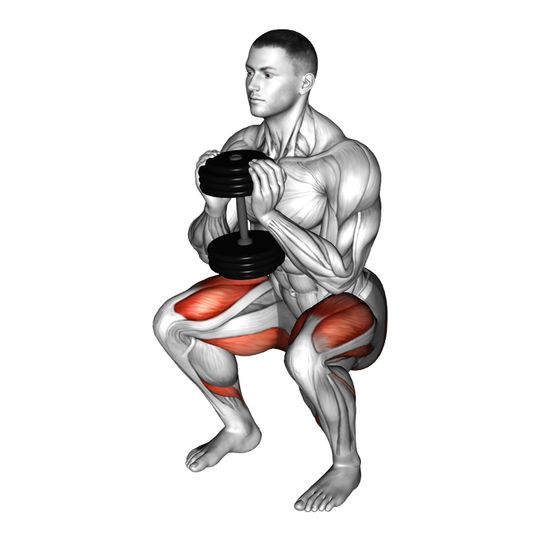
- Goblet Squat Holds a single dumbbell at the chest, which acts as a counterbalance and makes it easier to stay upright and squat deep.
- Barbell Squat The heavy version with the bar on the back, for when dumbbells no longer offer enough load.
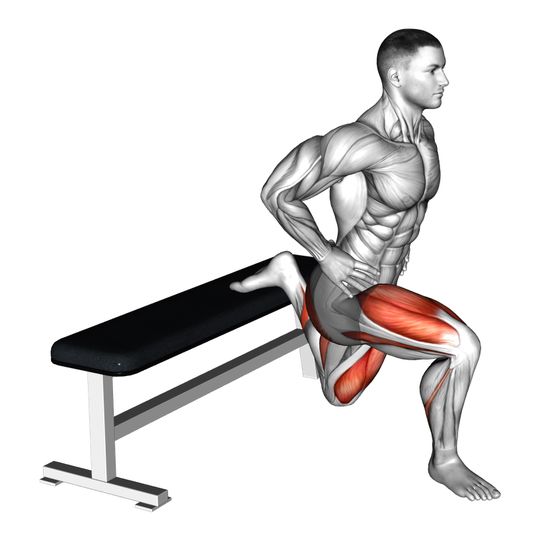
- Dumbbell Bulgarian Split Squat Works one leg at a time with the rear foot elevated, doubling the effective load per leg with the same dumbbells.
- Dumbbell Lunge Steps into a split stance with the same grip, adding balance demands and more glute work.
- Barbell Front Squat The barbell squat closest in feel to a dumbbell squat, with an upright torso and a quad focus.
Dumbbell squat vs goblet squat#
The goblet squat holds one dumbbell at the chest, which shifts the centre of mass forward and forces a tall torso. That makes it easier to hit depth with good form and ideal for teaching the pattern, but the load is capped by what you can hold in front of your chest, usually far less than two dumbbells at the sides.
The dumbbell squat with a weight in each hand lets you carry roughly twice as much, so it is the better choice once you need more load. The trade-off is that the weights pull the shoulders down and forward and grip becomes a limit. Learn the movement with the goblet, then move to two dumbbells when the single weight gets light.
Common questions#
What muscles does the dumbbell squat work?
The quads and glutes do most of the work, with the hamstrings and adductors assisting hip extension. The abs and lower back brace the spine, the calves stabilise the ankles, and the forearms and traps hold the dumbbells for the whole set.
Are dumbbell squats as effective as barbell squats?
For building the quads and glutes at moderate loads, yes. The limit is how much you can hold; once a pair of heavy dumbbells is easy for fifteen reps, a barbell squat or a split squat variation is needed to keep progressing.
How heavy should dumbbell squats be?
Heavy enough that ten to fifteen reps is hard but every rep reaches at least parallel with the heels down. Most beginners start around 8 to 12 kilograms per hand and progress to 20 or 25 within a few months.
Where should I hold the dumbbells when squatting?
At your sides with straight arms and palms facing in, keeping the shoulders pulled back so the weights hang close to the legs. Holding them on the shoulders is an option once the sides position becomes a grip issue, but it raises the centre of mass and demands more upper back strength.
How deep should you go in a dumbbell squat?
At least until the thighs are parallel to the floor, and deeper if your hips and ankles allow it without the heels lifting or the back rounding. The dumbbells hanging at the sides can limit depth for taller lifters; standing on two low boxes solves that.