
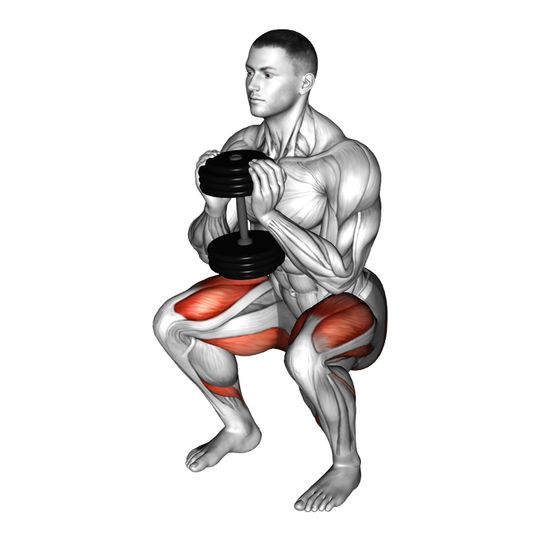
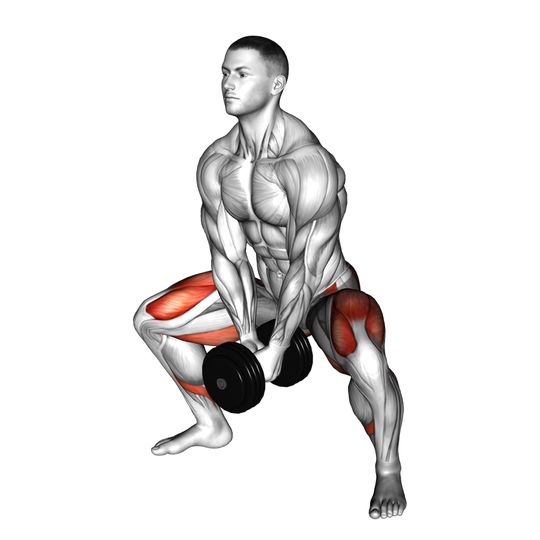
The goblet squat and the dumbbell sumo squat are the two squats you can do with a single dumbbell, and gyms are full of people alternating between them without a clear idea of why. The goblet squat holds the weight at your chest with the feet around shoulder width and the torso upright. The sumo squat takes a wide stance with the toes turned out and lets the dumbbell hang between your legs.
Those two changes — where the weight sits and how wide the feet go — decide almost everything. The goblet squat is a deep, quad-dominant squat that trains the upper back and core as hard as the legs. The sumo squat is a shallower, wide squat that pulls in the adductors and glutes and takes the upper body out of it. Sumo squat vs goblet squat is a question of which muscles you want, not which is harder.
| Factor | Goblet Squat | Dumbbell Sumo Squat |
|---|---|---|
| Stance | Shoulder width, toes slightly out | Wide, toes turned out 30–45 degrees |
| Weight position | Dumbbell held at the chest | Dumbbell hanging between the legs |
| Main target | Quads and glutes | Quads, glutes, and adductors |
| Depth | Deep — hips below the knees for most people | Shallower — limited by the wide stance |
| Upper body demand | High — upper back and core hold the weight | Low — arms hang, grip is the limit |
| Mobility demand | Ankles and hips for depth | Hip external rotation and adductor flexibility |
| Best for | Learning to squat, quad growth, warm-ups | Inner thigh and glute emphasis, knee-friendly volume |
Goblet Squat vs Dumbbell Sumo Squat: muscles worked#
Goblet Squat
- Primary: Quads, Glutes
- Secondary: Hamstrings, Adductors, Abs, Upper back
Dumbbell Sumo Squat
- Primary: Quads, Glutes, Adductors
- Secondary: Hamstrings, Calves, Abs
Muscles worked#
Both are quad and glute exercises, and the sumo squat vs goblet squat muscles worked difference lives in the stance. The goblet squat's shoulder-width feet and forward-held weight let the knees travel far over the toes, which loads the quads through a long range, and the glutes finish the rep out of the bottom. Holding the dumbbell at the chest also makes the upper back and abs work the whole set.
The sumo squat's wide, toes-out stance puts the adductors and glutes in a stretched position at the bottom and asks them to help extend the hip, so the inner thighs and hips do noticeably more than in the goblet squat. The quads still work, but through a shorter knee range. With the dumbbell hanging there is almost nothing for the upper back to do, which is why the sumo squat feels like a leg exercise and the goblet squat like a full-body one.
Depth, stance, and mobility#
The goblet squat is the deeper squat. The counterweight at the chest lets you sit straight down between the heels without falling back, and most people reach a position with the hamstrings covering the calves. That depth stretches the quads under load and is the main reason the goblet squat is used to teach the squat pattern and to build quads without a barbell.
The sumo squat is limited by the stance. Wide feet and turned-out toes stop the hips descending as far before the pelvis runs out of room, so most people finish around parallel. In exchange it demands hip external rotation and adductor flexibility rather than ankle mobility, which suits lifters whose ankles will not let them squat deep, and it stretches the inner thighs in a way a normal squat never does.
Loading and joint stress#
Both are limited by the dumbbell rather than the legs. The goblet squat stops when you can no longer lift the weight to your chest or hold it there without the upper back giving out — usually around 30–40 kilograms — and the sumo squat stops when your grip cannot hold the dumbbell for a full set. Neither is a maximal strength exercise; both are volume and technique tools.
On the joints, the goblet squat puts more through the knees because they travel further forward and the range is longer, which is what grows quads and what makes very deep goblet squats less comfortable for irritated knees. The sumo squat keeps the shins more vertical, so it is the more knee-friendly option, but the wide stance stresses the hips and groin, and forcing the toes out further than the hips allow is how people strain an adductor.
Programming and how to use both#
Use the goblet squat as a teaching tool, a warm-up, and a quad volume exercise. Two sets of 10 with a light dumbbell before barbell squats grooves depth and bracing; 3–4 sets of 10–15 with a heavy dumbbell is a legitimate quad session on its own. When the biggest dumbbell in the gym is easy for 15, slow the lowering to three seconds or pause in the bottom.
Use the sumo squat as the inner thigh and glute complement: 3 sets of 12–20 with a full pause at the bottom, either after the goblet squat or on a day when the knees need a break from deep knee bend. A goblet vs sumo squat choice does not have to be made — goblet first for depth and quads, sumo second for adductors and glutes covers the whole lower body with one dumbbell.
The verdict#
Pick the goblet squat if you want the squat that teaches you to squat, builds the quads through a full range, and trains the upper back and core at the same time. It is the better general-purpose lift, the better warm-up for barbell work, and the one beginners should learn first.
Pick the sumo squat if you want more inner thigh and glute work, if your ankles or knees will not let you squat deep, or if you are adding a second squat pattern to a dumbbell-only program. It is shallower and less demanding on the upper body, which makes it a good high-rep volume exercise. Most dumbbell programs are better with both than with either alone.
Frequently asked questions#
Is the sumo squat or goblet squat better for glutes?
The sumo squat, slightly. The wide stance and turned-out toes put the glutes and adductors in a stretched position and make them extend the hip from a wider base. The goblet squat still works the glutes hard out of the bottom, especially at full depth, but shares more of the load with the quads and upper back.
What muscles does a sumo squat work vs a goblet squat?
Both work the quads and glutes. The sumo squat adds the adductors as a main mover and uses the hamstrings and calves for stability. The goblet squat trains the quads through a longer range and adds the upper back and abs, which hold the dumbbell at the chest. The sumo squat does very little for the upper body.
Can I do a sumo squat with the dumbbell held like a goblet?
Yes, a goblet-style sumo squat is a common hybrid. You keep the wide, toes-out stance and hold the dumbbell at the chest, which brings the upper back and core back into the exercise and helps the torso stay upright. It is a good option if grip is the limit on the hanging version.
Which is better for beginners, goblet squat or sumo squat?
The goblet squat. The weight at the chest acts as a counterbalance that makes it easier to sit deep with a straight back, and it teaches the same pattern you will later use with a barbell. Add the sumo squat once the goblet squat is comfortable, as a second variation for the hips and inner thighs.
Should I do goblet squats and sumo squats in the same workout?
Yes, they pair well because they emphasise different muscles. Do goblet squats first for 3–4 sets of 10–15 while your upper back is fresh, then sumo squats for 3 sets of 12–20 with a pause at the bottom. Together they cover most of what a barbell squat does with one dumbbell.