
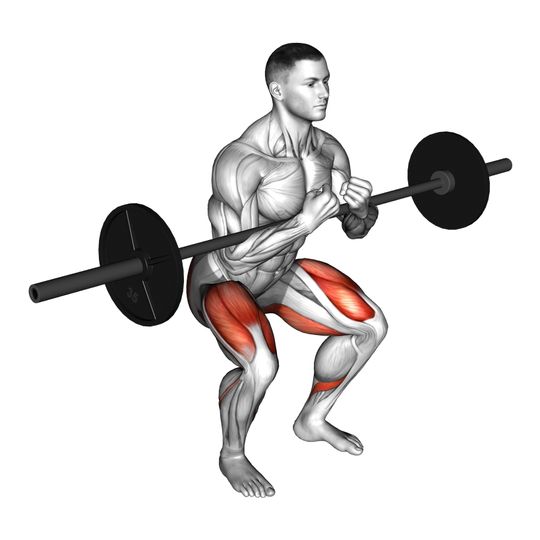
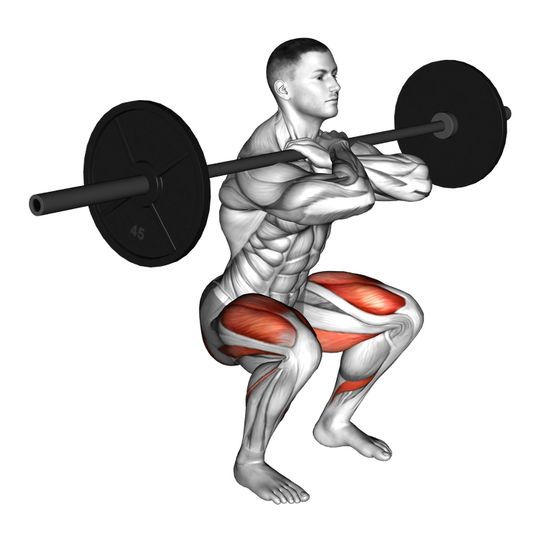
The Zercher squat and the front squat both carry the bar in front of the body, both keep the torso upright, and both hammer the quads and the trunk. The difference is where the bar sits: across the front of the shoulders in a front squat, or cradled in the crook of the elbows in a Zercher. Moving the bar down a few inches changes the exercise more than most lifters expect.
The front squat is the more established lift, a weightlifting staple with a clear technique and a high ceiling for load. The Zercher squat is the odd one out, a strongman-flavoured variation that trades load for a brutal core and upper back demand and needs no rack.
| Factor | Zercher Squat | Barbell Front Squat |
|---|---|---|
| Bar position | Crook of the elbows, in front of the sternum | Front rack, across the shoulders and collarbone |
| Main target | Quads and glutes, heavy trunk and upper back demand | Quads and glutes, with the upper back holding the rack |
| Mobility needed | Little — no wrist or shoulder flexibility needed | Wrist, shoulder and thoracic mobility for the rack |
| Typical load | Roughly 70–80% of a back squat | Roughly 80–85% of a back squat |
| Limiting factor | Elbow discomfort, arm and upper back fatigue | Rack position and quad strength |
| Setup | From the floor or a low rack, no rack needed | Squat rack at chest height |
| Best for | Core and upper back strength, no-rack training | Quad size, clean carryover, heavy loading |
Zercher Squat vs Barbell Front Squat: muscles worked#
Zercher Squat
- Primary: Quads, Glutes
- Secondary: Adductors, Hamstrings, Abs, Upper back, Lower back
Barbell Front Squat
- Primary: Quads, Glutes
- Secondary: Adductors, Hamstrings, Abs, Upper back, Lower back
Muscles worked#
Both are quad-dominant squats. The forward bar position forces an upright torso and lets the knees travel well forward, which loads the quadriceps through the full descent, while the glutes and adductors drive the hips forward out of the bottom. In the front squat the upper back and spinal erectors work hard to keep the rack from collapsing forward, and the abs brace throughout.
The Zercher squat carries the same quad and glute work and adds a layer on top. Because the bar sits lower and further from the spine, the upper back and erectors fight a longer lever to stay tall, the abs brace against a load pressing into the midsection, and the biceps and forearms hold the bar isometrically for the entire set. It feels like a front squat and a heavy carry at the same time.
Bar position and mobility#
The front rack is the front squat's biggest hurdle. Holding the bar across the shoulders with the elbows high demands wrist extension, shoulder external rotation and enough thoracic mobility to keep the chest up under load. Lifters who cannot get there use a cross-arm grip or straps, which gets less stable as the weight climbs.
The Zercher squat asks for none of that. You hook the bar in the elbows, squeeze the arms together, and squat. It suits lifters with wrist, elbow or shoulder problems that rule out a rack position, and it can be set up from the floor by deadlifting the bar to the thighs and rolling it into the elbows.
Loading and what limits each#
The front squat goes heavier. Most lifters can front squat around 80–85 percent of their back squat, limited by quad strength and the rack position, both of which improve steadily. It is a genuine strength lift that carries over directly to the clean.
The Zercher squat usually lands around 70–80 percent of a back squat, and it is often limited before the legs give out: the arms tire, the upper back rounds, or the elbows hurt. That makes it a poor test of maximal strength and a good builder of the trunk and upper back, because the weak link is what it trains. Lifters who round on heavy deadlifts often fix the problem faster with Zerchers than with direct core work.
Programming and how to use both#
Program the front squat as a main quad lift: 3–5 sets of 3–6 for strength or 4–8 for size, once or twice a week, progressed like any barbell lift. It works as the primary squat for lifters who want quad development without the lower back cost of a heavy back squat.
Program the Zercher squat as a secondary or seasonal lift: 3–4 sets of 5–8, once a week, in a block where core and upper back strength are the priority or when a rack is not available. A sensible pattern is front squats as the main squat with Zerchers second on a lower day, or a four to eight week Zercher block once or twice a year.
The verdict#
Pick the Zercher squat if you want a squat that also trains the trunk and upper back hard, if wrist or shoulder issues make a front rack impossible, if you train without a rack, or if you compete in strongman. It will not be your heaviest squat, but the upright, braced position transfers to deadlifts, carries and anything that punishes a rounded back.
Pick the front squat if quad size and squat strength are the goals, if you do the clean or want carryover to it, or if you want a lift with a clear technique and a long runway for load. Most lifters keep the front squat as the primary movement and use the Zercher squat as a change of stimulus rather than choosing one permanently.
Frequently asked questions#
Is the Zercher squat better than the front squat?
Better for core and upper back strength and for lifters who cannot hold a front rack, yes. Better for quad size and maximal squat strength, no. The front squat goes heavier, progresses more predictably and carries over to the clean; the Zercher squat trades some load for a much larger trunk demand.
What is the difference between a Zercher squat and a front squat?
Bar position. The front squat rests the bar across the front of the shoulders in a rack position; the Zercher squat holds it in the crook of the elbows in front of the sternum. Both keep the torso upright and target the quads, but the Zercher's lower, more forward bar means more work for the upper back, abs and arms and less weight on the bar.
Zercher squat vs back squat — which is better?
The back squat is the better strength and mass builder because it allows far more weight. The Zercher squat is more quad and core focused, easier on the shoulders and lower back, and does not need a rack. Most lifters keep Zerchers as a secondary movement rather than a replacement.
How much should I Zercher squat compared to my front squat?
Expect around 85–95 percent of your front squat, or roughly 70–80 percent of your back squat, for the same rep range. If your Zercher matches or beats your front squat, your front rack is probably the weak point rather than your legs.
Do Zercher squats hurt your arms?
At first, yes — a bare bar in the crook of the elbows is uncomfortable, and bruising is common in the first weeks. It fades as the skin adapts. A bar pad, a folded towel or long sleeves solve it, and squeezing the hands together reduces how much the bar digs in.