

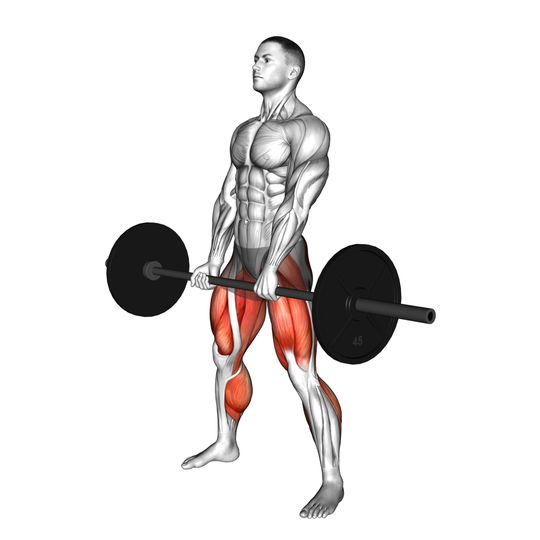
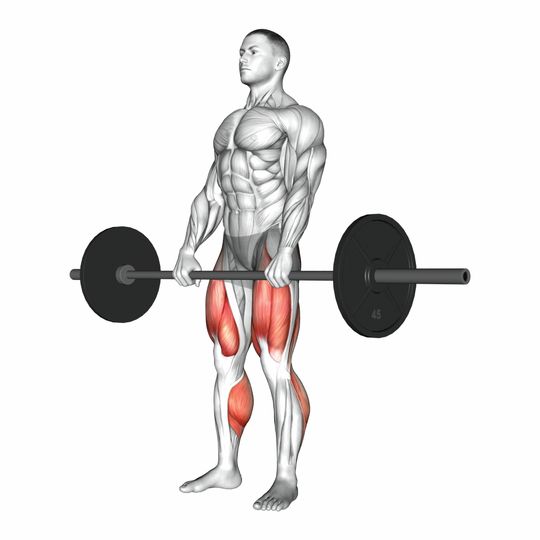
Sumo and conventional are the two competition-legal ways to deadlift, and lifters argue about them as if one were cheating. Neither is. They are two solutions to the same problem — lifting a bar from the floor to lockout — that distribute the work differently across the hips, back, and legs.
Conventional uses a stance about hip width with the hands outside the legs, a more horizontal back, and a longer bar path. Sumo uses a wide stance with the hands inside the legs, a more upright torso, and a shorter bar path. Which is stronger depends on your proportions; which is better for you depends on what you want the deadlift to train.
| Factor | Barbell Sumo Deadlift | Barbell Deadlift |
|---|---|---|
| Stance | Wide, toes out, hands inside the knees | Hip width, hands outside the knees |
| Torso angle at start | More upright | More horizontal |
| Main target | Quads, glutes, adductors, hips | Hamstrings, glutes, spinal erectors, back |
| Bar path | Shorter | Longer |
| Hardest point | Breaking the bar off the floor | Passing the knees to lockout |
| Best for | Long torso, good hip mobility, back-sensitive lifters | Long arms, strong back, building the posterior chain |
Barbell Sumo Deadlift vs Barbell Deadlift: muscles worked#
Barbell Sumo Deadlift
- Primary: Glutes, Quads, Adductors
- Secondary: Hamstrings, Lower back, Traps, Forearms, Abs
Barbell Deadlift
- Primary: Glutes, Hamstrings, Lower back
- Secondary: Quads, Traps, Upper back, Forearms, Abs
Muscles worked#
Both stances train the glutes, hamstrings, spinal erectors, lats, traps, and grip. The conventional deadlift loads the back and hamstrings more, because the horizontal torso puts the spinal erectors under greater demand and the hips start higher and further from the bar.
The sumo deadlift loads the quads and adductors more, because the wide stance and upright torso put the knees in a deeper bend at the start and ask the inner thighs to drive the knees out. Back demand is lower, which is the main reason lifters with sensitive lower backs move to sumo.
Mechanics and the sticking point#
Conventional is hardest at and just above the knee: the bar has to travel a long way, and the back has to hold its angle while the hips come through. The start off the floor is usually manageable because the hips can rise and the quads help.
Sumo is hardest off the floor. The wide stance means the hips are already close to the bar and the knees are bent deeply, so breaking the plates from the ground takes patience and a slow build of tension. Once the bar is moving, the shorter path and upright torso make lockout comparatively easy — which is why sumo pulls often look slow at the bottom and fast at the top.
Which stance is stronger?#
Neither, universally. Competition data shows roughly equal totals across the two, with individual lifters often differing by 5–10 percent depending on leverage. Long arms and a short torso favour conventional; a long torso, short arms, and mobile hips favour sumo. Most lifters simply find one feels natural and pull more with it after a few months of practice.
The claim that sumo is easier is wrong in the general case. The bar travels a shorter distance, but the start is harder and the position demands hip mobility many lifters do not have. It is easier for some bodies and harder for others, which is exactly what you would expect from two different lever systems.
Which to train#
Powerlifters should test both and compete with the stronger one, using the other as a variation. Everyone else should pick based on goal and joints. Conventional builds more back and hamstring and is the better choice for general strength and posterior chain development; sumo keeps the back happier and brings the quads and adductors in.
Whichever you pick, learn the other too. Alternating stances across blocks keeps the hips and back healthy and exposes weaknesses the main stance was hiding. And neither stance excuses a rounded back — the upright sumo start still has to be braced, and the horizontal conventional back still has to be flat.
The verdict#
Pull conventional if you want the deadlift to build your back and hamstrings, if you have long arms, or if you are new to the lift — it is the simpler position to learn and it carries over to more.
Pull sumo if your lower back is the limiting factor, your hips are mobile, or your proportions favour an upright torso. If you compete, pull whichever adds more kilos to the bar. In every case, run the other stance as a variation for a block each year.
Frequently asked questions#
Is sumo deadlift easier than conventional?
No, not in general. The bar travels a shorter distance, but the start off the floor is harder and the position demands more hip mobility. Some lifters pull more sumo because of their proportions, others pull more conventional. Across large groups of competitors the two stances produce roughly equal totals.
Which deadlift is better for the lower back?
Sumo, usually. The upright torso reduces the demand on the spinal erectors and the shear on the lumbar spine, which is why many lifters with back complaints switch to it. Conventional loads the back more heavily — a benefit for building it, a cost when it is already irritated.
Does sumo deadlift work the quads?
Yes, much more than conventional. The wide stance puts the knees in a deeper bend at the start, so the quads and adductors contribute heavily to breaking the bar off the floor. It is still a hip-dominant lift, but the quad involvement is real and one reason sumo pullers often have strong squats.
Should I switch from conventional to sumo?
Try it for a block of 6–8 weeks if your conventional pull stalls at the knees, your lower back is the first thing to fatigue, or your torso is long relative to your arms. Give it real practice before judging — sumo feels awkward for most people at first. If it ends up within 5 percent of your conventional after a block, keep both and alternate.
Which stance should beginners learn first?
Conventional. It teaches the hip hinge and back bracing that transfer to every other lift, and it requires less specific hip mobility. Add sumo once the conventional pull is competent, or start with sumo if a coach identifies proportions or a back issue that clearly favour it.