
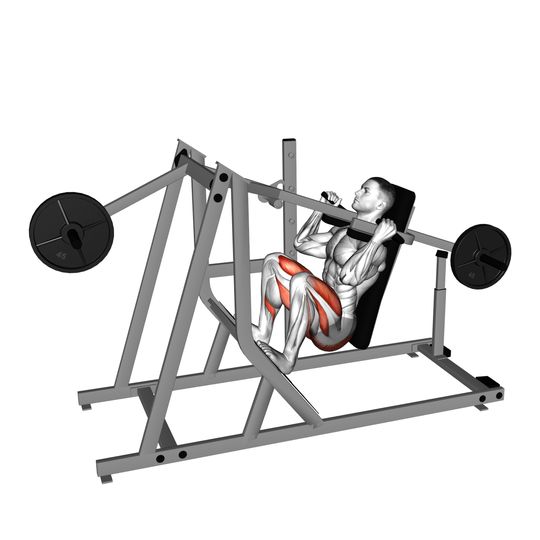
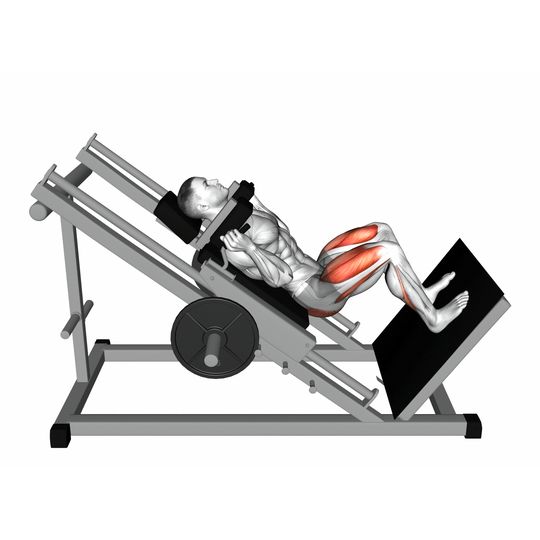
The pendulum squat and the hack squat are the two machines that come closest to a heavy free squat without a bar on your spine. Both put your shoulders under a pad, support your back, and let you drop into a deep knee bend with the torso upright. The difference is how the machine moves. A hack squat runs on a fixed track at roughly 45 degrees, so the resistance is the same at every point in the rep. A pendulum squat hangs from a pivot and swings through an arc, which changes how heavy the weight feels from bottom to top.
For most lifters the choice is decided by access, because a pendulum squat machine is rare outside specialty gyms while a hack squat is standard. But if you have both, the pendulum squat vs hack squat question has a real answer: they load the quads differently, reach different depths, and one is considerably harder per plate.
| Factor | Pendulum Squat | Hack Squat |
|---|---|---|
| Main target | Quads, glutes and adductors at depth | Quads, glutes assisting |
| Resistance curve | Lighter at the bottom, heavier as you stand | Constant through the whole rep |
| Range of motion | Deepest — knees pass far over the toes | Deep, limited by heel lift and track angle |
| Spinal loading | Low, back on the support | Low, back on the sled |
| Knee stress | High — most forward knee travel of any machine | High, adjustable with foot position |
| How heavy it goes | Fewer plates for the same effort | Heavy, familiar loading |
| Best for | Deep quad work close to failure | Heavy sets, squat carryover, availability |
Pendulum Squat vs Hack Squat: muscles worked#
Pendulum Squat
- Primary: Quads, Glutes
- Secondary: Adductors, Hamstrings, Calves
Hack Squat
- Primary: Quads
- Secondary: Glutes, Adductors
Muscles worked#
Both machines are quad-dominant knee extension exercises. All four heads of the quadriceps drive the rep, the glutes contribute at the bottom where the hips are most flexed, and the adductors help the knees track out of the hole. Because the back is supported on both, the spinal erectors and core do very little, which is why lifters use these machines when the lower back is tired from squats or deadlifts.
The pendulum squat pushes the glutes and adductors harder because it takes the hips and knees deeper. The arc lets the knees travel far forward while the torso stays upright, so the bottom position has the hamstrings on the calves and the hips bent past ninety degrees. The hack squat keeps the hips a little more extended at the bottom, which biases the quads slightly more; feet higher on the platform brings in more glute, feet lower keeps it on the quads.
The arc and the resistance curve#
On a hack squat the sled slides on rails, so a plate weighs the same at every point of the rep. The hardest position is the bottom, where the knees are most bent and the quads are longest, so a heavy hack squat set is limited by how strong you are two inches out of the hole.
On a pendulum squat the weight arm swings around a pivot, which unloads the weight slightly at the bottom and adds it back as you stand. That matches how strong the legs are at each joint angle: you can get out of the deepest position, and the rep gets harder toward the top where you are strongest. The pendulum squat therefore lets you take the quads to genuine failure through the whole range rather than at one sticking point, which is why it feels harder than a hack squat with the same plates.
Depth, knees and loading#
The pendulum squat wins on depth. The forward knee travel lets almost anyone sink to a full squat with the torso vertical, and that stretched bottom position under load is the stimulus most associated with quad growth. It is also the most knee-demanding machine in the gym for the same reason, and a patellar tendon that already complains on hack squats will complain more here.
The hack squat goes heavier on the plate count and is easier to progress, because the constant resistance is familiar and the numbers translate from session to session. Depth is limited by the point where the heels lift off the platform, which depends on the track angle and your ankle mobility. Set the feet slightly higher if the heels rise or the knees ache.
Programming and how to use both#
Both belong in the same slot: the second quad movement after a barbell squat, or the main quad exercise on a machine day. The hack squat suits heavier sets of 6–10, where its constant resistance and carryover to the barbell squat — same upright torso, same knee travel — make it a good strength builder, and volume work at 10–15 reps when the back needs a rest from free squats.
The pendulum squat is best used for 8–15 reps taken close to failure, with a three-second lowering phase and full depth on every rep, because the arc makes the eccentric easy to control and lets you finish sets you would stall on elsewhere. Add a plate when every set hits the top of the range at the same depth; if depth shrinks as the weight goes up, you progressed too fast. If you have both machines, alternate them across training blocks rather than running them back to back.
The verdict#
Pick the pendulum squat if you have access to one, your knees are healthy, and quad size is the goal. The deeper range, the extra glute and adductor work at the bottom, and a resistance curve that lets you push through the whole rep make it the most productive machine squat there is per set.
Pick the hack squat if you want heavier, more familiar loading, if your knees prefer a slightly shorter range, or simply because it is the one your gym has. It does everything a second quad movement needs to do; the pendulum squat is an upgrade in feel, not a different category of exercise.
Frequently asked questions#
Is the pendulum squat better than the hack squat?
For quad growth, slightly. The pendulum squat takes the knees and hips deeper and its arc unloads the bottom of the rep, so you can take the quads to failure through the full range instead of stalling out of the hole. The hack squat is close and easier to progress. The gap is about how the sets feel more than about one machine building muscle the other cannot.
Why is the pendulum squat so much harder than the hack squat?
The arc adds resistance as you stand, so the top of the rep stays hard instead of getting easier, and the machine lets you go deeper, which makes every rep more work. Because the resistance changes through the range you also cannot compare the plates on a pendulum squat machine with a hack squat — expect to use fewer for the same effort.
Which is safer for the knees, pendulum squat or hack squat?
The hack squat, marginally. Both send the knees forward under load, but the pendulum squat sends them further, so it puts more stress on the patellar tendon. Lifters with knee complaints usually tolerate the hack squat better with the feet set slightly higher and a shorter range. For healthy knees the pendulum squat is not dangerous, just demanding.
Can I do pendulum squats and hack squats in the same workout?
You can, but there is little reason to. They train the same muscles through almost the same movement, so doing both mostly doubles the knee stress without adding much stimulus. Use one for a training block and switch to the other in the next, or pair either with a leg press or a lunge that loads the legs differently.
What is a pendulum squat machine and why is it so rare?
A pendulum squat is a plate-loaded machine where the carriage swings around a pivot instead of sliding on a straight track, so the weight moves through an arc. It is expensive and takes up a lot of floor space, so most commercial gyms buy a hack squat and a leg press instead. You are most likely to find one in a specialty or powerlifting gym.