

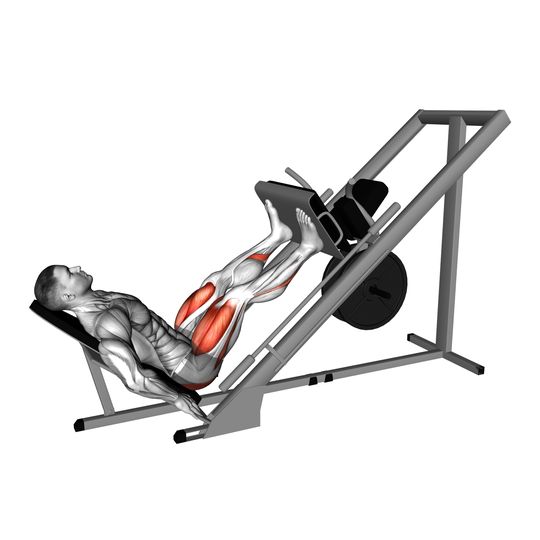
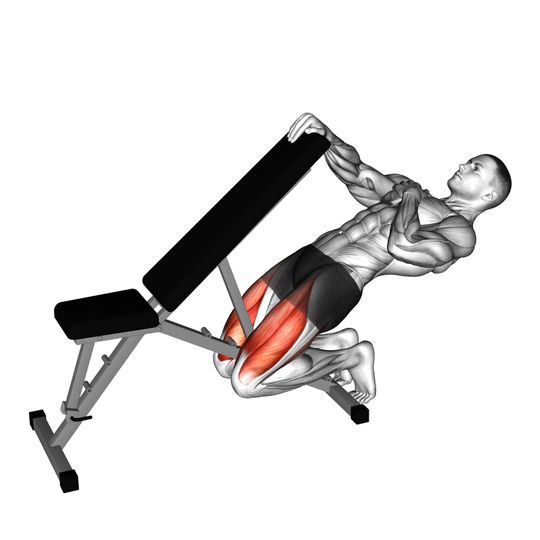
The hack squat is a squat with the balancing removed. Your back is braced against a pad, the path is fixed, and the foot position sits far enough forward that the knees travel a long way — which is why it hammers the quads at loads a free-weight squat would never allow.
Substituting it means deciding which of those properties you need most. Other sled and machine work keeps the support and the load. Front squats keep the upright, quad-biased mechanics but reintroduce balance. Single-leg and bodyweight variations keep the knee travel and give up the weight entirely.
Every hack squat alternative, and what it changes#
1. Leg Press#
MachineQuadsGlutes
The most available substitute in almost any gym. Same guided knee-dominant press against a supported back, just seated instead of standing, so your torso does even less and the hips contribute a little more. Load it heavy and it covers the hack squat’s job directly.
2. Pendulum Squat#
MachineQuadsGlutes
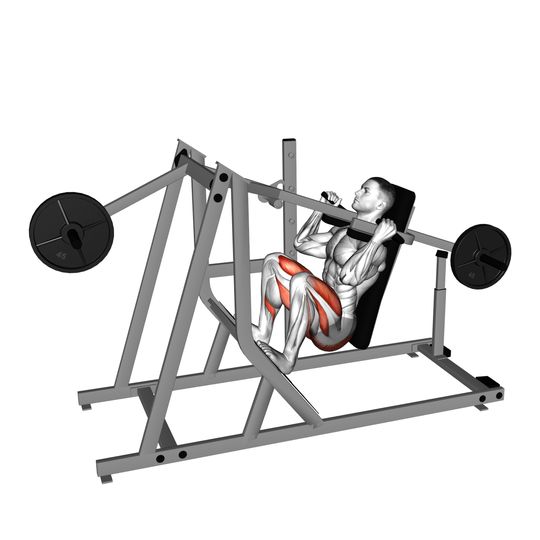
The nearest relative: standing, back-supported, and travelling through an arc that keeps the quads loaded top to bottom. If anything it is harder than the hack squat, because the strength curve does not hand you a rest position at the top of the rep.
3. Barbell Hack Squat#
BarbellQuads
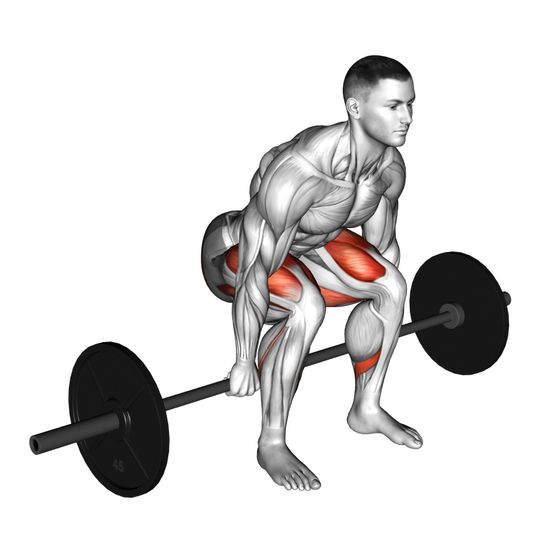
The original version of the lift — a barbell deadlifted from behind the calves, which produces the same forward knee travel and quad emphasis. No machine required, but your grip and upper back cap the load long before your quads do.
4. Barbell Front Squat#
BarbellQuadsGlutes
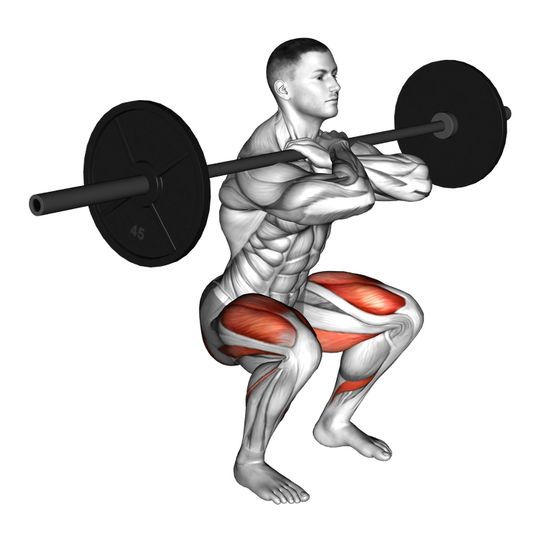
The best free-weight match for the mechanics. A front-loaded bar forces the torso upright and drives the knees forward, so the quads take the load the way they do on the sled. Balance and thoracic position become the limiter, so the weight drops sharply.
5. Smith Machine Squat#
Smith machineQuadsGlutes
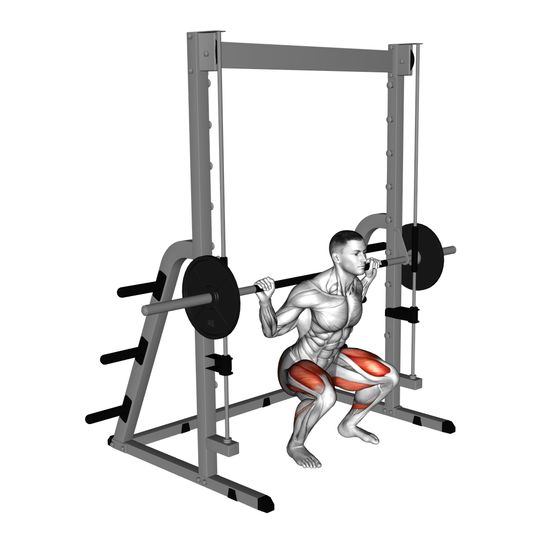
A fixed bar path lets you set your feet forward and lean back against the bar, which reproduces the hack squat’s supported, quad-biased position more closely than any free squat. Widely available, and easy to load in small jumps.
6. Belt Squat#
MachineQuadsGlutes
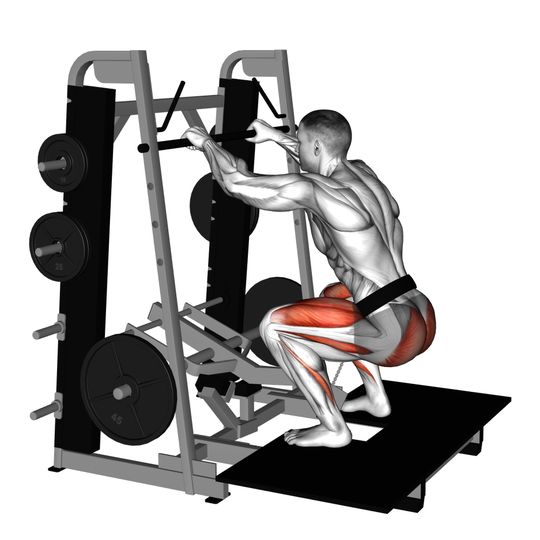
Keeps the heavy knee-dominant loading while taking the spine out entirely, since the weight hangs from the hips. Choose it over the others when the reason you liked the hack squat was that it let you train legs hard without loading your back.
7. Dumbbell Bulgarian Split Squat#
DumbbellBenchQuadsGlutes
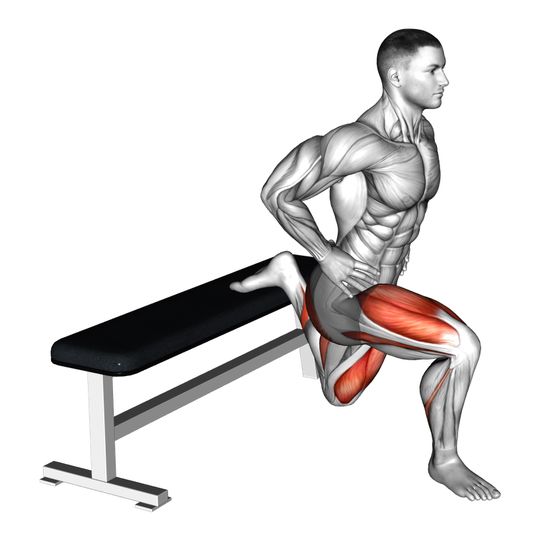
Single-leg work that generates a hard quad and glute set from a light pair of dumbbells, with a deep stretch on the front leg. It gives up the support and the heavy load, and gives back range of motion and a large stimulus per unit of weight.
8. Sissy Squat#
Quads
Almost pure knee extension under bodyweight: the hips stay extended while the knees travel forward, which puts the quads under a stretch nothing else here matches. Demanding on the knees, so build up slowly — but it needs no equipment at all.
How to choose, by what you have#
The same shortlist, filtered by the equipment actually in front of you. Each row names the one to start with.
At home, no equipment#
Start with Sissy Squat
Bodyweight can still bias the quads if you keep the hips extended and let the knees travel. Sissy squats do that most directly; build up to them with slow split squats and hold a support until the position feels stable.
Dumbbells only#
Start with Dumbbell Bulgarian Split Squat
Dumbbells cannot match sled loading, so trade weight for leverage. Bulgarian split squats on a bench produce a hard quad set from moderate dumbbells; a heel-elevated goblet squat is the closest upright, quad-biased two-legged option.
Barbell and rack#
Start with Barbell Front Squat
Front squats are the mechanical match — upright torso, forward knees, quads leading. If wrist or shoulder mobility makes the front rack unpleasant, the barbell hack squat gives you the same knee travel with the bar behind you instead.
Full gym#
Start with Leg Press
Any guided squat pattern will do the job. Pendulum squat is the closest, leg press the most available, Smith machine squat the best compromise when both are taken — set your feet forward and lean into the bar to recreate the angle.
Frequently asked questions#
What is the closest alternative to a hack squat?
A pendulum squat, then a leg press. Both keep the machine’s defining features — a supported torso, a fixed path, and heavy quad-dominant loading. The pendulum squat matches the standing position and strength curve more closely; the leg press is far easier to find.
Is the leg press a good substitute for the hack squat?
Yes, and it is usually the practical choice. It trains the same quads and glutes with the same supported, guided loading. It involves slightly more hip contribution and slightly less knee travel, so if quads are the priority, push your foot placement lower on the platform.
What replaces the hack squat with only a barbell?
Front squats, or the barbell hack squat the machine was named after. Front squats force the upright torso and forward knee travel that make the machine so quad-dominant; the barbell hack squat reproduces the knee travel directly but is limited by grip and upper-back strength.
Can I build quads without any machines?
Yes, by trading load for leverage and range. Bulgarian split squats, deep split squats, and sissy squats all put the quads under high tension using bodyweight or a light dumbbell. Slow eccentrics and a pause in the stretched position matter more than the number on the weight.
Hack squat vs front squat — which builds more quad?
The hack squat, for most people, because it lets the quads work to failure without the bar position, balance, or core strength ending the set first. Front squats build more overall strength and transfer better to other lifts, which is a different goal from maximum quad stimulus.