


The 5×5 workout program is the most proven way for a new lifter to get strong: five sets of five reps on a handful of heavy barbell lifts, three days a week, adding weight every session. No exotic exercises, no periodization spreadsheets — just squat, press, pull, and progress. This guide covers the full program: the routine, starting weights, progression rules, what to do when you stall, and when it's time to move on.
What 5×5 is and why it works#
5×5 is built on three ideas that have survived every training fad since the 1960s. First, heavy compound lifts: squats, deadlifts, presses, and rows train the most muscle with the fewest exercises, and five reps is heavy enough to build strength without turning every set into a max attempt. Second, high frequency: you squat three times a week, which for a beginner means three chances a week to practice the movement and trigger adaptation. Third, simple linear progression: you add a small amount of weight every single workout. That last part is just progressive overload in its purest form — and it works because beginners recover fast enough to be slightly stronger every 48 hours.
The trade-off is specificity. 5×5 makes you strong at five lifts. It does less for arms, shoulders, and conditioning — which is fine for the six to twelve months it typically lasts.
The classic A/B routine#
The program alternates two workouts, A and B, on three non-consecutive days — Monday, Wednesday, Friday is the standard. Week one runs A/B/A, week two runs B/A/B, and so on.
- MonA
- WedB
- FriA
Workout A
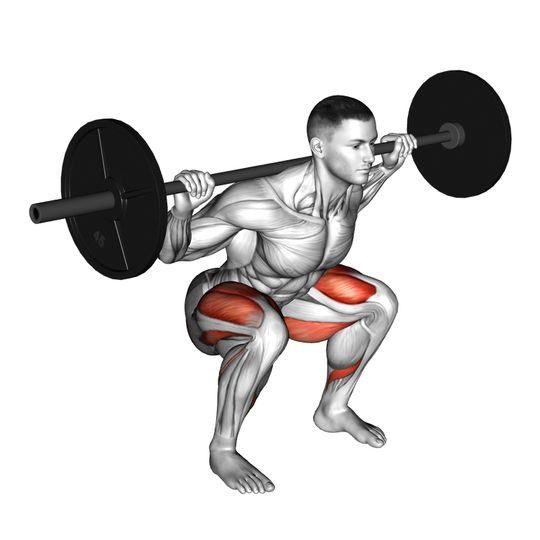 5×5
5×5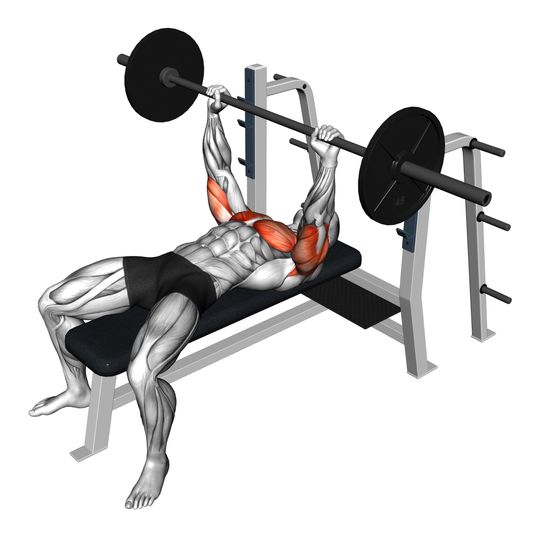 5×5
5×5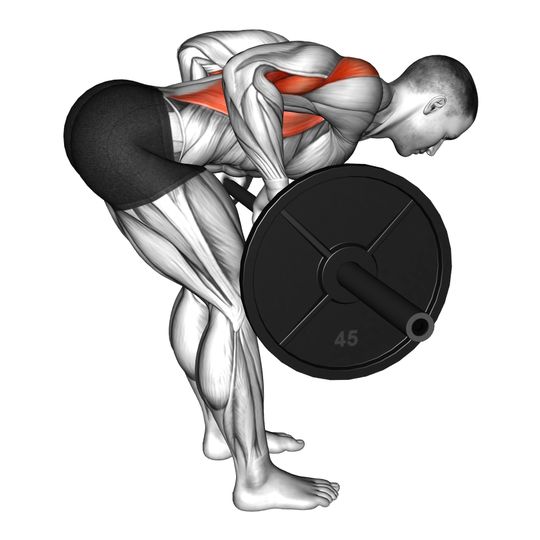 5×5
5×5
Workout B
- 5×5
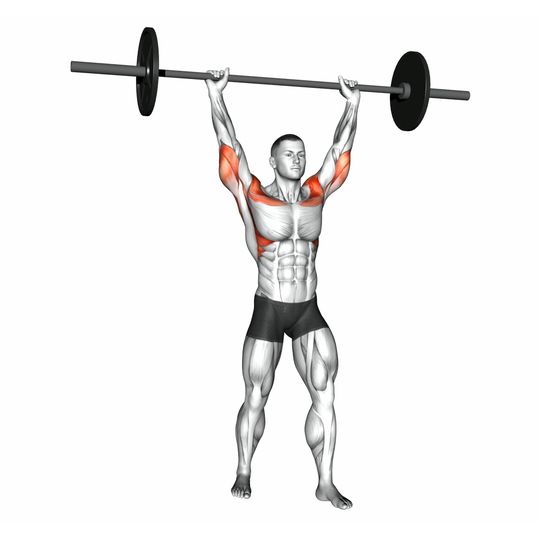 5×5
5×5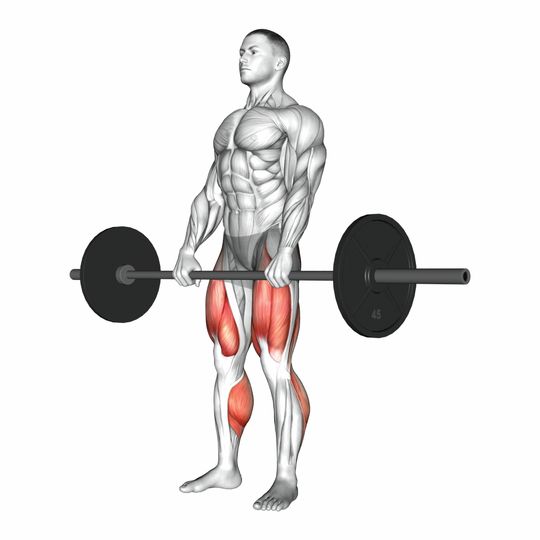 1×5
1×5
The deadlift is one heavy set of five, not five sets. It shares so much work with the squat that five heavy sets of both, three days a week, buries most lifters in fatigue. One honest top set is enough to drive it up.
Rest 90 seconds to three minutes between sets — longer as the weights get heavy. If you finished all five sets of five easily, you rested enough; if the last set fell apart, rest more next time. Set the routine up once in a tracker (Gript's routines handle the A/B alternation) so you never have to think about what today's workout is.
Starting weights: start humble#
The single most common way to ruin 5×5 is starting too heavy. The program adds weight every session, so whatever you start with, you will be lifting far more within two months — the early weeks exist to groove technique and build momentum, not to prove anything.
- Never barbelled before: start with the empty bar (20 kg / 45 lb) on squat, bench, and press. Start the deadlift and row around 40 kg / 95 lb, since light plates leave the bar too low to pull from.
- Some lifting experience: start around 50% of your one-rep max — no higher. If you don't know your maxes, estimate them from a recent hard set with the one-rep max calculator.
Yes, the first two weeks will feel too easy. That is by design. Lifters who start humble run linear progression for months; lifters who start at 80% stall in three weeks.
The progression rules#
The entire program is two rules:
- Add 2.5 kg (5 lb) per session on squat, bench press, overhead press, and row — every time you complete all 25 reps.
- Add 5 kg (10 lb) per session on the deadlift, since it is one set and progresses faster, until it slows down — then drop to 2.5 kg jumps.
That is roughly 7.5 kg a week on the squat. It sounds trivial until you do the math: three months of successful sessions adds around 90 kg to your squat. The math only works if the jumps stay small, which is why fractional plates are worth owning — especially for the overhead press, where 2.5 kg is a big relative jump. A plate calculator saves the mental arithmetic of loading odd totals mid-session.
Warm-up sets matter more as the weight climbs#
With the empty bar, warming up barely matters. At a 100 kg work weight, walking up cold is how you get hurt or miss reps you had in you. The standard approach: two sets of five with the empty bar, then progressively heavier singles, doubles, and triples up to the work weight — roughly 40%, 60%, and 80% of the day's target. Keep warm-up reps low so they don't eat into your work sets. The warm-up calculator generates the exact ramp for any target weight, and Gript can add those sets to your workout automatically.
What to do when you stall#
A stall is failing to get all 25 reps at the same weight. It will happen — first on the overhead press, usually last on the deadlift. Handle it in three stages:
1. Repeat the weight#
Failing once means nothing. Bad sleep, a rushed warm-up, a long day — any of it can cost you two reps. Keep the weight the same next session and try again. Most stalls end here.
2. Deload 10%#
If you fail the same weight three sessions in a row, take 10% off the bar and work back up. The lighter weeks let accumulated fatigue clear, and you'll usually blow past the old sticking point on the way back.
3. Switch the rep scheme#
When a lift stalls again after a deload, 5×5 has done its job for that lift. Drop to 3×5, which cuts volume and buys more linear progress, and later 1×5 with back-off sets. When even that stalls, the lift is ready for weekly rather than per-session progression.
When to move on from 5×5 — and to what#
Run 5×5 for as long as it works, which is typically six to twelve months. The signal to leave isn't boredom — it's that multiple lifts have been through repeat–deload–reduce cycles and per-session progression is dead. At that point you're an intermediate: you need more volume, more exercise variety, and weekly progression. Natural next steps are an upper/lower split with double progression, or a push/pull/legs split if physique goals are taking over. Whatever comes next, keep the log from your 5×5 run — those numbers are the baseline everything after is measured against.
Who should not run 5×5#
- Lifters with strength-limiting injuries. Squatting heavy three days a week is unforgiving of a cranky back or knees. Rehab first, or pick a program with more exercise flexibility.
- Intermediate and advanced lifters. If you already squat 1.5× bodyweight for reps, per-session jumps will stall within weeks. You need weekly or monthly progression, not a beginner program.
- Pure physique-focused lifters. 5×5 builds muscle, but low-rep barbell work is an inefficient route to bigger arms and shoulders. A hypertrophy-oriented split serves that goal better.
- Anyone who won't track their lifts. The program is nothing but numbers going up. If you don't record every session, you can't run it — a dedicated 5×5 tracking app makes the whole thing automatic.
For everyone else — new lifters who want to get strong without overthinking it — 5×5 remains the standard for a reason. Start light, add weight every session, and don't stop until the bar makes you.