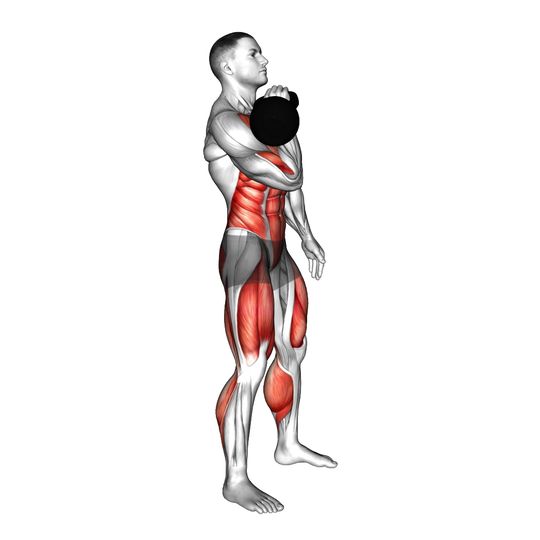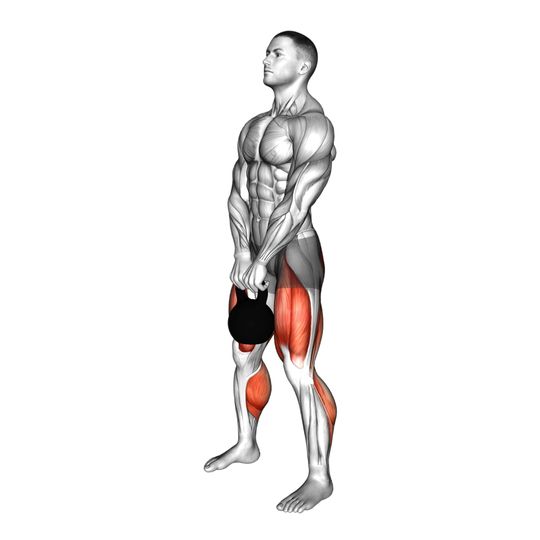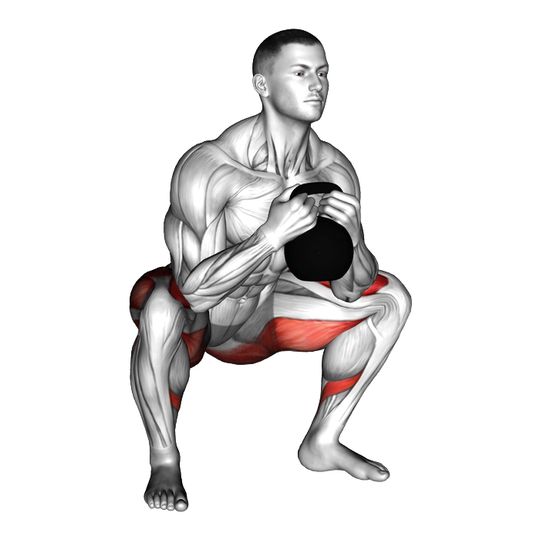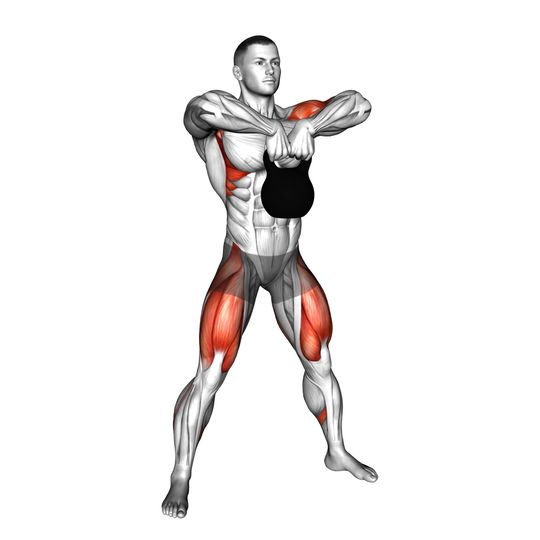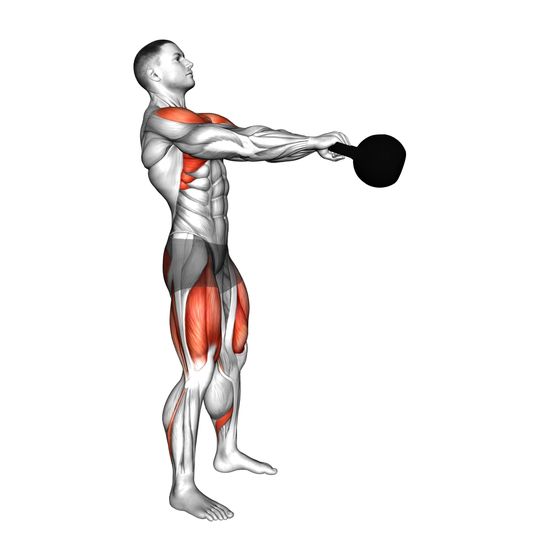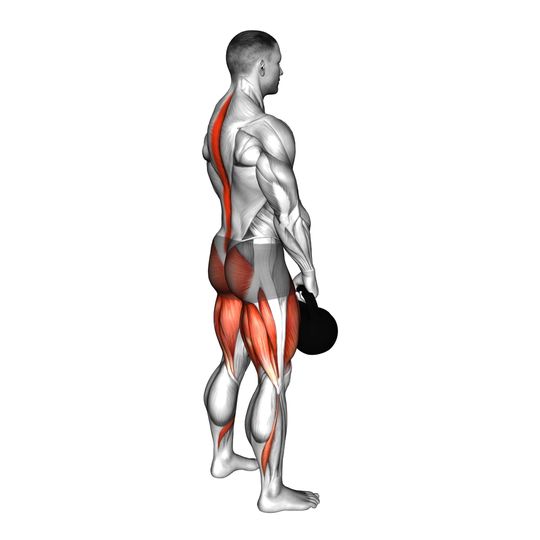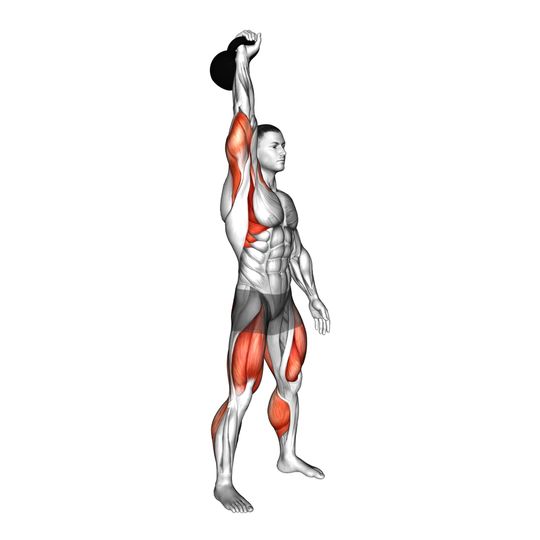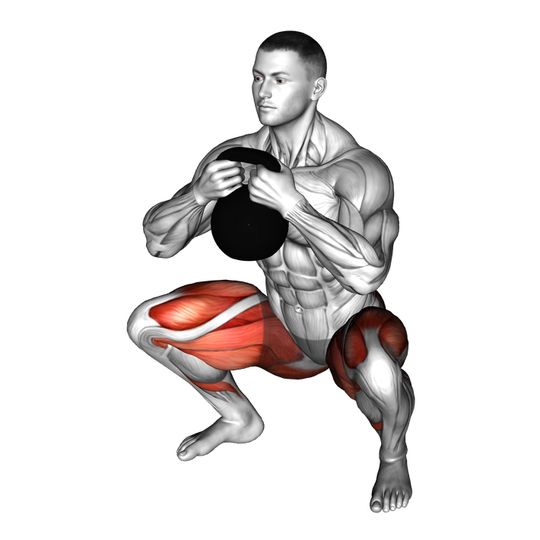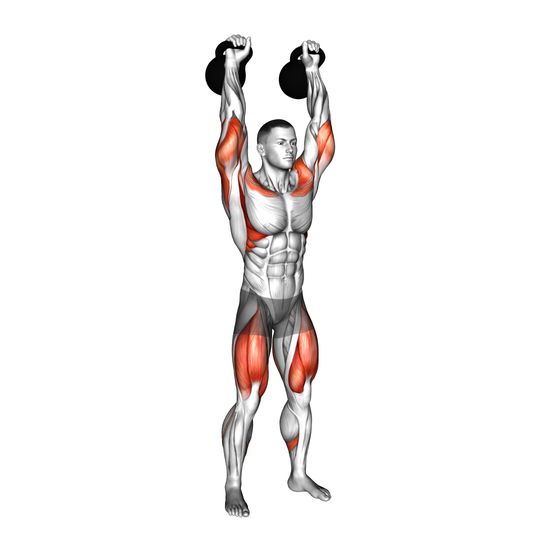


A deadlift performed with a single kettlebell set beside one foot and lifted like a suitcase, so the whole load sits on one side of the body. The hips, hamstrings, and glutes drive the lift exactly as they would in a two-handed deadlift, but the obliques and lats also have to work to stop the torso tipping toward the weight. That extra anti-side-bend demand makes it a forgiving first hinge for beginners and an easy way to train the core without adding a separate exercise.
How to do the Kettlebell Suitcase Deadlift#
- Set a kettlebell on the floor next to one foot, roughly in line with your ankle.
- Stand with your feet hip-width apart, brace your core, and pull your shoulders back and down.
- Push your hips back and bend your knees slightly to reach down and take the handle with the near hand.
- Keep your shoulders level and your spine neutral, resisting the pull of the weight toward that side.
- Drive through your whole foot and extend your hips and knees to stand tall, keeping the kettlebell close to your leg.
- Squeeze your glutes at the top without leaning back or letting your torso tilt.
- Hinge at the hips and lower the kettlebell back to the floor under control.
- Complete all reps on one side, then switch to the other.
Muscles worked#
- Primary: Glutes (Gluteus Maximus), Hamstrings (Biceps Femoris, Semitendinosus & Semimembranosus)
- Secondary: Quads (Quadriceps Femoris), Lower back (Erector Spinae), Obliques (External & Internal Obliques), Forearms (Forearm Flexors & Extensors (incl. Brachioradialis)), Traps (Trapezius)
Common mistakes#
- Letting the torso tip sideways toward the kettlebell instead of keeping the shoulders level.
- Rounding the lower back to reach the handle rather than hinging and bending the knees.
- Squatting the weight up with the hips low instead of hinging at the hips.
- Letting the kettlebell drift away from the leg, which loads the lower back.
- Training only the stronger side instead of matching reps on both.