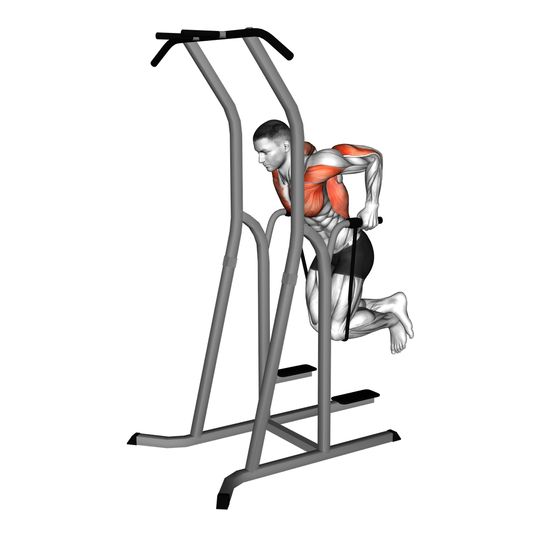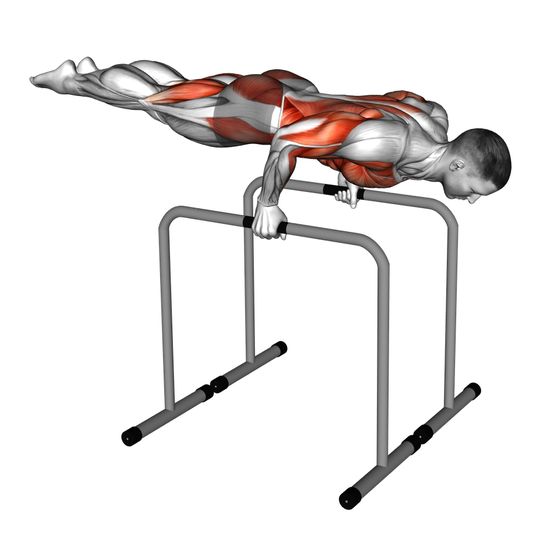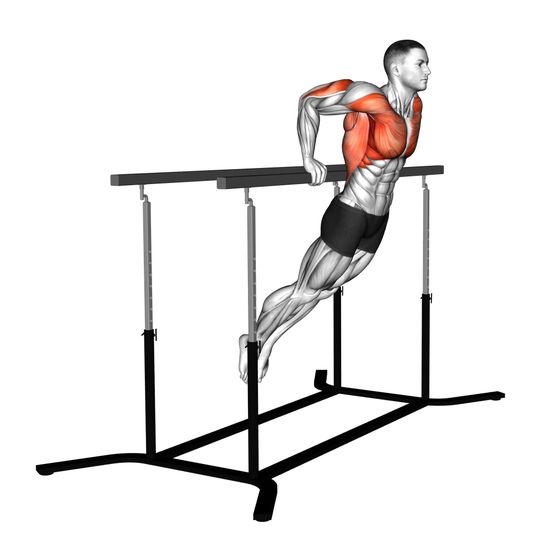


A bodyweight vertical press on parallel bars that extends the elbows to primarily load the triceps. You perform a controlled lowering and pressing motion with a slight forward torso angle.
How to do the Dip#
- Grip the parallel bars and hold yourself up with your arms straight and shoulders stacked over your hands.
- Tilt your chest forward slightly and bend the elbows to lower your body under control until you feel tension in the shoulders.
- Press through the palms to straighten the arms and return to the top position, keeping the core stable.
- Repeat for the planned number of repetitions.
Muscles worked#
Dips train the triceps and the chest together, and the split between them is decided by your torso angle. With the body upright and the elbows tucked behind you, all three heads of the triceps straighten the arms against your full bodyweight, which is why dips build the back of the arm faster than any pushdown. Lean the chest forward and let the elbows drift out, and the lower chest, the sternal part of the pectoralis major, takes over the bottom of the rep.
The front delts work through the descent and the drive out of the bottom, and they are the joint most at risk if you drop too deep too fast. The lower traps and serratus anterior stabilise the shoulder blades against the bars, and the lats help lift you out of the hole. The core stops the legs swinging. A hard set is felt in the arms, the chest, and the front of the shoulder in roughly that order.
- Primary: Triceps (Triceps Brachii), Chest (Pectoralis Major)
- Secondary: Front delts (Anterior Deltoid)
Common mistakes#
- Bouncing out of the bottom instead of lowering under control.
- Allowing the shoulders to round or shrug at the bottom.
- Flaring the elbows excessively wide.
- Stopping short of a full depth or not fully extending the arms on ascent.
Why it works#
The dip is the upper body squat. It moves the whole body through a long range at the shoulder and elbow, it is loaded by bodyweight from day one and by a belt from there on, and it builds pressing strength that carries into the bench press and overhead press. Few exercises put as much load through the triceps with the shoulders in a strong position, and the chest gets a stretch at the bottom that the bench press never provides.
Progression is simple and almost unlimited. Once bodyweight dips reach fifteen or so, a dip belt lets you add weight in small increments for years, which is why weighted dips are a staple for lifters who want big arms and a strong bench. They also need nothing but a pair of bars.
Sets, reps and setup#
Three to four sets of 6-12 reps with two to three minutes of rest, once or twice a week. Anyone who cannot do six clean reps should use an assisted dip machine, a band, or slow negatives until they can. Once fifteen bodyweight reps are easy, add weight and stay in the 6-10 range; sets of twenty build endurance more than muscle.
- Setup
- Bars roughly shoulder-width or a little wider. Start at the top with the arms locked and the shoulders down, not shrugged. Lower under control until the upper arm is at least parallel to the floor, shoulders packed and chest slightly forward, then press back to lockout. Cross the legs or keep them slightly in front to stop swinging.
- Progression
- Reps to fifteen, then 2.5 to 5 kilos on a belt and work back up from six. If the front of the shoulder hurts at the bottom, stop at parallel and lean the chest forward a little; depth that hurts is not worth having. A two-second pause at the bottom is the best fix for lifters who bounce.
Variations#
- Chest Dip Forward lean, wider bars, and elbows flared, shifting the work from the triceps to the lower chest.
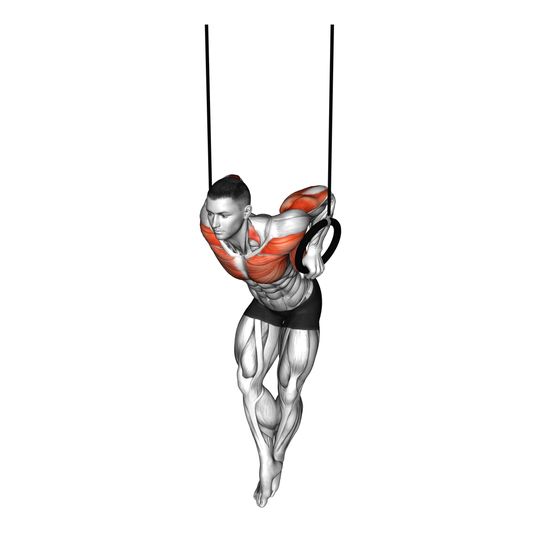
- Ring Dip Unstable rings that demand far more shoulder control and are much harder at the same bodyweight.
- Assisted Dip Machine or band assistance for anyone not yet strong enough for full bodyweight reps.
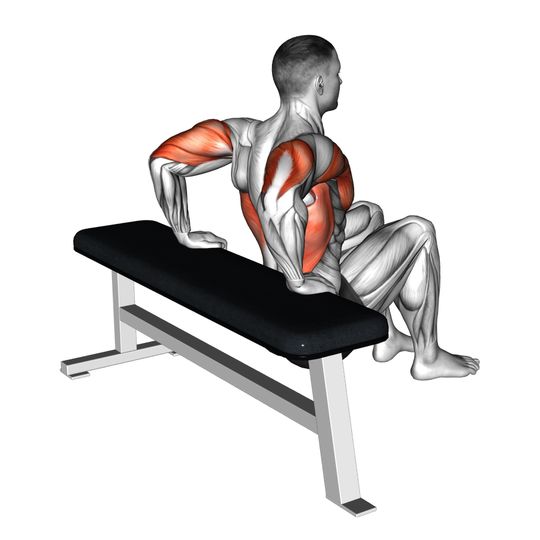
- Bench Dip Hands on a bench with feet on the floor, a lighter triceps exercise with less shoulder demand.
Dips vs close grip bench press#
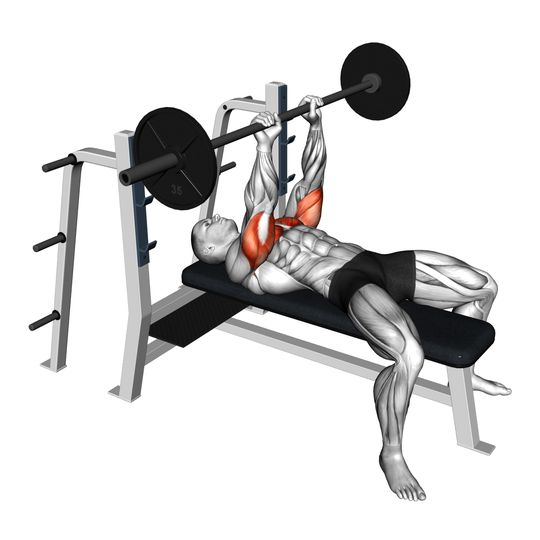
The close grip bench press is easier to load exactly and to spot, and the shoulders stay supported throughout. It trains the triceps and chest with the elbows in front of the body, exactly the position a competition bench press uses, so it carries over directly to a heavier bench.
Dips move the body rather than the bar, take the shoulder through a longer range, and load the triceps with the elbows behind the torso, a position no bench variation reaches. They are harder to progress in small steps and less friendly to cranky shoulders, but they build more overall pressing strength. Strong lifters do both; anyone with shoulder history should start with the bench.
Common questions#
What muscles do dips work?
The triceps and chest, with the split depending on torso angle: upright for triceps, leaning forward for the lower chest. The front delts, lats, and the muscles around the shoulder blades assist and stabilise.
How many dips should I be able to do?
Ten clean bodyweight dips is a solid intermediate standard and twenty is strong. Past fifteen, adding weight is a better goal than adding reps; half your bodyweight added for five reps is a serious upper body benchmark.
Are dips bad for your shoulders?
Not if you stay in a range you control and keep the shoulders down rather than shrugged. Most dip injuries come from dropping fast into a depth the shoulder is not ready for. Stop at parallel, build slowly, and dips are as safe as any press.
Are dips better for chest or triceps?
Both, depending on how you do them. Upright torso, elbows tucked, and full lockout is a triceps exercise. Chest forward, elbows out, and stopping short of lockout is a chest exercise.