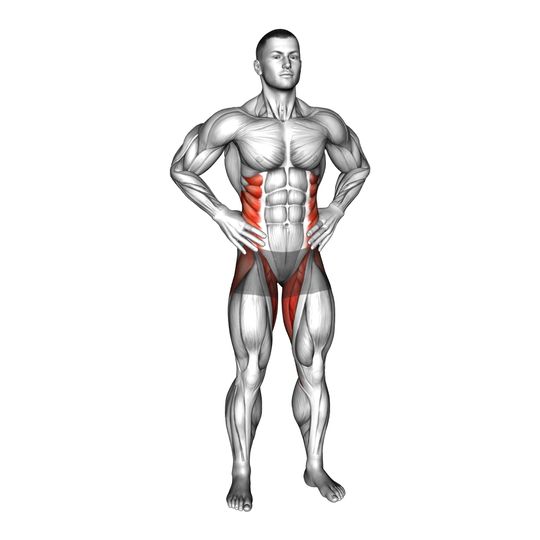


Sit upright and push your thighs outward against the machine pads to separate the legs, primarily working the hip abductors.
How to do the Hip Abduction Machine#
- Set the seat and leg pads so your knees start together and the pads rest against the outer thighs.
- Choose a weight, sit with your back against the pad, plant your feet, and hold the handles.
- Maintain a neutral spine and keep your torso still throughout the movement.
- Exhale and steadily press your thighs outward until you reach a controlled end range.
- Pause briefly, then inhale and return your legs slowly to the starting position under control.
Muscles worked#
The hip abduction machine trains the muscles on the outside of the hip that move the leg away from the body. The gluteus medius does most of the work, with the smaller gluteus minimus underneath it and the tensor fasciae latae at the front of the hip assisting. Pressing the pads apart from a seated position is one of the few gym exercises that loads these muscles directly rather than asking them to stabilise while something else lifts.
The upper fibres of the gluteus maximus help as well, more so if you lean the torso forward slightly, and the deep hip rotators stabilise the joint. It feels like a spreading burn along the outer hip and upper side of the glute rather than deep in the buttock. The abs and lower back do very little because the seat and backrest are holding you in place.
Common mistakes#
- Using momentum or jerky motions instead of a controlled tempo.
- Leaning or twisting the torso to help move the pads.
- Allowing the knees or feet to rotate instead of driving from the outer thighs.
- Choosing too much weight and losing control on the return.
Why it works#
Strong hip abductors keep the pelvis level and the knees tracking straight. When the gluteus medius is weak, the opposite hip drops on every stride and the knee drifts inward under load, which shows up as knee pain in runners, wobbly single-leg work and squats that cave. Direct abduction work is the fastest way to bring these muscles up because it isolates them with a load you can actually progress.
It also rounds out glute development. Squats, hip thrusts and deadlifts build the gluteus maximus, but they only ask the gluteus medius to stabilise, so the outer hip lags. Two or three sets of machine abductions at the end of a session add width and shape to the upper glutes with almost no fatigue, no spinal load and no technique to learn.
Sets, reps and setup#
Three sets of 12-20 reps with a one-second pause at the widest point and 45-60 seconds of rest, twice a week. This is a small-muscle movement; heavy sets of six do not suit it. Lighter loads, more reps and a full range work better.
- Setup
- Sit fully back in the seat, feet on the platforms, outer knees against the pads and the pads brought together to start. Keep the torso still and press the knees apart as far as they will go, squeeze for a second at the widest point, then return slowly and stop just before the pads touch so the muscles stay under tension.
- Progression
- Add one increment on the stack when you complete every set at the top of the rep range with a full pause and no torso rocking. Once you plateau, slow the return to three seconds, finish sets with partial reps in the outer half of the range, or lean forward from the hips to bias the upper glutes, which increases the difficulty with the same weight.
Variations#
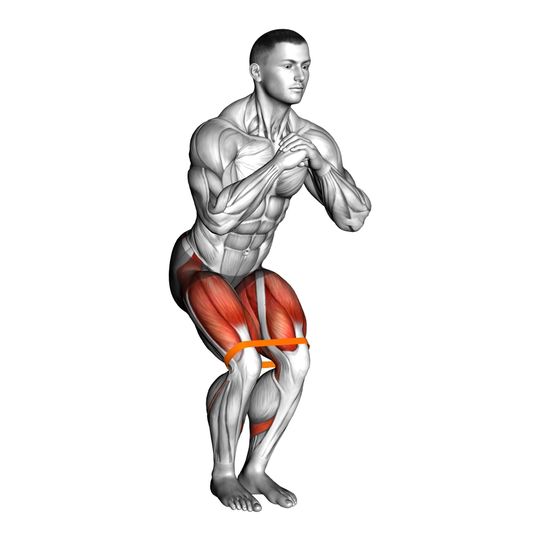
- Lateral Band Walks Standing abduction with a band around the knees or ankles, training the same muscles as stabilisers under bodyweight.
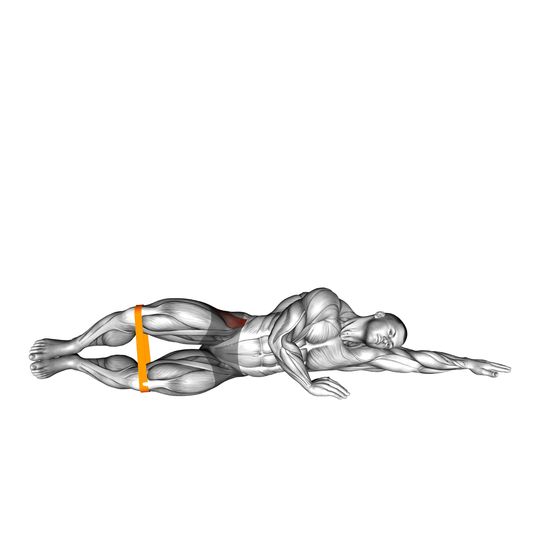
- Clamshell Side-lying abduction and external rotation, a low-load option for isolating the gluteus medius.
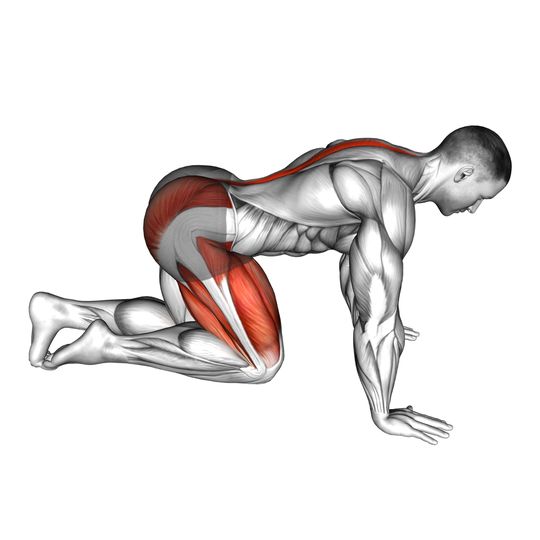
- Fire Hydrants Quadruped abduction with the hip flexed, which shifts more of the work onto the upper glutes.
- Lateral Leg Raises Side-lying straight-leg raises, the classic no-equipment way to train the outer hip.
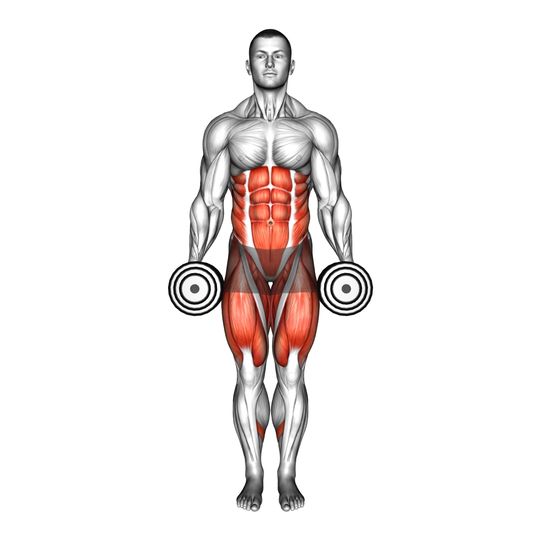
- Hip Adduction Machine The opposite movement on the same machine, training the inner thighs to balance the hip.
Hip abduction machine vs band walks#
The machine wins on load and progression. You can add weight in small, measurable steps, take the muscles to genuine failure through a full range, and the seat removes any balance demand, so all of the effort goes into the gluteus medius. For building size and strength in the outer hips, it is the more effective tool.
Band walks train the same muscles in the position they actually use them: standing, with the pelvis held level while the legs move. That makes them the better warm-up before squats and running, and the better choice for teaching the hips to stabilise. Use the machine for growth and strength, and bands for activation and carryover.
Common questions#
What muscles does the hip abduction machine work?
Mainly the gluteus medius on the outside of the hip, with the gluteus minimus and tensor fasciae latae assisting. The upper part of the gluteus maximus contributes more if you lean forward slightly. It is one of the few exercises that trains these muscles as prime movers rather than stabilisers.
Does the hip abduction machine grow your glutes?
It grows the gluteus medius and the upper, outer part of the glutes, which adds width and roundness to the hips. It does not do much for the bulk of the gluteus maximus, so pair it with hip thrusts, squats or deadlifts rather than relying on it alone.
Should I lean forward on the hip abduction machine?
Leaning forward from the hips with the back straight shifts more of the work to the upper glutes and makes the exercise harder with the same weight. Sitting upright is fine and slightly more comfortable. Try both and use the one where you feel the outer glutes most.
How many reps should I do on the hip abduction machine?
Three sets of 12-20 reps with a one-second squeeze at the widest point, twice a week. It is a small muscle group that responds better to controlled, high-rep work than to heavy sets.
Is the hip abduction machine good for knee pain?
Strengthening the gluteus medius often helps, because a weak outer hip lets the knee drift inward during walking, running and squatting. It is not a fix on its own, but combined with single-leg work it addresses one of the most common causes of knee tracking problems.