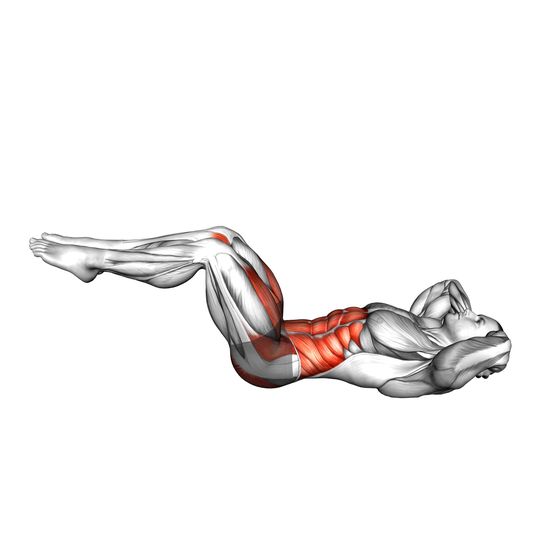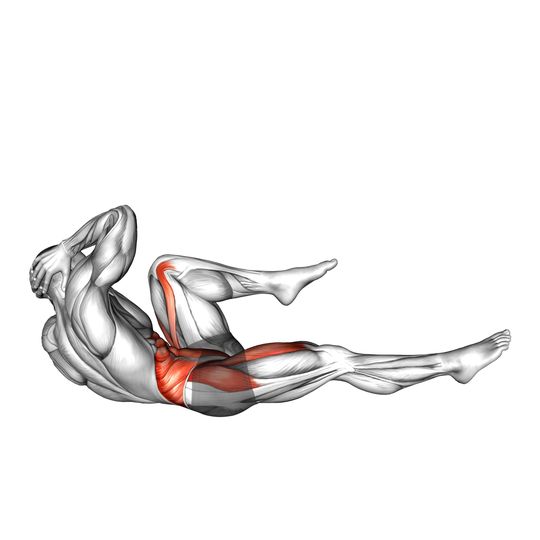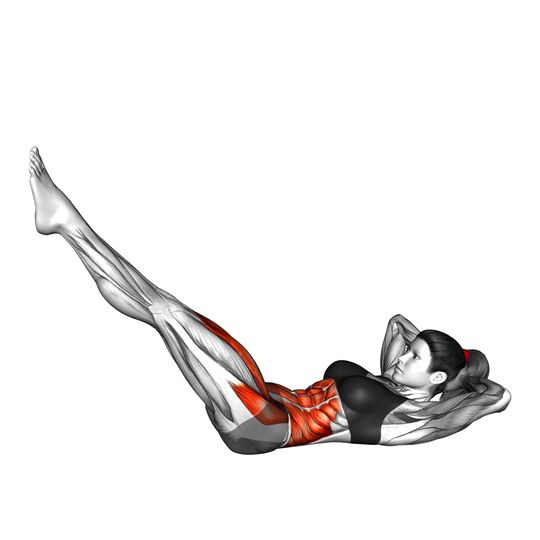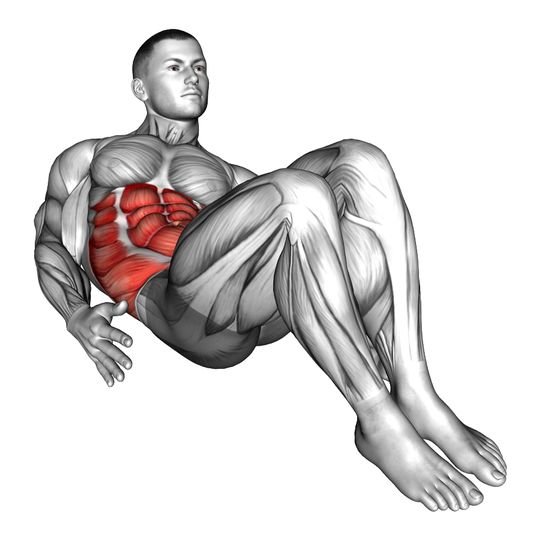


Seated rotational core exercise that rotates the torso to load the abdominals through controlled twists.
How to do the Russian Twist#
- Sit on the floor with knees bent and feet anchored under a stable object; lean back so your torso and thighs form a V-shape.
- Bring your hands together and hold them slightly away from your chest.
- Rotate your torso to one side by driving the ribcage while keeping your hips steady.
- Return through center with control and rotate to the opposite side.
- Repeat the alternating twists for the prescribed number of repetitions.
Muscles worked#
The Russian twist trains the obliques, the muscles along the sides of the waist that rotate the torso. Sitting in a V position with the feet up and turning the shoulders side to side is rotation under load: the external oblique on one side and the internal oblique on the other contract together to turn the ribcage, and then the opposite pair takes over to bring it back. The rectus abdominis works isometrically the whole time to hold the torso off the floor.
The hip flexors hold the legs up and the hips flexed, which is why the front of the hips tires on long sets, and the erector spinae along the lower back keep the spine from rounding. It should feel like a burn along the sides of the waist and across the front of the abs, with the hips doing their share. If the lower back is what you notice most, the torso has rounded or the lean is too far back.
- Primary: Obliques (External & Internal Obliques), Abs (Rectus Abdominis)
- Secondary: Hip flexors (Iliopsoas (Hip Flexors))
Common mistakes#
- Using momentum from the arms instead of rotating the torso.
- Rounding the lower back instead of maintaining a tall chest.
- Allowing the hips to rock instead of keeping them stable.
- Holding your breath during the movement.
Why it works#
It trains rotation, which most core work skips. Planks, crunches and leg raises either flex the spine or resist movement; the Russian twist loads the obliques through actual turning, which is how they work in throwing, striking, running and any sport where power moves from hips to shoulders. It also strengthens the pattern of rotating the ribs on a stable pelvis, which is exactly what protects the lower back when you twist in daily life.
It is also fast to set up and easy to load. Bodyweight is enough to start, a dumbbell, kettlebell or medicine ball held at the chest adds resistance in small steps, and a slower tempo or a longer hold in the V turns the same reps into a harder set. Done with a still pelvis and a tall chest it is a good oblique builder; done as a fast arm swing it is nothing.
Sets, reps and setup#
Three sets of 10-16 reps per side with 45-60 seconds of rest, two or three times a week. Count each side as a rep and move slowly: one second to rotate, a brief pause, one second to return. Sets that fly past 20 per side are usually arm swinging rather than torso rotation.
- Setup
- Sit with knees bent and heels either lightly on the floor or lifted a few centimetres. Lean back until the torso and thighs form a V and the abs are tight. Hold your hands together or a weight at chest height and rotate the shoulders and ribcage as one unit until the hands point roughly 45 degrees to the side. Return through the centre and rotate the other way, keeping the hips still and the chest tall.
- Progression
- Lift the feet off the floor first, then add a weight at the chest and increase it when every set is controlled with no rocking. Beyond that, slow the tempo, pause at each end of the rotation, or hold the arms straighter to lengthen the lever. If the exercise starts to bother the lower back, swap in a cable twist or Pallof press, which load rotation with the spine upright.
Variations#
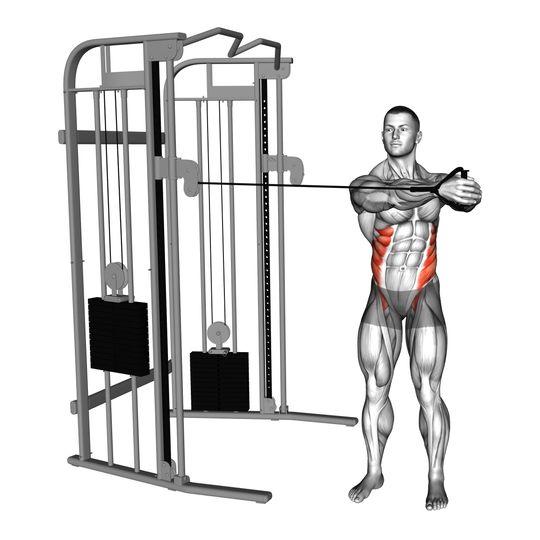
- Cable Twist Standing rotation against a cable, which loads the obliques with the spine upright and no hip flexor fatigue.
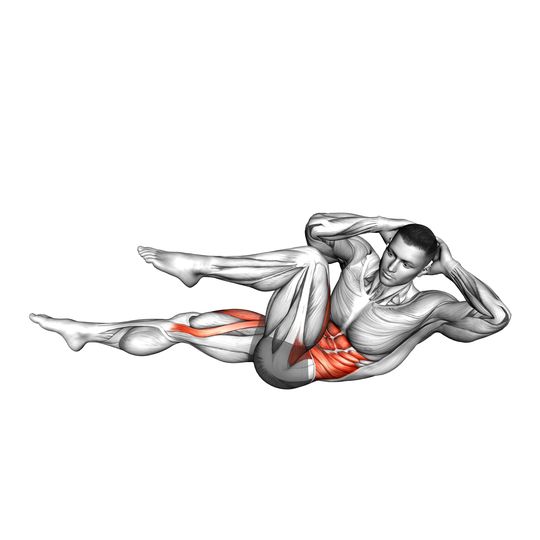
- Bicycle Crunch Lying alternating twists that combine rotation with spinal flexion for the obliques and abs.
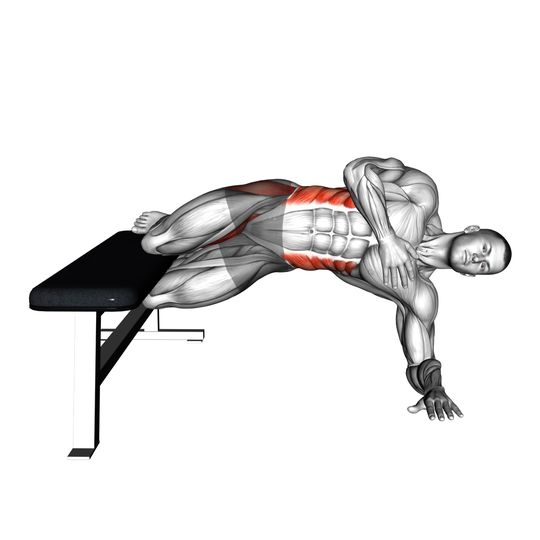
- Side Bend Lateral flexion rather than rotation, which trains the obliques from a different angle.
- Cross Body Crunch A shoulder-to-opposite-knee crunch that trains rotation with the lower back supported on the floor.
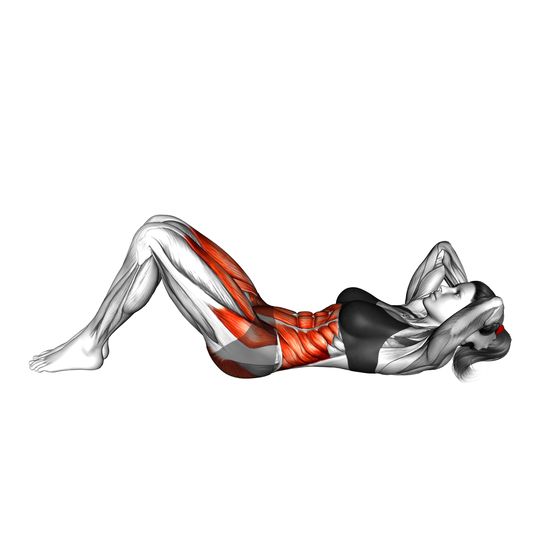
- Crunch The straight flexion movement for the front of the abs that pairs with rotational work.
Russian twist vs Pallof press#
The Russian twist trains the obliques by rotating: the torso turns against the resistance of a weight and bodyweight leverage. That builds strength in the actual movement of twisting, and it does so without equipment. The trade-off is that the seated V position tires the hip flexors and puts the lower back in flexion, which some people do not tolerate well.
The Pallof press trains the obliques by resisting rotation: you stand upright, hold a cable at the chest, and stop the load from turning you. That is more protective of the spine and closer to how the core works under a barbell. Use the Russian twist to build rotational strength for sport and oblique size, and the Pallof press to build the stability that keeps rotation under control.
Common questions#
What muscles do Russian twists work?
The obliques are the main movers, rotating the torso from side to side, with the rectus abdominis working isometrically to hold the V position. The hip flexors keep the legs and hips flexed, and the lower back muscles keep the spine from rounding.
Are Russian twists bad for your back?
Not when done with a tall chest, a still pelvis and a controlled tempo. Problems arise when the lower back rounds, the lean is too far back, or a heavy weight is swung fast. If you have a history of disc issues, use a cable twist or Pallof press instead, which train the same muscles with the spine upright.
Do Russian twists slim your waist?
No. They build the oblique muscles, which can make the waist look more defined once body fat is low enough, but they cannot remove fat from the area. Waist size is decided by diet and overall body fat, not by which core exercise you do.
How many Russian twists should I do?
Three sets of 10-16 slow reps per side, two or three times a week. If you can do more than 20 per side easily, add a weight or slow the tempo rather than adding reps.
Should my feet be on the floor or in the air?
On the floor is easier and lets you focus on rotating; in the air adds a balance and hip flexor demand and makes the abs work harder to hold the V. Start with heels down and lift them once you can control the rotation without the hips rocking.