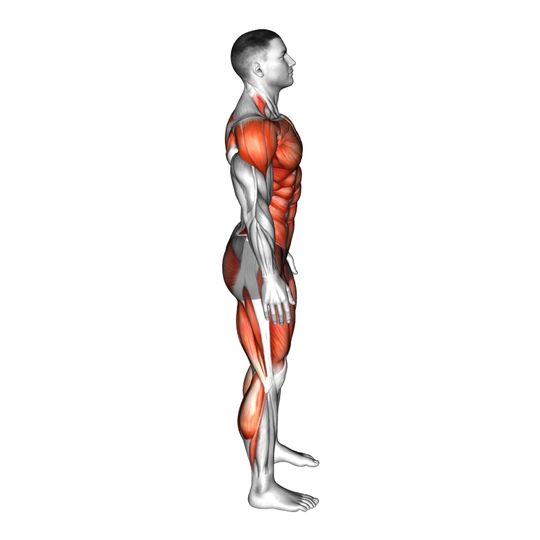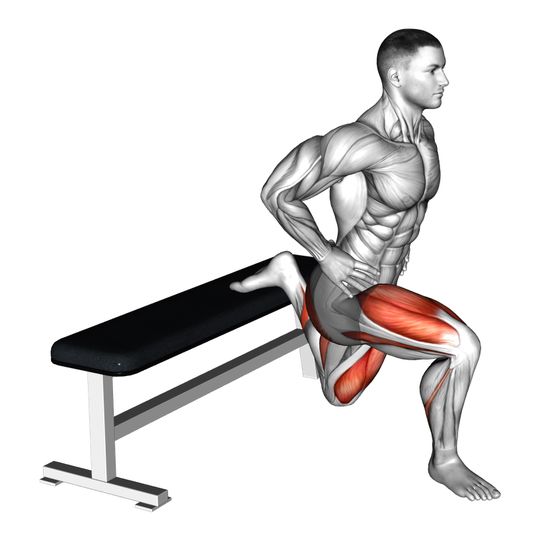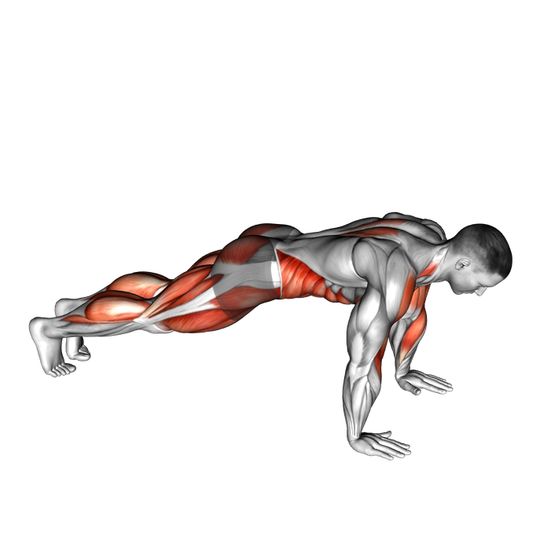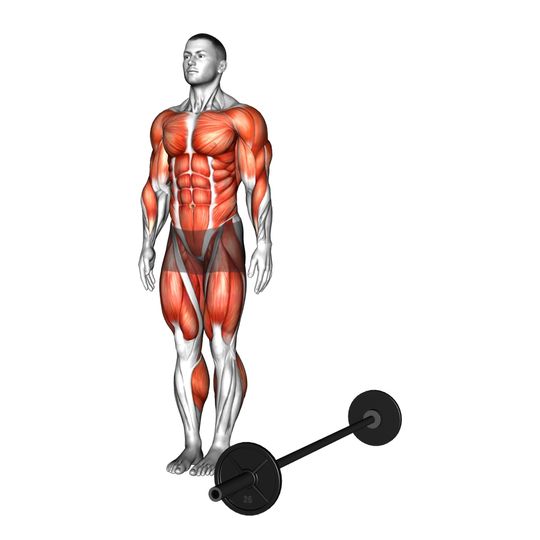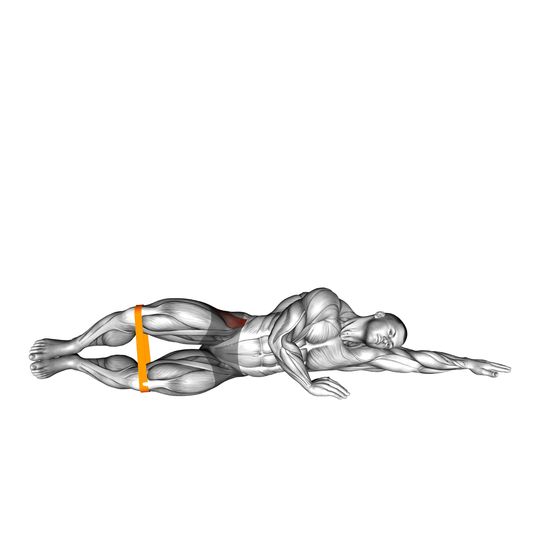


Perform a single-leg hip extension from a supine position to lift the pelvis, primarily working the glute muscles.
How to do the Single Leg Glute Bridge#
- Lie on your back with one knee bent, the other leg extended straight, and your arms at your sides.
- Press the heel of the bent leg into the floor and engage your core.
- Drive through the planted heel to raise your hips until your body forms a straight line from shoulders to knee, keeping the extended leg aligned with your torso.
- Hold and squeeze the working glute at the top while keeping your hips level.
- Lower your hips slowly back to the start with control.
Muscles worked#
The single leg glute bridge is a glute exercise, and unlike most hip movements it gives them very little help. The glutes (gluteus maximus) of the working leg extend the hip to lift the pelvis off the floor, and with the other leg held in the air the whole load lands on one side. The bent knee shortens the hamstrings and takes them mostly out of the movement, which is what keeps the glute in charge; if the hamstrings cramp, the foot is too far from the hips.
The gluteus medius on the working side has to stop the pelvis from tipping toward the free leg, which makes this exercise as much about hip stability as hip strength. The abs and lower back hold a neutral spine so the lift comes from the hips rather than from arching, and the hamstrings and calves stabilise the knee. A good rep finishes with one glute fully squeezed and the pelvis perfectly level.
- Primary: Glutes (Gluteus Maximus)
- Secondary: Hamstrings (Biceps Femoris, Semitendinosus & Semimembranosus), Abs (Rectus Abdominis), Lower back (Erector Spinae)
Common mistakes#
- Letting the hips drop or rotate at the top.
- Pushing through the toes instead of the heel.
- Overextending the lower back when reaching the top.
- Using momentum instead of controlled muscle contraction.
Why it works#
Most people have one glute that works harder than the other, and two-legged bridges and hip thrusts let the strong side cover for the weak one. The single leg version removes that option. It is one of the simplest ways to find and fix a hip imbalance, which shows up later as a knee that hurts on one side or a squat that shifts to one leg.
It also requires nothing but a floor and is safe enough to do daily. Runners use it to wake up glutes that sitting has switched off, lifters use it as a warm up before squats and deadlifts, and anyone rehabbing a knee or back can load the hips without loading the spine. Add a dumbbell across the hips and it becomes a real strength exercise.
Sets, reps and setup#
Three sets of 10-15 reps per leg with 45-60 seconds of rest, two to four times a week. Hold the top for two seconds and squeeze the working glute hard on every rep. As a warm up, one or two sets of 10 per side is enough.
- Setup
- Lie on your back with one knee bent and the foot flat about 30 cm from the hips, the other leg extended or held with the knee toward the chest. Push through the heel of the planted foot and lift the hips until the thigh and torso form a straight line, keeping the pelvis level. Lower slowly until the hips are just off the floor and repeat.
- Progression
- When 15 slow reps with a two-second hold are easy, hold a dumbbell or plate across the working hip, or raise the shoulders onto a bench for a single leg hip thrust that adds range. Pausing for five seconds at the top on the last rep is a good way to finish a set without more weight.
Variations#
- Glute Bridge Both feet down, which halves the load per glute and makes a good starting point.
- Single Leg Hip Thrust Shoulders on a bench for a longer range and a harder stretch at the bottom.
- Dumbbell Single Leg Hip Thrust Adds a dumbbell across the hips once bodyweight is no longer enough.
- Barbell Hip Thrust The heavy two-legged version and the main glute builder to progress toward.
- Dumbbell Frog Pumps A high-rep bridge with the soles of the feet together that biases the glutes and reduces hamstring involvement.
Single leg glute bridge vs single leg hip thrust#
The glute bridge is performed from the floor, so the range is short and the glute works mainly in the top, contracted portion of the movement. That makes it easier, safer for beginners, and ideal as an activation drill before heavier training.
The hip thrust raises the shoulders onto a bench, which lets the hips drop lower and stretches the glute at the bottom of each rep. The longer range and extra stretch make it the better muscle builder and the natural next step once bridges are easy. Use the bridge for warm ups and rehab, and the thrust when growth is the goal.
Common questions#
What muscles does the single leg glute bridge work?
The gluteus maximus of the working leg does the lifting, the gluteus medius keeps the pelvis level, and the hamstrings, abs, and lower back stabilise. It is one of the most glute-dominant exercises available.
Why do I feel single leg glute bridges in my hamstrings?
The foot is too far from the hips, which straightens the knee and turns the movement into a hamstring exercise. Bring the heel closer so the shin is roughly vertical at the top, push through the heel, and think about squeezing the glute rather than lifting the hips.
Are single leg glute bridges effective for building glutes?
For beginners and as a high-rep or activation exercise, yes. For continued growth you will eventually need to add a dumbbell across the hips or move to a hip thrust, because bodyweight alone stops being challenging after a few months.
How many single leg glute bridges should I do?
Three sets of 10-15 per leg with a two-second hold at the top, two to four times a week. If you can do more than 20 with perfect form, add load or range rather than reps.
Where should the free leg be during a single leg glute bridge?
Either extended straight in line with the torso or held bent with the knee toward the chest. The bent position is easier and keeps the lower back from arching; the straight-leg position adds a hip flexor and core challenge. Both are correct.