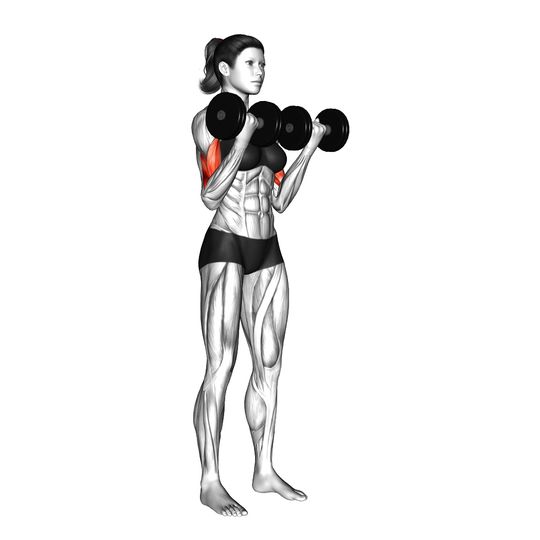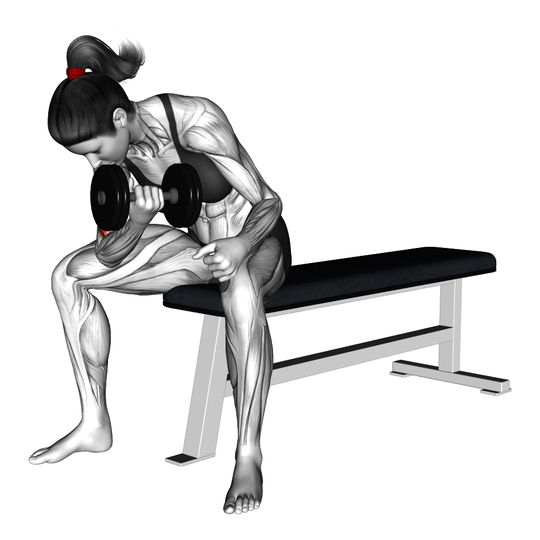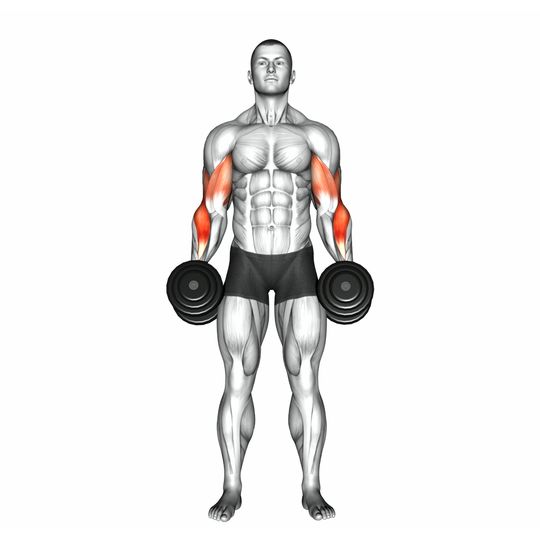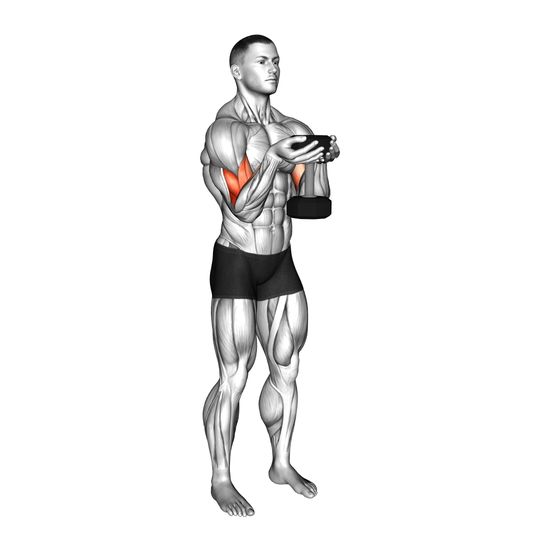


Perform a neutral-grip dumbbell curl by bending the elbows to lift the weights, primarily working the biceps.
How to do the Dumbbell Hammer Curl#
- Stand upright with a dumbbell in each hand at your sides and palms facing each other.
- Keep your elbows tucked against your torso and maintain a stable, upright posture.
- Curl both dumbbells by flexing the elbows until your forearms reach near-vertical.
- Hold the top position briefly to feel the biceps contract without twisting the wrists.
- Lower the dumbbells slowly back to the starting position with control.
Muscles worked#
Hammer curls are the best dumbbell movement for the brachialis, the thick muscle that sits under the biceps on the outside of the upper arm. With the palm facing inward the biceps lose their supination job, so the brachialis and the brachioradialis on the top of the forearm take on far more of the elbow flexion. The biceps brachii still contributes, especially the long head, but it is no longer the whole story.
The forearms work harder here than in any standard curl. The brachioradialis is under tension the whole rep, and the wrist flexors and extensors grip to keep the dumbbell vertical. You will feel a pump along the top of the forearm and a deep ache on the outer arm rather than the peak-of-the-biceps burn a supinated curl gives. The front delts stabilise the shoulder as the weight moves forward.
Common mistakes#
- Using body momentum or swinging the torso to lift the weights.
- Allowing the elbows to move forward away from the sides.
- Rotating the wrists so the palms turn upward.
- Dropping the weights quickly on the way down instead of controlling the descent.
Why it works#
The brachialis pushes the biceps up from underneath, so building it makes the upper arm look thicker from the side and the front. Regular curls barely touch it. Hammer curls also develop the brachioradialis, which is most of the visible mass on the thumb side of the forearm, so one exercise widens the arm above and below the elbow.
The neutral grip is easier on the wrists and elbows than a supinated barbell curl, which matters for anyone with tendon irritation on the inside of the elbow. It also lets you handle more weight than a normal dumbbell curl, and that extra grip strength carries directly into rows, pull-ups and deadlifts.
Sets, reps and setup#
Three sets of 8-12 reps, either both arms together or alternating, with 60-90 seconds of rest. Two sessions a week is plenty. Use a two-second lowering phase; the brachialis responds well to slow eccentrics and poorly to swinging.
- Setup
- Stand tall with a dumbbell in each hand, palms facing your thighs, elbows tucked against the ribs. Curl until the thumb reaches shoulder height without letting the elbow drift forward, hold for a moment, then lower until the arm is fully straight. Keep the wrist locked so the dumbbell stays vertical throughout.
- Progression
- Work up to 12 reps on all three sets, then take the next dumbbell up and drop to 8. If the top of the movement starts to feel like a front raise because the elbows are travelling, sit down on an incline bench for a few weeks and let the setup enforce the position.
Variations#
- Cross Body Hammer Curl Curling across the torso toward the opposite shoulder shifts even more load onto the brachialis and the long head of the biceps.
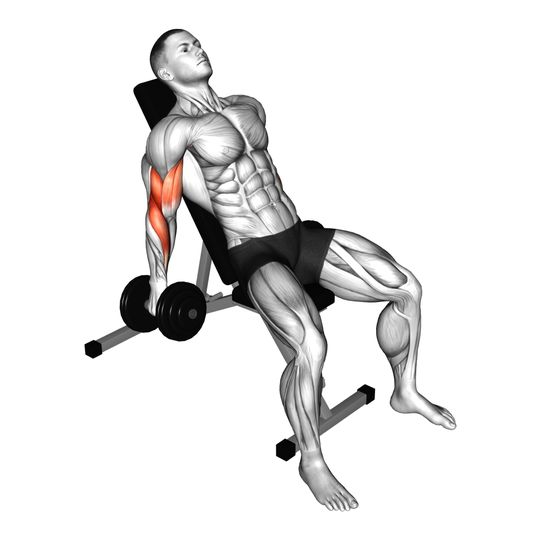
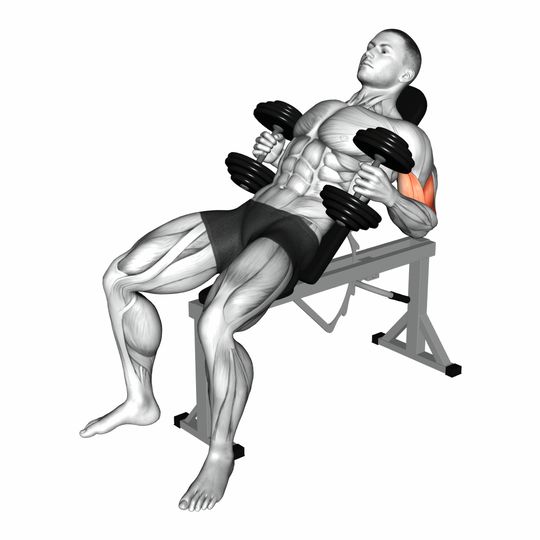
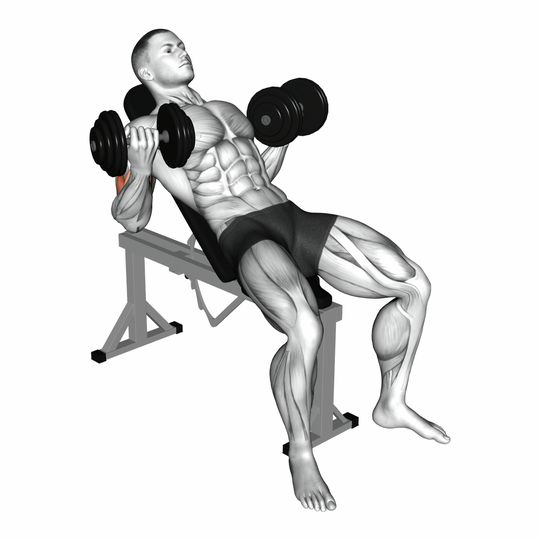
- Incline Dumbbell Hammer Curl The arms hang behind the body, stretching the biceps at the bottom and making it impossible to swing.
- Cable Hammer Curl A rope on a low pulley keeps tension on the muscle through the whole range, including the top.
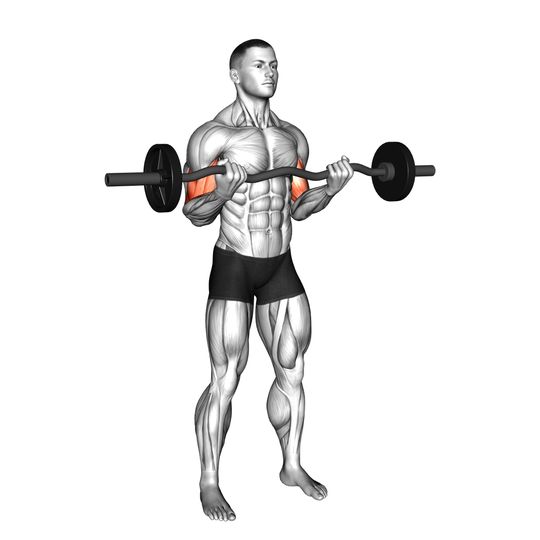
- Barbell Reverse Curl Palms down instead of neutral, which takes the biceps out further and targets the brachioradialis directly.
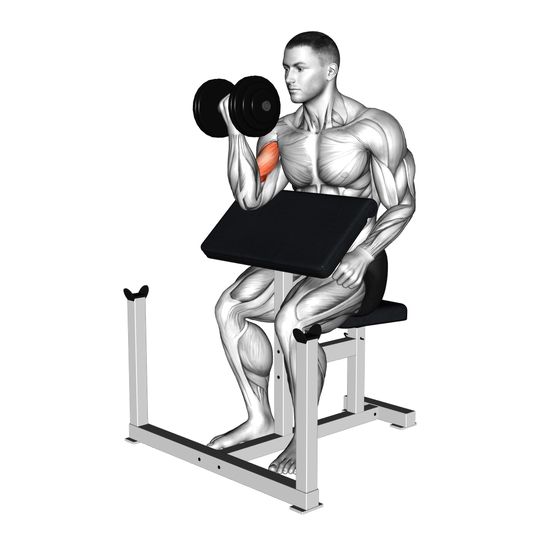
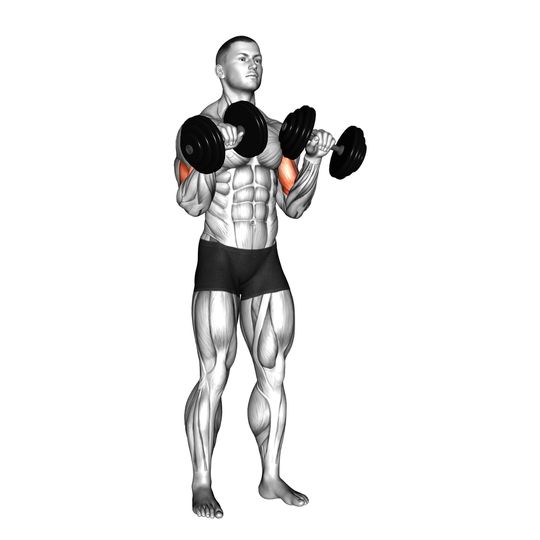
- Dumbbell Curl The supinated version, with the biceps doing more and the brachialis doing less.
Hammer curls vs bicep curls#
A supinated bicep curl trains the biceps brachii at both of its jobs, elbow flexion and turning the palm up, so it builds the peak of the muscle most directly. The hammer curl removes supination and hands a bigger share of the work to the brachialis and brachioradialis, the muscles that add width to the arm and the forearm.
Neither is better in isolation; they build different parts of the arm. If you only have room for one, most people will get more visible size from the hammer curl because the brachialis and forearms are usually undertrained. If arm size is the goal, do both, hammer curls first while the grip is fresh.
Common questions#
What muscles does the dumbbell hammer curl work?
The brachialis and biceps flex the elbow, with the brachioradialis on the top of the forearm doing far more than in a regular curl. The wrist flexors and extensors hold the dumbbell vertical, and the front delts stabilise the shoulder.
What are hammer curls good for?
Adding thickness to the upper arm by building the brachialis underneath the biceps, and growing the forearms through the brachioradialis. They also strengthen the neutral grip that shows up in rows, pull-ups and carrying anything heavy.
Should I do hammer curls alternating or both arms at once?
Both work. Alternating lets you focus on one arm and use a little more weight; curling together keeps the set shorter and stops you rocking side to side. Pick one and stay consistent so your logbook numbers mean something.
How heavy should hammer curls be?
Roughly 10-20 percent heavier than your regular dumbbell curl weight, so most men land between 12 and 20 kg per hand and most women between 6 and 12 kg for sets of 8-12. If the elbows drift forward or the torso swings, drop a dumbbell size.
Why do I feel hammer curls in my forearms more than my biceps?
That is normal and partly the point. The neutral grip loads the brachioradialis heavily, and it sits in the forearm. If the forearm burn stops you finishing sets, use a slightly lighter weight, keep the wrist neutral rather than curling it, and the upper arm will catch up.