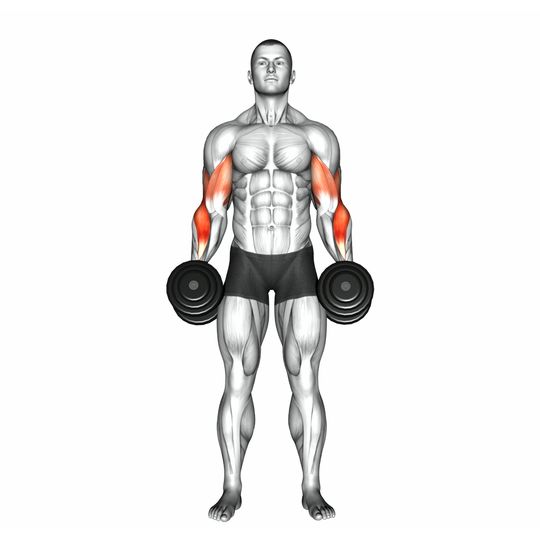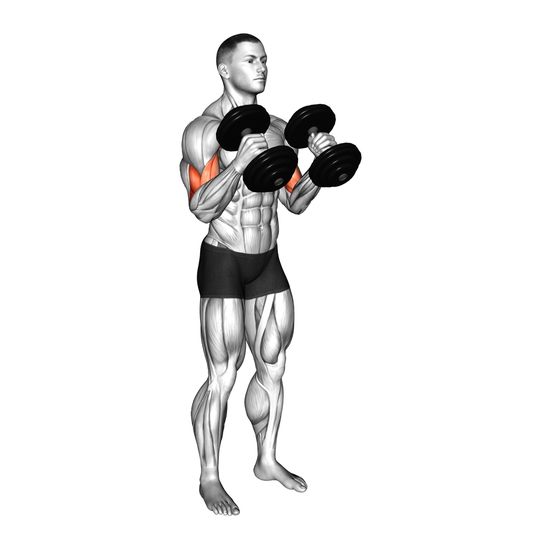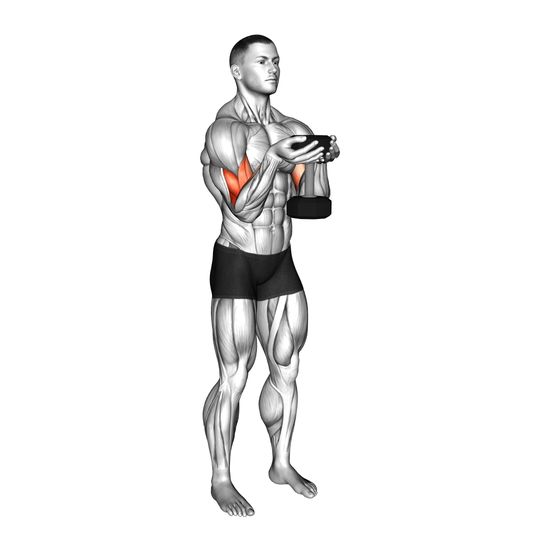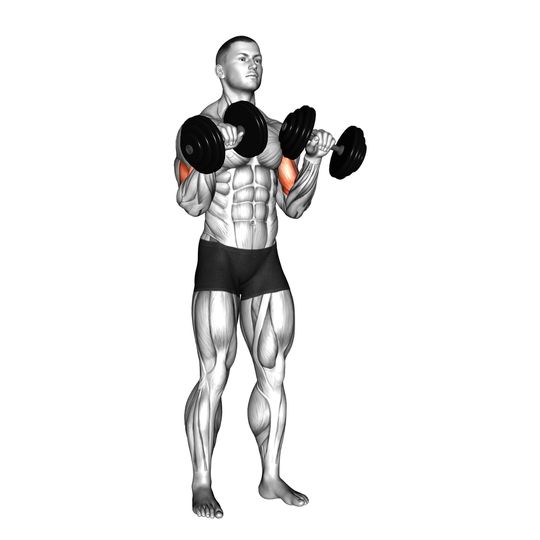


Stand holding a dumbbell in each hand and curl one weight up toward the shoulder, using elbow flexion to work the biceps. Perform the same movement on the opposite side, alternating for reps.
How to do the Dumbbell Curl#
- Stand tall with a dumbbell in each hand, palms facing forward and elbows resting at your sides.
- Keep the upper arm stationary and bend the elbow to raise one dumbbell toward the shoulder.
- Pause briefly at the top and actively contract the biceps.
- Lower the weight back down in a controlled manner until the arm is straight.
- Repeat the curl with the other arm, alternating sides for the prescribed reps.
Muscles worked#
The dumbbell curl trains the biceps brachii, both heads, through the one job they exist for: bending the elbow with the palm turned up. Because the hand is free to rotate, you can start with a neutral grip and turn the palm up as you curl, which adds forearm supination to the elbow flexion and asks more of the biceps than a fixed bar does. The brachialis underneath the biceps works on every rep, and the brachioradialis on the thumb side of the forearm helps most in the first third of the curl.
The forearm flexors hold the dumbbell and get a steady isometric workout, which is why grip is often what fails first on high-rep sets. The front delts and upper back only stabilise; if they start moving, the weight is too heavy. Expect the burn along the front of the upper arm, with a strong squeeze at the top when the hand is fully turned out.
Common mistakes#
- Swinging the torso to help lift the weight.
- Letting the elbow move away from the side during the curl.
- Bending the wrist instead of keeping it neutral.
- Using momentum rather than a controlled lift.
- Failing to fully lower the arm between reps.
Why it works#
It is the most forgiving way to load the biceps. Each arm lifts its own weight, so a stronger side cannot cover for a weaker one, and the wrist is free to find the angle that keeps the elbow comfortable. That freedom is what a straight bar does not allow, and it is why the dumbbell version works for people whose wrists or elbows complain on barbell curls.
It also scales from the first week of training to the last. Beginners learn elbow flexion with light dumbbells and no setup, and advanced lifters use the same movement with pauses, slow lowering phases and alternating arms to keep the biceps under tension for longer. Curls will not add much to your pressing or pulling strength, but a stronger biceps does protect the elbow on heavy rows and chin-ups.
Sets, reps and setup#
Three sets of 8-12 reps, two or three times a week, at the end of an upper-body or pull session. Sets of 15-20 with light dumbbells work well as a finisher; sets under six reps turn into a shoulder swing and are not worth doing.
- Setup
- Stand with the dumbbells at your sides, palms facing your thighs or forward, elbows tucked against your ribs. Curl one or both dumbbells up, turning the palm toward the ceiling as the forearm passes horizontal, and squeeze at the top with the elbow still by your side. Lower under control over two seconds until the arm is straight. The upper arm should not move; if it drifts forward, the weight is too heavy.
- Progression
- Add reps first, then weight. When you can do 12 clean reps on every set, take the next dumbbell up and drop back to 8. Beyond that, add a two-second pause at the top, a slow four-second lowering phase, or finish each set with partial reps in the bottom half where the biceps is strongest. Alternating arms lets you rest one side while the other works, which usually buys an extra rep or two per set.
Variations#
- Hammer Curl (Dumbbell) The same movement with a neutral grip throughout, shifting work toward the brachialis and brachioradialis for thicker-looking arms.
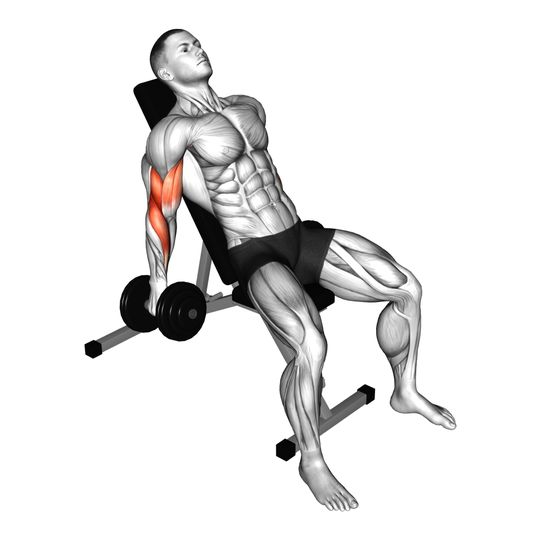
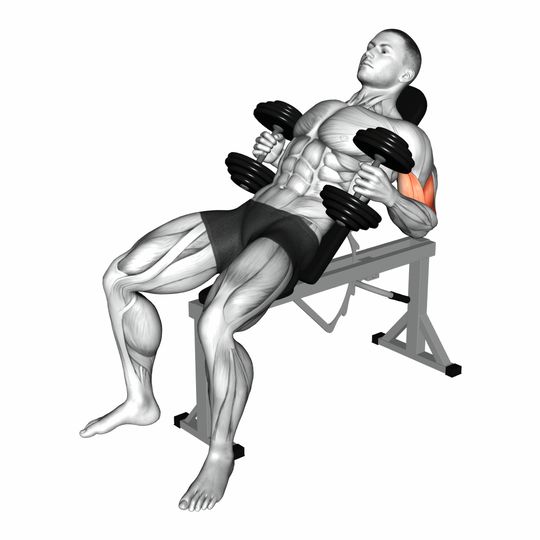
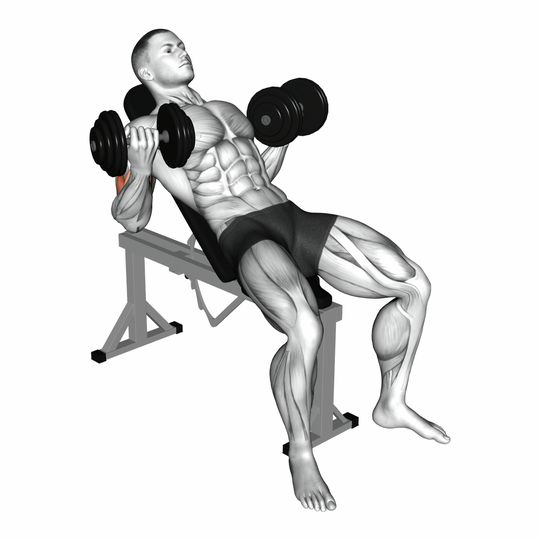
- Incline Curl (Dumbbell) Curled while lying back on an incline bench, which stretches the biceps at the bottom and removes any help from the shoulders.
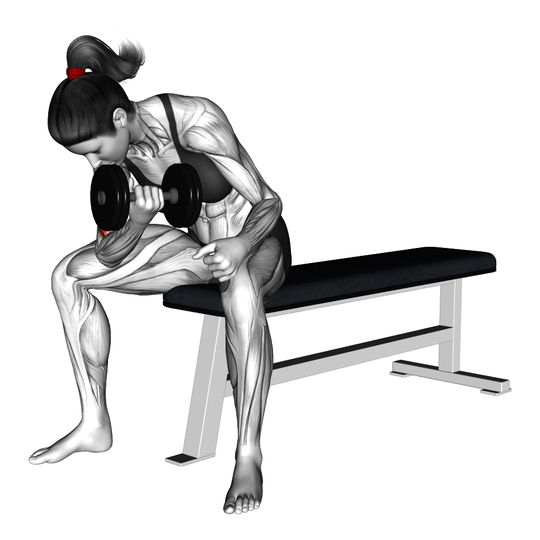
- Concentration Curl (Dumbbell) Seated with the elbow braced against the inner thigh, the strictest curl there is and a good check on whether you are swinging.
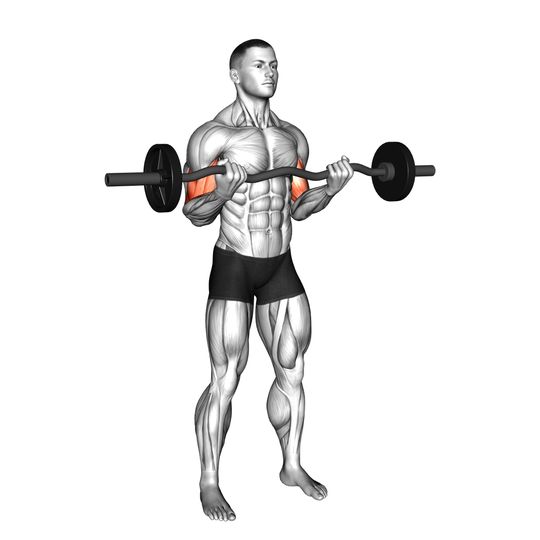
- Bicep Curl (Barbell) Both hands on one bar for more total load, at the cost of the wrist rotation that the dumbbell version allows.
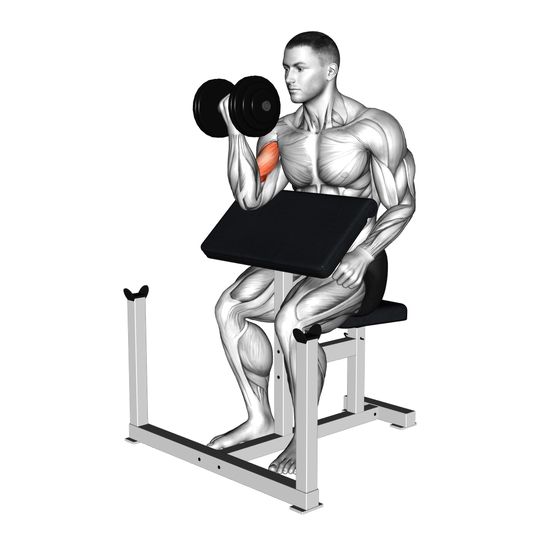
- Preacher Curl (Machine) Arms pinned to a pad so the biceps works alone, with the machine keeping tension even at the top of the rep.
Dumbbell curl vs barbell curl#
Both train the same muscle through the same range, and neither is better for growth if the sets are equally hard. The barbell lets you lift more total weight and is quicker to load, so it suits lifters chasing strength on the curl itself. The dumbbells make each arm work independently and let the wrist rotate, which most people find easier on the elbows and wrists.
If you have both available, alternate them across training blocks rather than picking one forever. If curls bother your wrists, the dumbbell version is the one to keep. If you want the heaviest curl you can do, use the barbell and add dumbbell curls afterwards to even out any strength gap between arms.
Common questions#
What muscles does the dumbbell bicep curl work?
Mainly the biceps brachii, with the brachialis and brachioradialis assisting the elbow bend and the forearm flexors holding the weight. Turning the palm up during the curl brings in the biceps' second job, forearm supination, which is why dumbbells suit this exercise so well.
Should I curl both arms at once or alternate?
Either works. Curling both at once is faster and keeps the torso steadier. Alternating gives each arm a short rest between reps, so you can usually manage a heavier dumbbell or an extra rep or two, and it makes it obvious when one arm is weaker.
How heavy should dumbbell curls be?
Heavy enough that the last two reps of a set of 8-12 are hard, but light enough that the elbows stay by your sides and the back does not lean. For most people that means far less than they curl with a bar, since each arm is working alone.
Why does my forearm burn more than my biceps?
Usually because the dumbbell is being held too tightly or the wrist is curling toward you at the top. Hold the dumbbell firmly but let the wrist stay straight, and turn the palm up from the forearm rather than flicking the wrist. If the burn continues, hammer curls train the same arm with less wrist demand.
Are dumbbell curls enough for biceps growth?
For most lifters, yes, if they are done with effort two or three times a week alongside rows and chin-ups. Adding an incline curl or preacher curl covers the stretched and shortened ends of the range, but the plain dumbbell curl can carry the whole job on its own.