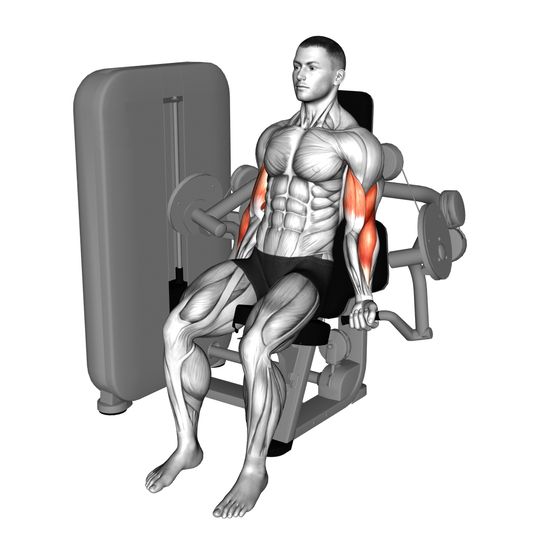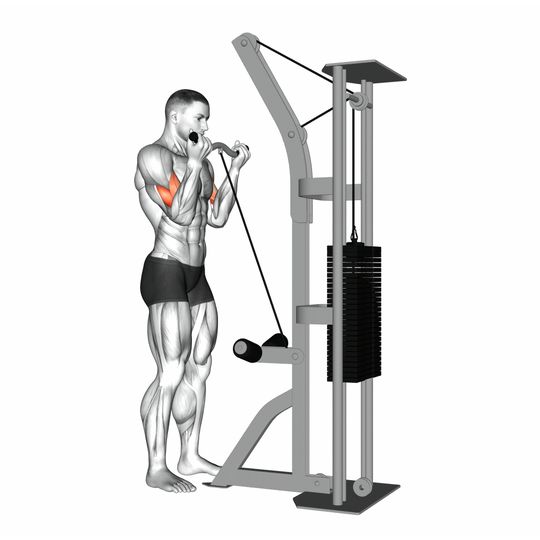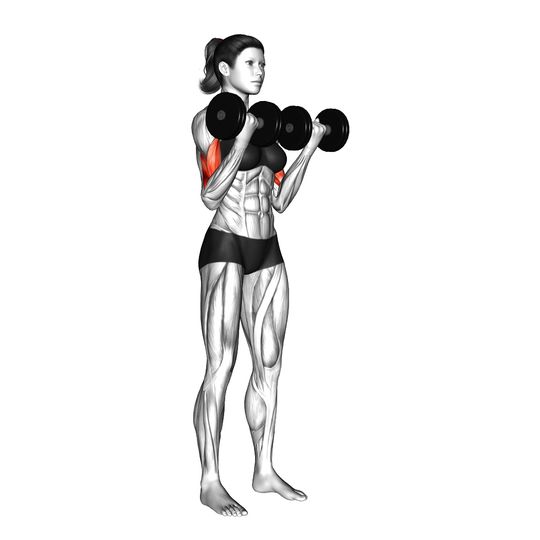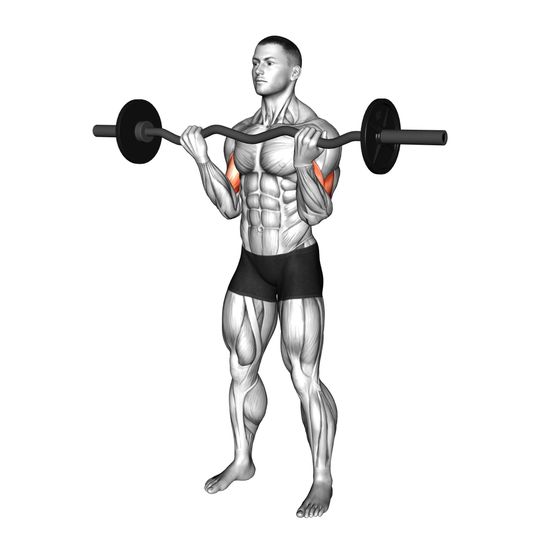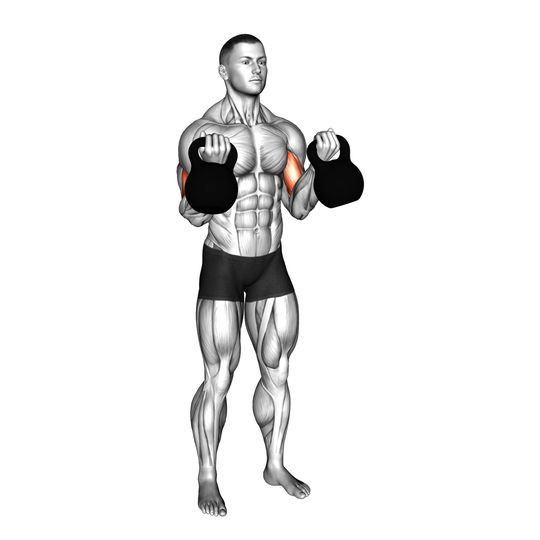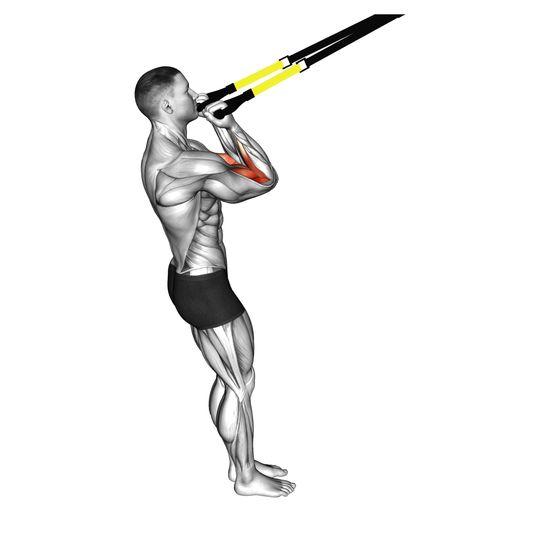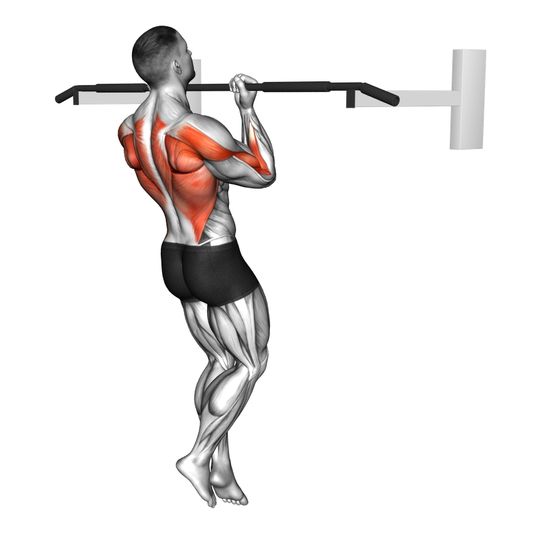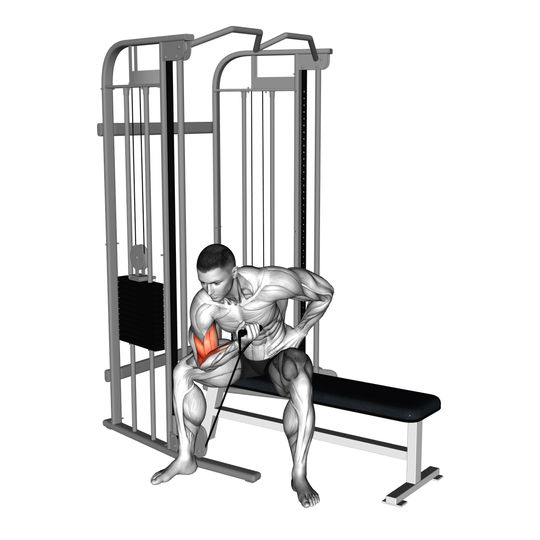


Seated preacher-style curl on a leverage machine that isolates the biceps through controlled elbow flexion. Perform slow, deliberate curls from full extension to a contracted position.
How to do the Machine Preacher Curl#
- Set the seat and pad so your upper arms lie flat against the angled pad and grasp the machine handles with a firm underhand grip.
- Exhale and bend your elbows to curl the handles toward your shoulders, keeping your upper arms stationary against the pad.
- Hold briefly at the top, focusing on contracting the biceps.
- Inhale and lower the handles back to the start in a slow, controlled motion until your arms reach the starting position.
Muscles worked#
Common mistakes#
- Lifting the upper arm off the pad during the curl.
- Using torso momentum to swing the weight up.
- Bending the wrists instead of keeping them neutral.
- Dropping speed on the eccentric phase and letting the weight fall.
Why it works#
The pad is the whole exercise. With the upper arm fixed in front of the torso you cannot swing the weight, rock backward, or let the shoulder drift forward to help — the elbow is the only joint left to move. That also means the hardest part of the rep sits at the bottom, in the stretched position, which is the part most lifters skip on a standing curl.
Because the arm is held in front of the body, the shoulder is flexed and the long head of the biceps starts shortened, so the emphasis moves toward the short head and the brachialis. The machine version adds what a barbell preacher curl lacks: resistance matched through the range by the cam instead of a dead spot at the top, and a stack you can fail on safely.
Sets, reps and setup#
Three sets of 10-15 reps with 60-90 seconds of rest, usually as the second biceps movement after a barbell, cable or dumbbell curl. Two sessions a week is plenty for a muscle this size.
- Setup
- Set the seat so your armpits rest on the top of the pad and your chest stays against it, with the elbows in line with the pivot. Hold the handles lightly, lower until the arm is straight without letting the elbows slide down the pad, and stop just short of the stack resting.
- Progression
- Take every set from 10 to 15 reps, then move up one plate. If the elbows start complaining, hold the load and slow the lowering phase to four or five seconds instead — the stretched position is where this exercise earns its keep, and it does not need to be heavy.
Variations#
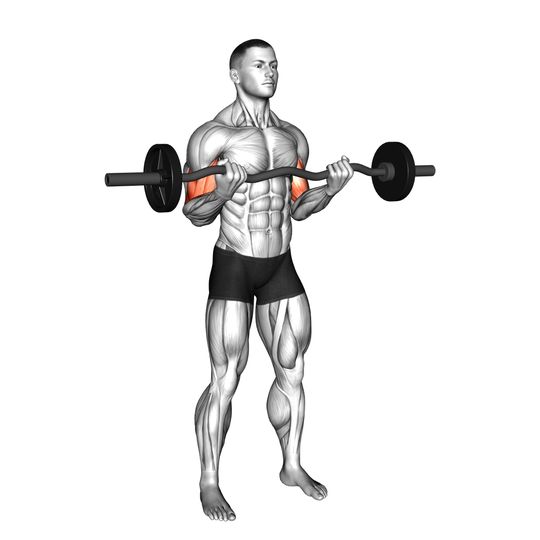
- Preacher Curl (Barbell) Heavier loading and small plate jumps, but the top of the rep gets easy and the wrists are fixed.
- Preacher Curl (Dumbbell) One arm at a time with a free wrist, so each side gets the same work and can rotate into supination.
- Spider Curl (Dumbbell) Chest on the pad with the arms hanging vertically, which shifts the hardest point toward the top.
- Bicep Curl (Machine) The same fixed-path idea with the arms lower, so the long head is less shortened at the start.
- Incline Curl (Dumbbell) The opposite shoulder position — arms behind the torso — which lengthens the long head instead.
Machine preacher curl vs barbell preacher curl#
The machine matches the resistance to your leverage through the range, so the top of the rep is not free the way it is with a barbell, and you can push the last reps hard without anyone handing the weight back to you. It is also easier to set up in the same position every week, which matters for tracking progress.
The barbell moves more weight and progresses in two-and-a-half kilo steps, and every gym has a preacher bench. The cost is a dead spot near the top where the forearm stacks over the elbow, plus a fixed grip that some wrists dislike.
Common questions#
What muscles does the machine preacher curl work?
The biceps brachii is the target, with the brachialis underneath doing a large share because the shoulder is flexed, plus the brachioradialis and forearm flexors assisting.
How many sets and reps should I do?
Three sets of 10-15 reps taken close to failure. This is an isolation movement with a hard stretched position, so control matters more than load.
Is the preacher curl better than a standing curl?
It is stricter, not better. The pad removes momentum and loads the bottom of the range hard, which a standing curl does poorly. A standing or cable curl still moves more weight and trains the long head in a longer position, so most programs use both.
Why do my elbows hurt on preacher curls?
Usually from snapping into full extension under a heavy load at the bottom. Reduce the weight, lower under control for three to four seconds, and stop just short of a locked-out elbow rather than letting the arm drop.