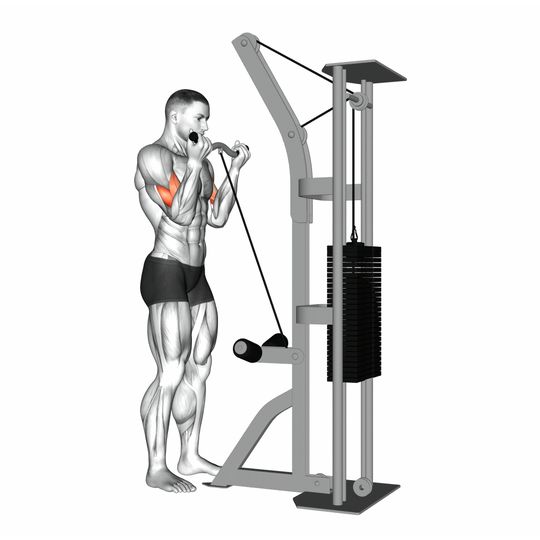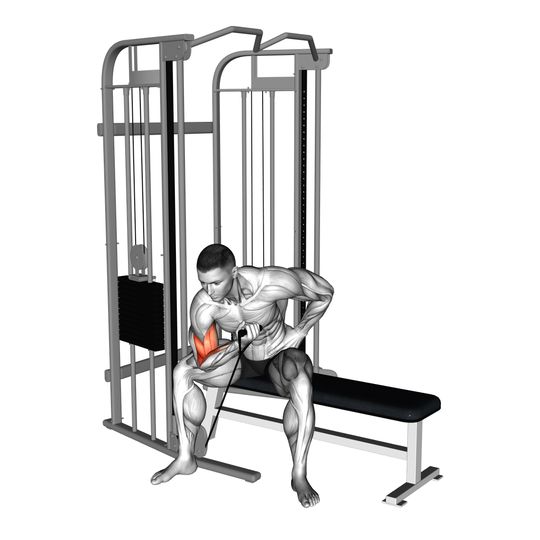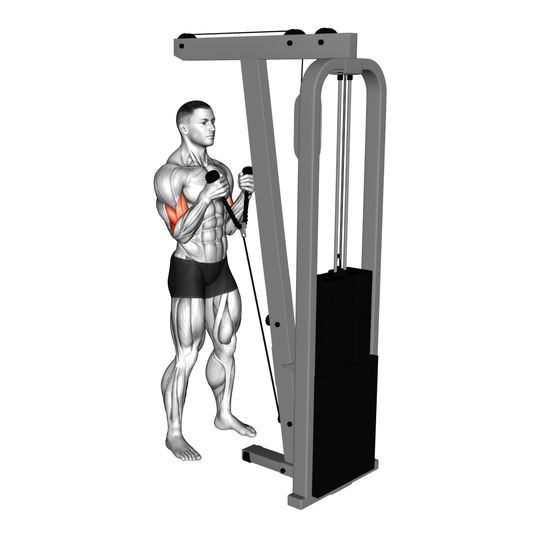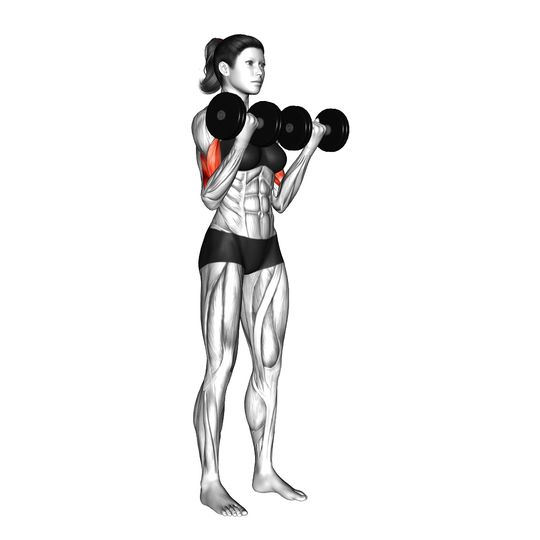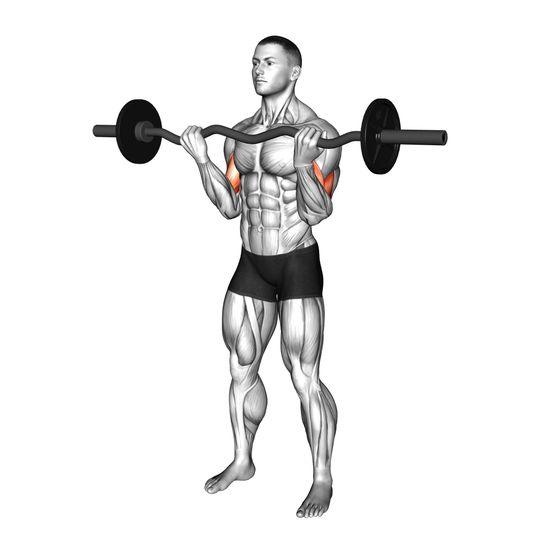


A single-arm cable curl performed facing away from a low pulley with the arm extended slightly behind the body, loading the biceps in a stretched position through the full range of elbow flexion.
How to do the Bayesian Curl#
- Set a pulley at roughly hip height or lower, grab the handle with an underhand grip, and turn to face away from the machine.
- Step forward into a staggered stance until the cable pulls your working arm back slightly behind your torso, and brace your core.
- Keeping the upper arm still and slightly behind your body, curl the handle toward your shoulder by flexing the elbow with a neutral wrist.
- Squeeze the biceps at the top without letting the elbow drift forward.
- Lower the handle slowly back to near full extension, feeling a stretch in the biceps at the bottom, then repeat and switch arms.
Muscles worked#
The Bayesian curl is a biceps exercise built around one idea: the elbow stays behind the body. Facing away from a low cable with the arm pulled back, the biceps brachii, and particularly its long head, which crosses the shoulder joint, starts every rep in a stretched position and stays under tension through the full range. Muscles loaded hard at long lengths tend to grow more, and the Bayesian curl is the cleanest way to give the biceps that stimulus.
The brachialis underneath the biceps helps flex the elbow throughout, and the forearm flexors keep the wrist neutral and the handle in the hand. Because the shoulder is held in extension against the cable, the front delt works isometrically to stop the upper arm being pulled backward, which shows up as fatigue in the front of the shoulder on long sets. Nothing else moves; the torso stays upright and still.
Common mistakes#
- Using torso momentum to lift the weight.
- Allowing the elbows to drift forward or away from the sides.
- Letting the wrists bend instead of staying neutral.
- Choosing too-heavy loads and performing partial reps.
- Dropping the weight quickly on the descent.
Why it works#
Standard curls lose tension at the top, where the weight sits over the elbow, and they start with the biceps already partly shortened because the arm hangs at the side. The Bayesian curl fixes both: the cable keeps pulling throughout, and the arm behind the body puts the biceps in a longer position at the bottom. It is a heavier stretch than an incline curl, with constant tension the incline curl cannot provide.
It is also one of the most elbow-friendly curls. The load builds gradually rather than starting from a dead hang, the wrist is free to find a comfortable angle, and the single-arm set-up makes torso cheating obvious. Lifters whose biceps stopped responding to dumbbell curls often see them grow again after a block of Bayesian curls.
Sets, reps and setup#
Three to four sets of 10-15 reps per arm with 60 seconds of rest, once or twice a week. This is a lengthened-position exercise, so do not rush the bottom: a two to three second lowering with a brief pause in the stretch is where the value is. Take the last set to failure; the load is light and the joint position is safe.
- Setup
- Pulley at the lowest setting with a single handle. Grab it underhand, face away from the stack, and step into a staggered stance until the working arm is pulled slightly behind your torso with the elbow straight. Curl toward the shoulder without letting the elbow drift forward, squeeze, and lower slowly until you feel the biceps stretch. Keep the shoulder back and the chest up.
- Progression
- Add reps to fifteen, then one plate, and work back down to ten. If the elbow starts moving forward as the set goes on, the weight is too heavy; the elbow position is the entire exercise. A half rep from the bottom at the end of each set is a better overload than heavier weight for most people.
Variations#
- Incline Dumbbell Curl The dumbbell version of a stretched curl, with the arm hanging behind the torso on an incline bench.
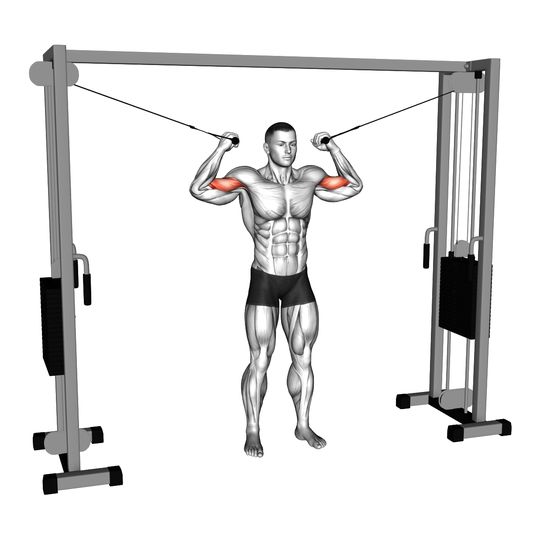
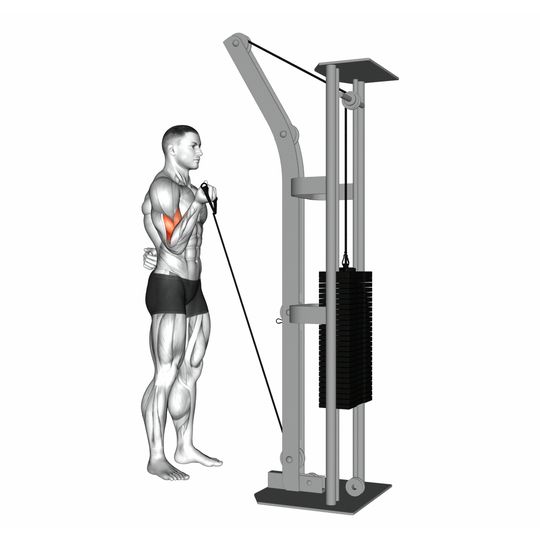
- Cable Curl Standing and facing the machine, constant tension but no stretch at the bottom.
- Dumbbell Preacher Curl Arm braced in front of the body, loading the short head and removing the shoulder from the movement.
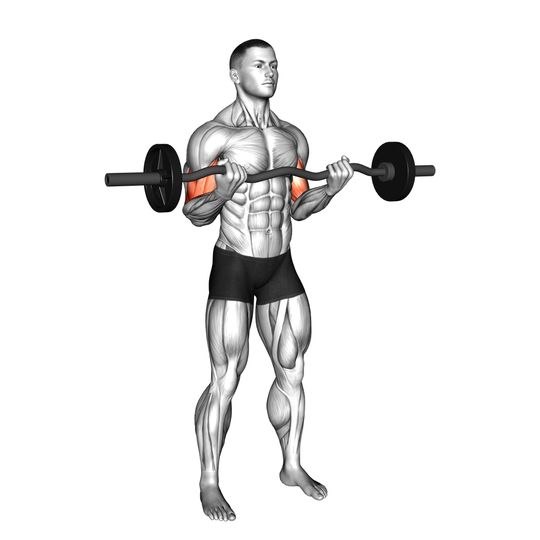
- Drag Curl Bar dragged up the torso with the elbows travelling back, a free-weight way to emphasise the long head.
Bayesian curl vs incline dumbbell curl#
Both put the arm behind the body to stretch the biceps at the bottom, and both hit the long head harder than a standing curl. The incline curl is easier to set up in any gym and lets you do both arms at once, but the dumbbell is heaviest at the bottom and almost weightless at the top, so the second half of the rep does very little.
The Bayesian curl keeps tension on the biceps through the entire range because the cable pulls from behind and below, and standing lets you adjust the shoulder extension by stepping further from the stack. If you have a cable, it is the better exercise for growth. If not, the incline curl is a close second.
Common questions#
What muscles does the Bayesian curl work?
The biceps, with more emphasis on the long head than a standard curl because the arm is held behind the body. The brachialis and forearm flexors assist, and the front delt works isometrically to hold the shoulder position.
What is a Bayesian curl good for?
Growing the biceps by training them in a stretched position under constant tension. It suits lifters whose arms have stalled on dumbbell and barbell curls, and anyone whose elbows dislike heavy straight bar work.
Why is it called a Bayesian curl?
The name comes from Menno Henselmans, who coaches under the Bayesian Bodybuilding brand and popularised the behind-the-body cable curl. It has nothing to do with statistics; the brand name stuck.
How far behind the body should the arm be?
Far enough to feel a clear stretch in the biceps with the elbow straight, usually 15-30 degrees behind the torso. Further than that strains the front of the shoulder and tends to make the elbow drift forward during the curl.