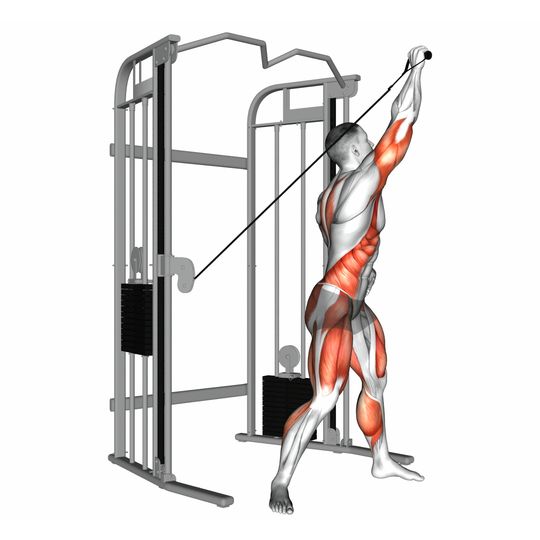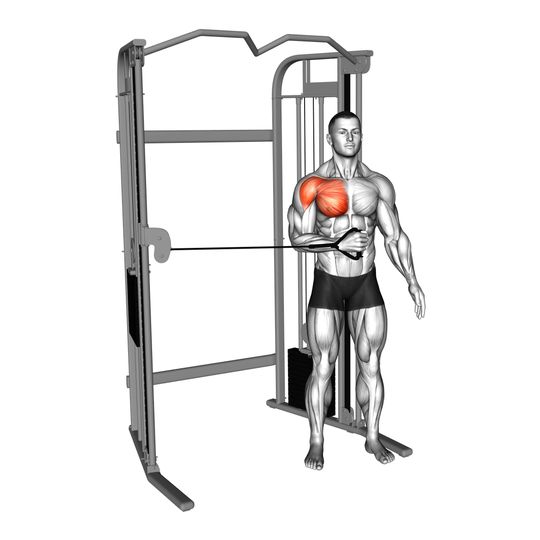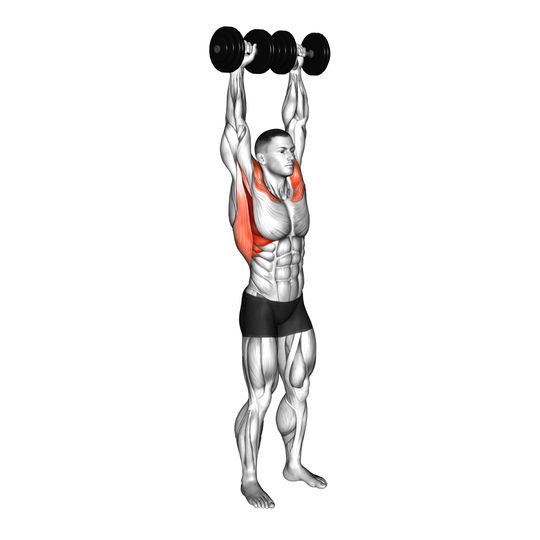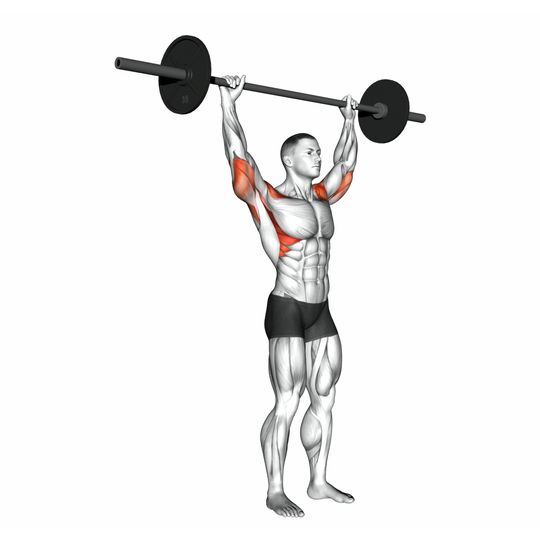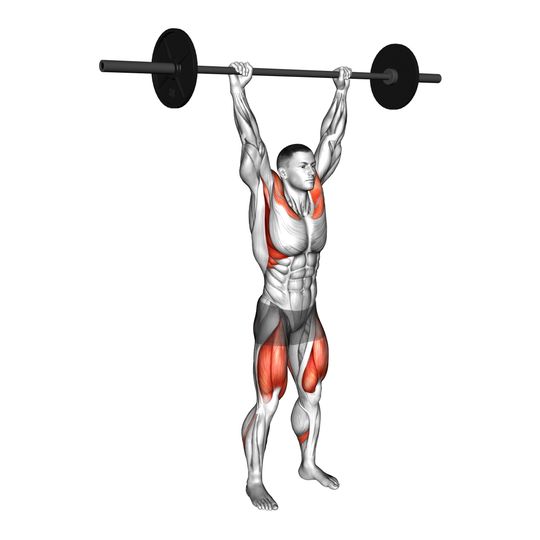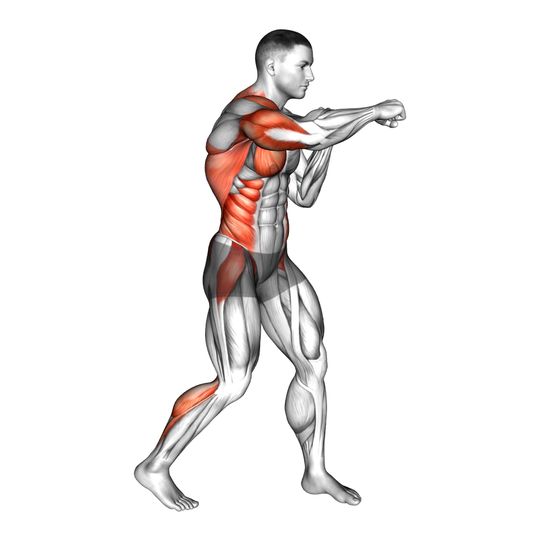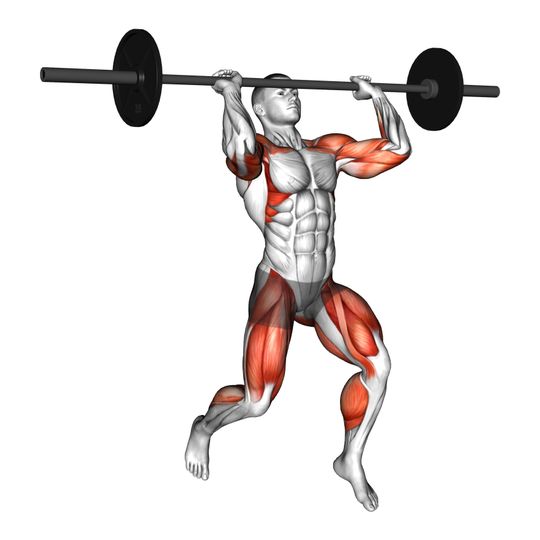


Stand and pull cable handles forward with straight arms, raising them to shoulder level to work the shoulder muscles. The movement emphasizes raising the arms in front of the body against cable resistance.
How to do the Cable Front Raise#
- Stand with feet about shoulder-width apart and hold the cable handles in a pronated (palms down) grip.
- Keep your arms extended and torso tall as you prepare to raise the handles.
- Exhale and lift the handles forward until your arms reach roughly shoulder height.
- Hold briefly at the top position.
- Inhale and lower the handles slowly back to the starting position, then repeat for the desired reps.
Muscles worked#
- Primary: Front delts (Anterior Deltoid)
- Secondary: Side delts (Lateral Deltoid), Traps (Trapezius)
Common mistakes#
- Using body swing or momentum to lift the weight.
- Bending the elbows too much during the raise.
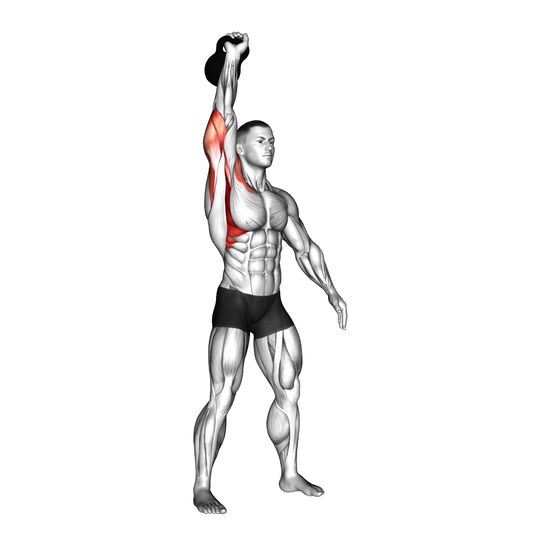
- Raising the arms above shoulder level.
- Shrugging the shoulders toward the ears.
- Lowering the handles too quickly and losing control.
Why it works#
A dumbbell front raise gives you almost nothing at the bottom — with the arm hanging straight down the weight sits directly under the shoulder, so there is no leverage to resist — and peaks only when the arm reaches horizontal. Run the same movement on a cable set behind or beside you and the line of pull stays roughly perpendicular to your arm the whole way, so the front delt is loaded from the first inch to the last.
That constant tension is the entire reason to pick the cable version. The front delts already take a beating from every press you do, so the job of a front raise is quality isolation at a load your elbows and wrists can tolerate — and a cable stack lets you do that in small increments instead of jumping five kilos between dumbbells.
Sets, reps and setup#
Two to three sets of 12-20 reps with 45-60 seconds of rest, once or twice a week, placed after your pressing work. Front delts get plenty of indirect volume from bench and overhead pressing, so this is a top-up rather than a main course.
- Setup
- Lowest pulley, single handle, cable running past the outside of your thigh or between your legs. Step forward until there is tension with the arm hanging, then raise to shoulder height with a straight arm and thumb up, and lower under control without letting the stack rest.
- Progression
- Take every set from 12 up to 20 reps, then add one plate. If your torso starts swinging to get the handle up, you have gone past the useful load for this movement.
Variations#
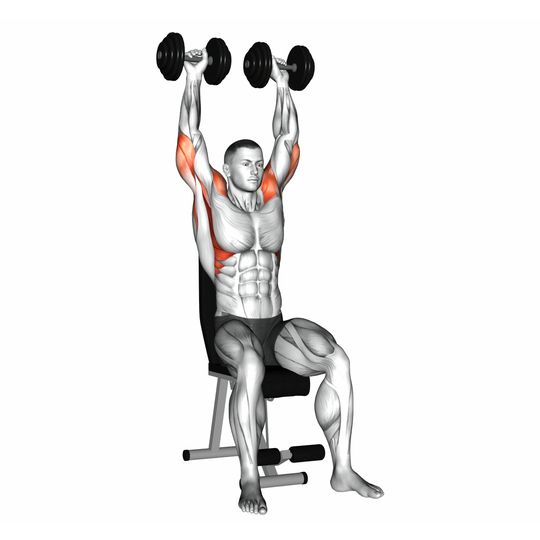
- Front Raise (Dumbbell) The default version, easiest to find. Tension disappears at the bottom, so the top half does most of the work.
- Front Raise (Barbell) Both arms on one bar, which makes the load easier to progress but fixes your hands at a set width.
- Front Raise (Plate) A neutral, two-handed grip on a plate. Comfortable on the wrists and a good option in a busy gym.
- Front Raise (Band) Resistance rises as you lift, so it is hardest at the top. The travel-friendly stand-in for the cable.
Cable front raise vs dumbbell front raise#
The cable holds tension through the whole range, including the stretched position at the bottom that a dumbbell simply cannot load. If you only do one set of front raises in a session, the cable version puts more of that set to work.
Dumbbells are quicker to set up, need no free cable station, and let you raise one arm at a time without re-rigging anything. They are a perfectly good choice — just accept that the bottom third of each rep is close to free, and pause briefly at the top to compensate.
Common questions#
What muscles does the cable front raise work?
The front delt is the target. The side delt and upper traps assist as the arm approaches shoulder height, and your abs work to stop the load pulling your torso forward.
How high should I raise the handle?
To shoulder height. Going higher hands the work to the traps and the serratus rather than the front delt, and it is the most common reason lifters end up leaning back on this exercise.
Do I need front raises if I already bench and overhead press?
Not necessarily. Pressing already trains the front delts hard. Add front raises when the front delt is a specific weak point or a physique priority, and keep the volume modest so it does not cut into your pressing recovery.
How many sets and reps should I do?
Two to three sets of 12-20 reps. This is a small isolation movement with a long lever, so light loads taken close to failure work far better than heavy ones.