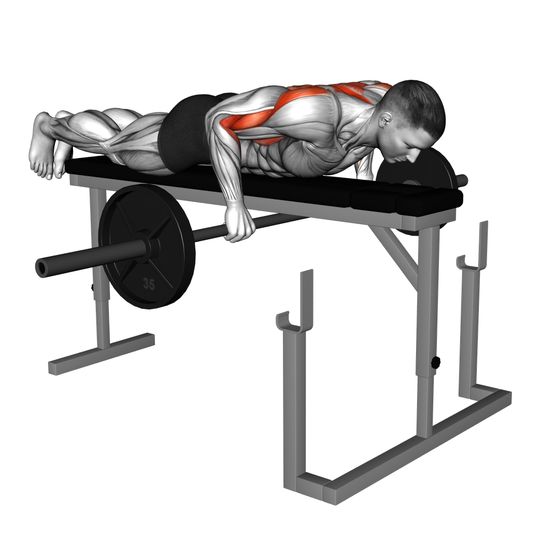


A strict barbell row performed face down on a bench raised high enough for the bar to hang clear of the floor, so the torso is fully supported and the legs and lower back contribute nothing. Removing the hip hinge makes cheating almost impossible: whatever you pull is moved by the upper back, lats, and arms alone, and the fixed torso means every rep travels the same path. That makes it the row of choice when you want honest upper-back volume without stacking spinal fatigue on top of heavy squats or deadlifts.
How to do the Seal Row#
- Raise a flat bench on blocks or use a dedicated seal row bench so the bar hangs below you with your arms fully extended.
- Lie face down with your chest on the pad and your hips supported, letting your legs hang or bracing them against the bench.
- Reach down and grip the barbell with an overhand grip just outside shoulder width.
- Brace your core, let the shoulder blades spread apart, and start each rep from a full stretch with the arms straight.
- Pull the bar toward your lower ribs by driving your elbows back and squeezing the shoulder blades together.
- Pause briefly with the bar close to the bench and the upper back fully contracted.
- Lower the bar under control until the arms are straight again, then repeat.
Muscles worked#
- Primary: Upper back (Rhomboids & Middle Trapezius), Lats (Latissimus Dorsi)
- Secondary: Rear delts (Posterior Deltoid), Biceps (Biceps Brachii), Traps (Trapezius), Forearms (Forearm Flexors & Extensors (incl. Brachioradialis))
Common mistakes#
- Rocking the chest off the pad to help the bar up.
- Cutting the top short so the bar never reaches the torso.
- Pulling with the biceps instead of driving the elbows back.
- Setting the bench too low so the plates hit the floor and the stretch is lost.