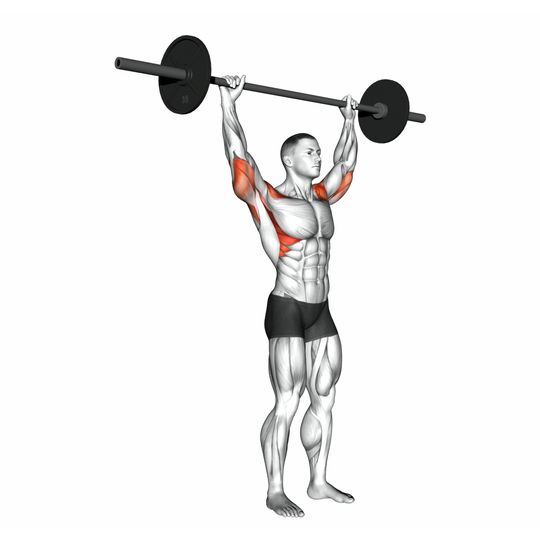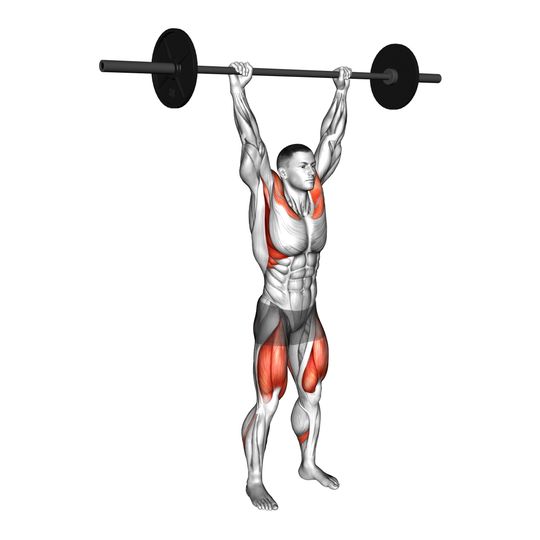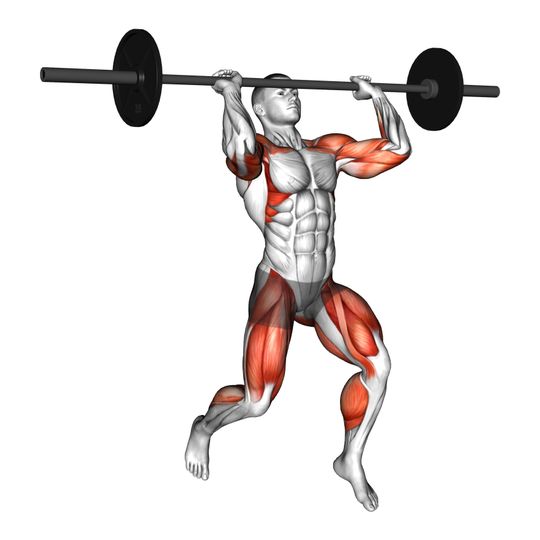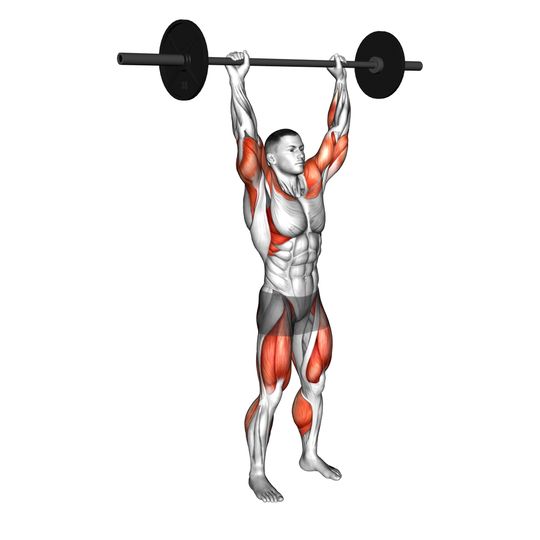


Lift the Smith-machine bar straight from shoulder level to full arm extension overhead, primarily working the shoulder muscles (deltoids) with triceps assistance.
How to do the Smith Machine Shoulder Press#
- Adjust the bar so it sits just below shoulder height and stand with feet about hip-width apart.
- Bend your knees slightly and take an overhand grip roughly shoulder-width apart.
- Straighten your legs and rotate the bar out of the hooks to release it.
- Brace your core, keep your legs straight, and press the bar directly overhead until your arms are extended.
- Lower the bar under control back to the position in front of your shoulders.
Muscles worked#
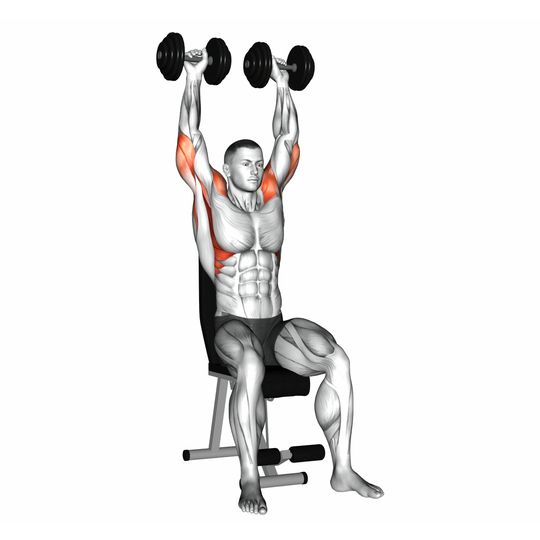
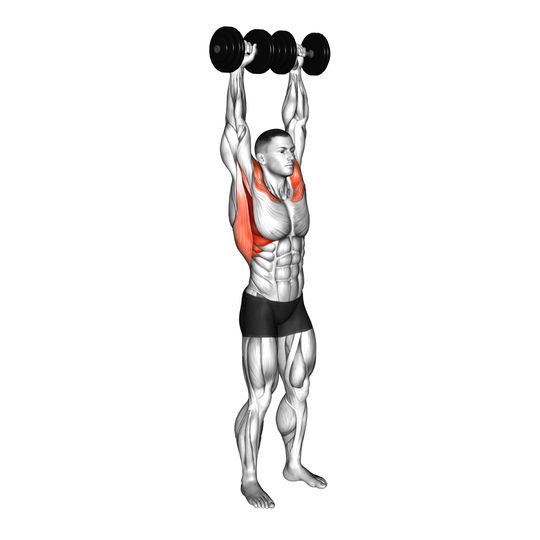
The Smith machine shoulder press is a vertical press, so the front delts do most of the lifting and the side delts join in as the arms rise past the shoulders. The anterior deltoid is loaded hardest in the bottom half, where the bar sits at the collarbone and the upper arm has the furthest to travel. The lateral head of the deltoid takes a bigger share near the top as the arm moves out and up.
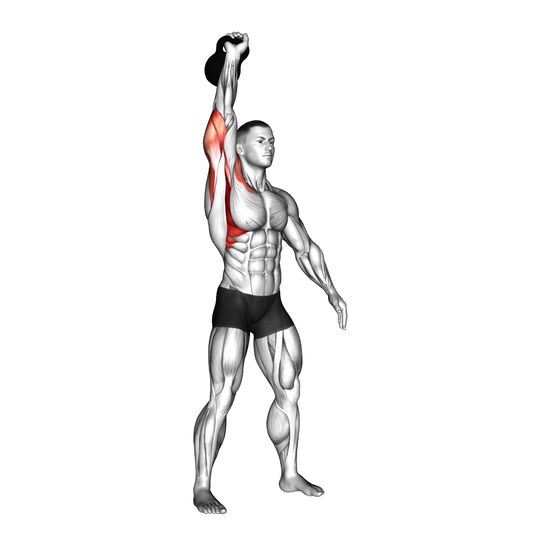
The triceps straighten the elbows and are often what fails first on a heavy set. The upper traps lift the shoulder girdle at the top, especially if you allow a slight shrug at lockout, and the serratus anterior rotates the shoulder blade upward. Because the bar cannot move forward or back, the rotator cuff, upper back and core have much less balancing to do than with a free barbell.
- Primary: Front delts (Anterior Deltoid), Side delts (Lateral Deltoid)
- Secondary: Triceps (Triceps Brachii), Traps (Trapezius)
Common mistakes#
- Overarching the lower back during the press.
- Using leg drive by bending the knees instead of pressing with the shoulders.
- Allowing the bar to travel behind the head rather than keeping it in front of the shoulders.
How much should you overhead press?#
What the average overhead press actually is, and what counts as beginner, intermediate, advanced, or elite at your bodyweight — for men and women, in kg and lbs.
See overhead press strength standards →
Why it works#
The fixed path is the whole argument. A barbell overhead press asks you to balance the bar, keep it over the midfoot and stop the lower back arching, all while pressing. The Smith machine does the balancing, so all of your effort goes into moving the load. That lets you press heavier than you can with a free bar and take sets closer to failure without worrying about the bar drifting.
It also makes drop sets and partial reps practical, because the bar can be racked anywhere with a twist of the wrist. For lifters whose shoulders have stopped responding to dumbbells, or who train alone and want to push a press hard, it is a safe way to add heavy vertical pressing volume.
Sets, reps and setup#
Three to four sets of 6-10 reps with two minutes of rest, once or twice a week. Use it as a heavy first movement on a shoulder day or as the main press on a machine-based push day.
- Setup
- Set a bench with the back at 80-90 degrees under the bar, or stand with the bar directly over the shoulders. The bar should touch the upper chest at the bottom and the elbows should sit slightly in front of the bar, not flared behind it. Press to a full lockout with the head pushed slightly through the arms, then lower under control to the collarbone.
- Progression
- Add 2.5 kg a side once you can complete 10 reps on all sets with the bar touching the chest each rep. Standing lifters who start bending the knees to help have exceeded their shoulder strength; sit down or reduce the weight. Adding a two-second pause at the bottom is a useful way to progress without adding load.
Variations#
- Barbell Overhead Press The free-weight standard, with far more stability demand and a natural bar path.
- Seated Barbell Press Seated with a free bar, removing leg drive but keeping the balance component.
- Seated Dumbbell Shoulder Press Independent arms with a longer range and each side working alone.
- Seated Machine Shoulder Press A lever machine with a fixed arc, even more stable and usually with a slightly different pressing angle.
- Arnold Press Rotates the dumbbells during the press to bring the front delts through a longer range.
Smith machine shoulder press vs barbell overhead press#
The barbell overhead press is the better all-round strength exercise. Balancing a free bar overhead trains the core, upper back and rotator cuff along with the delts, and the skill transfers to every other pressing movement. It also lets the bar travel in a slight curve around your face, which is the path the shoulder wants.
The Smith machine trades that for stability and load. Because you are not balancing anything, you can push the delts harder and more safely, particularly when training alone. It is the better choice when the goal is shoulder size rather than overhead strength, or when a lifter needs to press heavy without technical variables getting in the way.
Common questions#
What muscles does the Smith machine shoulder press work?
The front and side delts press the bar overhead, with the triceps locking out the elbows. The upper traps and serratus anterior move the shoulder blades at the top, and the core and upper back stabilise far less than they would on a free bar.
Is the Smith machine shoulder press effective?
For growing the shoulders, yes. It lets you load the delts heavily and safely and take sets close to failure without worrying about balance. It is less effective for building the coordination and stability that a free barbell press develops, so it is a supplement to free pressing rather than a replacement.
Should I do the Smith machine shoulder press seated or standing?
Seated is the default because it removes leg drive and the temptation to arch. Standing lets you use a bit more weight and trains the trunk, but it is easy to turn into a push press. If your goal is shoulder size, sit down.
Should the bar go in front of or behind the head?
In front, touching the upper chest at the bottom. Behind-the-neck pressing on a Smith machine forces the shoulder into extreme external rotation on a fixed path and is a common source of shoulder irritation. Position the bench so the bar clears your chin comfortably and stay there.
How much should I be able to shoulder press on a Smith machine?
Roughly 10-15 percent more than your barbell overhead press for the same reps, because the machine removes the balance work. Note that Smith machine bars weigh anywhere from 7 to 20 kg depending on the counterbalance, so compare bar plus plates, not plates alone.