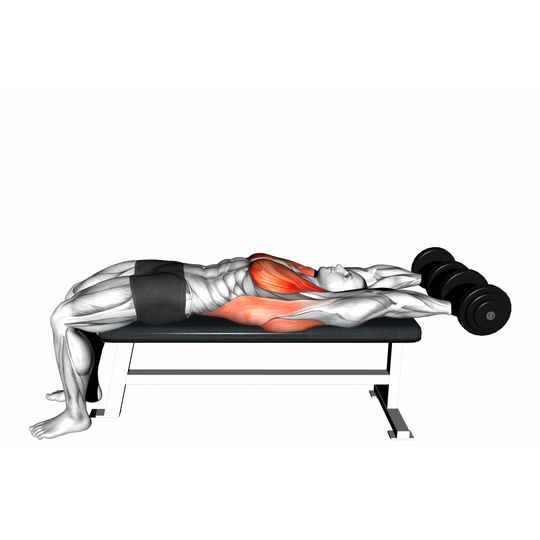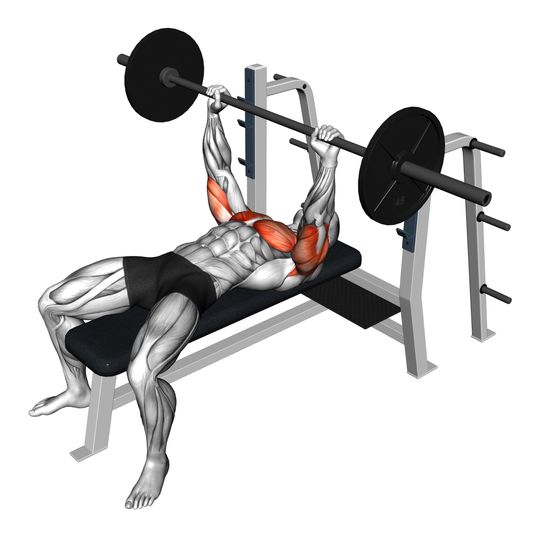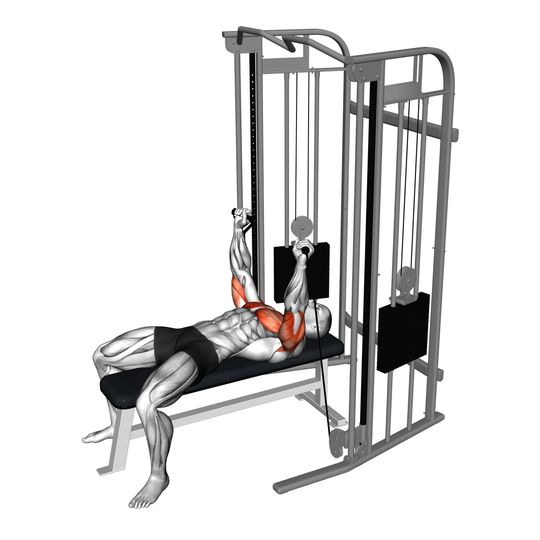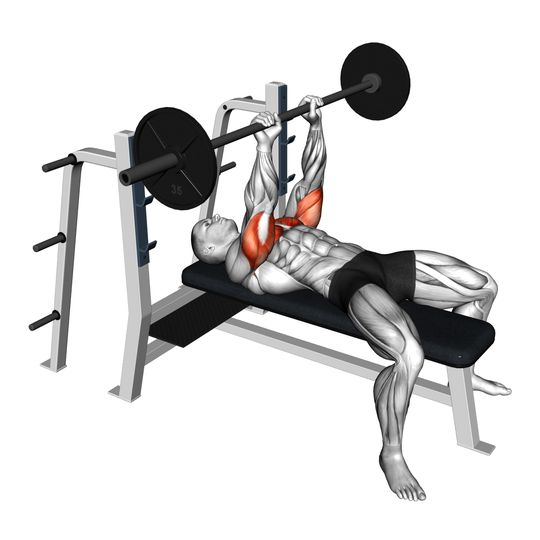


Place your hands on an elevated surface and press your body away to perform a pushing motion that primarily works the chest muscles.
How to do the Incline Push Up#
- Set your hands shoulder-width on a stable raised surface and straighten your arms.
- Step your feet back so your body forms a straight line from head to heels and tighten your core.
- Bend your elbows to lower your chest toward the edge of the surface until your upper arms are about parallel to the floor.
- Drive through your hands to extend your elbows and return to the starting position.
- Maintain a steady breathing pattern: inhale as you lower, exhale as you press up.
Muscles worked#
The incline push up is a chest exercise with the load turned down. Putting the hands on a bench or box tilts the body so that less of your weight is over the arms, but the pattern is the same: the pecs (pectoralis major) bring the upper arms across the body to push you away from the surface. Because the torso is angled upward, the lower and middle chest do slightly more of the work than in a flat push up, and the range at the bottom is easier to reach.
The triceps straighten the elbows to finish each rep and the front delts assist as the arms move forward. The abs and glutes hold the body in a straight line from head to heels, which is easier than on the floor but still matters; letting the hips sag is the most common mistake. The serratus anterior pushes the shoulder blades apart at the top, which makes the movement useful for shoulder health.
- Primary: Chest (Pectoralis Major)
- Secondary: Triceps (Triceps Brachii), Front delts (Anterior Deltoid), Abs (Rectus Abdominis)
Common mistakes#
- Allowing the hips to sag or pike out of a straight line.
- Flaring the elbows excessively away from the body.
- Stopping short of a full lowering motion.
- Placing the hands too far forward, shifting weight off the chest.
Why it works#
It is the best entry point to push ups. Knee push ups shorten the lever and remove most of the core demand, so they do not transfer well to the full movement. An incline push up keeps the body in one line and the abs working exactly as they will on the floor, while letting you choose a height that gives you 8-12 clean reps.
It also has a place for experienced lifters. The reduced load makes it a good warm up before heavy pressing, a high-rep finisher when the shoulders are tired, and a way to keep training the chest around an elbow or wrist that does not tolerate full bodyweight.
Sets, reps and setup#
Three or four sets of 8-15 reps with 60-90 seconds of rest, two or three times a week. Choose a height that lets you reach 8 reps with the chest touching the edge and stop each set one or two reps before form breaks. When you can do 15, lower the surface.
- Setup
- Place the hands slightly wider than shoulder width on a stable bench, box, or step, and walk the feet back until the body is a straight line from heels to head. Squeeze the glutes, brace the abs, and lower the chest to the edge of the surface with the elbows at about 45 degrees to the body. Press back up until the arms are straight and the shoulder blades spread.
- Progression
- Lower the surface in steps of around 15-20 cm every one to two weeks: from a wall to a countertop to a bench to a low step to the floor.
Variations#
- Push Up The full floor version, which the incline push up builds toward.
- Knee Push Up Reduces the load by shortening the lever instead of raising the hands, with less core involvement.
- Decline Push Up Feet elevated instead of hands, which increases the load and shifts the emphasis toward the upper chest and shoulders.
- Band Push Up A band across the back adds resistance to a full push up once bodyweight is no longer enough.
- Incline Dumbbell Bench Press A loaded pressing movement for the upper chest once you want to add weight.
Incline push up vs knee push up#
Both make the push up easier, but they do it differently. The knee push up shortens the body, which cuts the load and removes most of the core work, so the abs and glutes never learn to hold a plank under pressure. Lifters who build up on their knees often stall when they move to the floor because the trunk was never trained.
The incline push up keeps the full body length and the plank position, and simply shifts some weight toward the feet. It trains the exact pattern you are progressing toward, and the height of the surface gives you a smooth way to add difficulty. For nearly everyone, incline push ups are the better regression.
Common questions#
What muscles do incline push ups work?
The chest is the main mover, with the triceps and front delts assisting. The abs and glutes hold the body straight and the serratus anterior controls the shoulder blades. It is the same muscle list as a regular push up at a lower load.
Are incline push ups easier than regular push ups?
Yes. Raising the hands shifts weight toward the feet, so a bench-height push up loads the arms with roughly half to two-thirds of what a floor push up does, depending on the height. That is what makes them the right starting point for beginners.
How high should the surface be for incline push ups?
High enough that you can do 8 clean reps with a straight body and the chest touching the edge, and low enough that 15 reps is hard. For most beginners a standard bench or a kitchen counter is a good start, then work down toward the floor.
Do incline push ups work the upper chest?
Not especially. Despite the name, an incline push up angles the body so the lower and middle chest do slightly more, similar to a decline bench press. If you want upper chest emphasis from a push up, elevate the feet instead for a decline push up.
How do I progress from incline push ups to regular push ups?
Lower the surface in small steps as soon as you can do 12-15 reps at the current height. Most people move from a bench to the floor in four to eight weeks of training three times a week.